

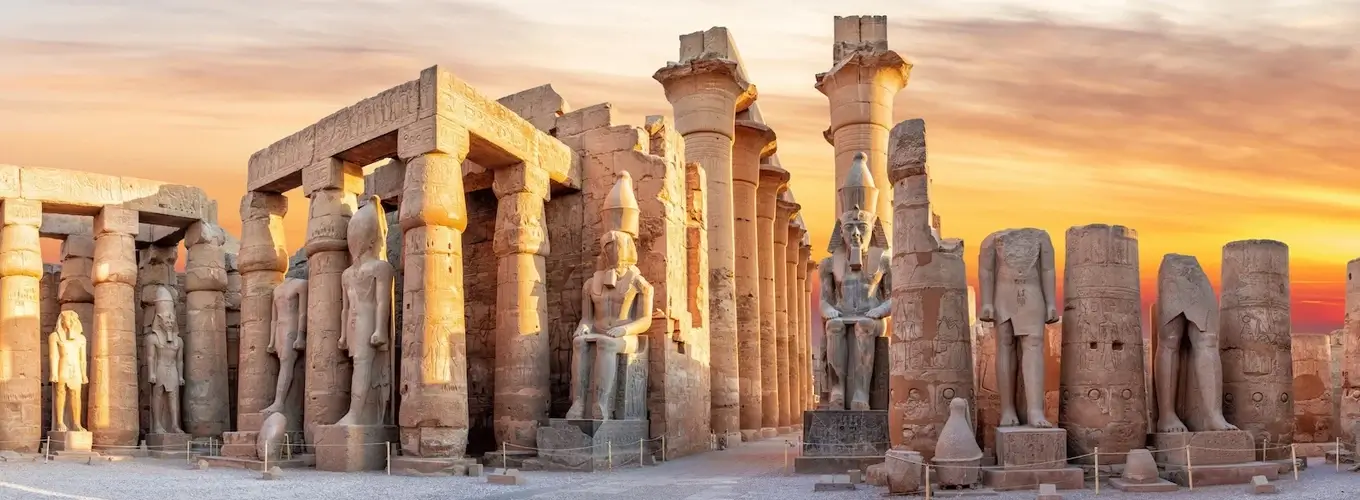
The Nile has been carrying travelers between Aswan and Luxor for thousands of years. Three nights on the river is the sweet spot: long enough to see the main temples without rushing, short enough to fit into a two-week Egypt trip.
On a standard 4-day, 3-night sailing from Aswan, most ships depart on Monday, Wednesday, or Friday. By the time you disembark in Luxor, you will have visited Philae Temple, the twin sanctuaries of Kom Ombo, the Horus temple at Edfu, and the Pharaonic necropolis on Luxor’s West Bank — with Abu Simbel available as an optional Day 2 excursion if you want it.
This guide from Nile Cruise Offers walks you through every day on the water: what you will see, how to pace it, and what to decide before you board.
What’s Included in a 3 Night Nile Cruise Itinerary — and What Is Not
| ✅ Usually Included | ❌ Usually Extra |
|---|---|
| Aswan pickup (airport, hotel, train station, or island dock) | Alcoholic drinks and soft drinks |
| 3 nights’ accommodation on the cruise ship | Tutankhamun’s tomb (special ticket ~$25) |
| Full board: buffet breakfast, lunch, and dinner daily | Abu Simbel by road or flight (pre-book with operator) |
| Licensed Egyptologist guide throughout | Balloon ride over Luxor |
| Entrance fees to: Philae, Kom Ombo, Edfu, Valley of the Kings (3 tombs), Hatshepsut | Wi-Fi (quality varies widely by ship) |
| Port taxes and on-board service charges | Tips for guides, crew, and drivers |
| Luxor drop-off (airport, hotel, or station) | Personal items, laundry, mini-bar snacks |
ℹ️ Always confirm the inclusions list with your specific operator. Nile Cruise Offers lists what each package covers before you pay.
3 Night Nile Cruise Itinerary at a Glance
Here is the full four-day route at a glance, so you can plan camera battery charging, medication timings, and what to pack each morning.
| Day | Base | Main Sites | Noche |
|---|---|---|---|
| 1 | Aswan (overnight on ship) | Pickup → Philae Temple (Agilika Island) → optional felucca ride | Dinner on board, first night on the Nile |
| 2 | Sailing north, Edfu stop | Optional Abu Simbel (pre-dawn) OR relaxed morning → Kom Ombo | Galabiya party / Nubian music on deck |
| 3 | Edfu → Esna Lock → Luxor | Edfu Temple (horse carriage) → Esna Lock crossing → sail to Luxor | Luxor Temple by night (optional Karnak) |
| 4 | Luxor West Bank (disembark) | Valley of the Kings (3 tombs) → Hatshepsut Temple → Colossi of Memnon | Transfer to the airport, station, or hotel |
Typical departure days from Aswan: Monday, Wednesday, and Friday. The ship sails north, so the current helps — you cover 181 km of river in a relaxed three-day journey.
Day 1: Aswan: Boarding and Philae Temple
Your guide meets you at Aswan Airport, the train station, your hotel, or the dock if you are staying on Elephantine or Suhail Island. Transfer to the ship is in an air-conditioned vehicle.
After check-in and lunch on board, the afternoon is for Philae Temple. You reach it by a short motorboat ride to Agilika Island, where the temple was rebuilt stone by stone after the 1960s construction of the High Dam threatened to submerge it permanently. Walking through its colonnaded halls, dedicated to the goddess Isis, you are looking at one of the best-preserved Ptolemaic temples in Egypt.
If time and energy allow, the Unfinished Obelisk quarry site is a quick visit near the city. An ancient crack in the granite stopped the obelisk — which would have been the largest ever cut — before it could be freed from the bedrock.
| Pickup point | Where to find your guide |
|---|---|
| Aswan Airport | Arrival hall — guide holds a sign with your name |
| Hotel or train station | Lobby or platform — representative helps with bags/td> |
| Island (Elephantine / Suhail / Gharb Aswan) | Designated mainland dock — short boat transfer follows |
Mohamed’s tip: The light on Philae is best in the late afternoon when the sun drops low over the water. Ask your guide to time the boat transfer so you arrive around 4 pm rather than straight after lunch — the photographs are completely different.
Optional felucca ride: after Philae, some operators arrange a short sail on a traditional wooden felucca around the Aswan islands. It takes about 45 minutes and gives you the first proper view of the river at eye level before you head back to the ship for dinner.
Día 2: Abu Simbel (Opcional) y Kom Ombo al Atardecer
El Día 2 se divide en dos escenarios dependiendo de si has reservado previamente Abu Simbel.
| Opción A | Abu Simbel por carretera (recomendado para amantes de la historia) |
| Qué esperar | Salida antes del amanecer por carretera (alrededor de las 4 am), aproximadamente 3.5 horas en cada sentido. El templo de Ramsés II y el templo más pequeño de Nefertari se alzan 65 metros de altura, tallados directamente en el acantilado de arenisca. La famosa alineación solar ocurre dos veces al año — el 22 de febrero y el 22 de octubre — cuando la luz del sol alcanza el santuario interior. Regreso al barco al mediodía. |
| ¿Vale la pena? | Si eres visitante por primera vez a Egipto, sí. La escala y la ingeniería son incomparables en el país. Si ya lo has visto antes, duerme un poco más — necesitarás energía para la Orilla Occidental de Luxor el Día 4. |
Whether or not you do Abu Simbel, the afternoon is for Kom Ombo Temple. The ship sails north and moors at the riverbank just below the site. Kom Ombo is the only double temple in Egypt — the left half dedicated to Horus, the falcon god, the right half to Sobek, the crocodile god. The small museum inside holds a collection of mummified crocodiles found in the area.
El atardecer en Kom Ombo transforma la arenisca color miel casi en naranja. Es uno de los mejores momentos fotográficos en todo el crucero — trae un lente gran angular y un pequeño trípode si tienes uno.
Noche: Back on board, most ships host a galabiya party — a social evening where guests and crew dress in traditional Egyptian galabiya robes. Nubian music and an optional belly-dancing show follow dinner. It is entirely optional, but most travelers find it one of the warmest evenings of the trip.
Día 3: Templo de Edfu, Esclusa de Esna, y Templo de Luxor de Noche

La parada matutina es Edfu. Llegas al templo en una carroza tirada por caballos desde el muelle — un corto paseo, ligeramente caótico, a través del pueblo — luego entras en lo que es probablemente el templo antiguo mejor conservado de Egipto. Construido durante el período ptolemaico, está dedicado a Horus y aún conserva gran parte de su pintura original y relieves tallados que representan el mito de Horus y Seth.
De vuelta a bordo, el barco se acerca a la Esclusa de Esna alrededor del mediodía. La esclusa es una estructura de ingeniería que baja o sube el nivel del agua para que los barcos puedan continuar hacia el norte pasando una sección poco profunda del río. Esperar en la esclusa toma 20–40 minutos y es extrañamente cautivador de ver: vendedores en pequeños botes pasan pañuelos, papiros y galabeyas a la cubierta de sol, y obtienes una vista cercana de la infraestructura laboral del Nilo.
The ship arrives in Luxor in the evening. Luxor Temple by night is a very different experience from the daytime: the warm artificial lighting turns the columns deep gold, most of the crowds have gone, and the avenue of sphinxes leading to the entrance is clear. If Karnak Temple is included in your package, it is usually visited in the morning of Day 3 or 4; confirm with your guide the night before.
Mohamed’s tip: Bring cash to the sun deck during the Esna Lock — the vendors are good-humored, and the prices are better than at the temples. Just agree on a price before anything leaves their hands.
Día 4: Orilla Occidental: Valle de los Reyes, Hatshepsut, Colosí de Memnón
El tour de la Orilla Occidental comienza temprano, a las 7 am si es posible. En verano, las tumbas se calientan rápidamente; en invierno, la salida temprana significa que tienes los caminos mayormente para ti solo.
Your general ticket to the Valley of the Kings covers three tombs from the current open roster of around 20 accessible sites. The standard route typically includes Ramesses III, Ramesses VI, and Merenptah, though your guide will adjust based on what is open that day. Tutankhamun’s tomb is a separate ticket and worth it if the queue is no more than 30 minutes — the painted burial chamber is the best-preserved in the valley.
El templo en terrazas de Hatshepsut en Deir el-Bahari es siguiente: una estructura de tres niveles construida en un anfiteatro natural de acantilados. Hatshepsut gobernó Egipto durante aproximadamente 20 años como faraona — inusual para una mujer en el Reino Nuevo — y su templo refleja la confianza de su reinado.
Los Colosí de Memnón son las dos estatuas sentadas de 18 metros de Amenhotep III que se alzan a la entrada de lo que fue una vez el templo mortuorio más grande en Luxor, ahora casi completamente desaparecido. Son una buena parada final: fáciles de fotografiar, con cielo abierto y el Valle del Nilo detrás.
El check-out del barco es generalmente antes de las 10 am. Tu traslado al Aeropuerto de Luxor, la estación de tren, o tu hotel está incluido.
Elegir Tu Barco de Crucero: Categorías y Qué Significan
The ship you are on does not change which temples you visit — the itinerary is the same across categories. What changes is cabin size, dining quality, lounge space, and how busy the sun deck feels.
| Categoría | Typical Ships | Cabin Size | Ideal para |
|---|---|---|---|
| 5★ Standard | MS Pioneer II, MS Mirage | 18–22 m² | Budget-conscious travelers who want a clean, comfortable trip without extras |
| 5★ Deluxe | MS Nile Style, MS Royal Beau Rivage | 22–28 m² | Travelers who want noticeably better dining and more deck space |
| 5★ Premium / Ultra | Royal Esadora, MS Zeina, MS Oberoi Philae | 30–50 m² | Couples or travelers wanting a luxury experience; some have private balconies and butler service |
All categories include: air-conditioned cabins, private bathrooms, a sun deck, and a swimming pool. Specific ship assignment is usually confirmed about a week before departure.
If a dahabiya interests you — a smaller, sail-powered wooden boat that moves more slowly and stops at less-visited spots — Nile Cruise Offers has a dedicated Dahabiya Nile Cruise page with available options.
Meals and Full Board: What to Expect
All meals on a standard 3-night cruise are full board. Breakfast and lunch are buffet-style with a mix of Egyptian and international dishes. Dinner is usually a set menu or a slightly more elaborate buffet. On days with early starts (Abu Simbel), a breakfast box replaces the sit-down meal.
- Dietary needs: tell the operator when you book. Most ships handle vegetarian, vegan, and gluten-free options with advance notice.
- Drinks: water, tea, and coffee at meals are usually included. Everything else — soft drinks, juice, alcohol — is charged separately at the bar.
- Minibar items in the cabin are chargeable. Bring your own snacks if you graze between meals.
- Tutankhamun’s tomb ticket (~$25) is not included in the standard entrance fee package; confirm this before assuming it is.
Pricing and When to Book
A 3-night Nile cruise from Aswan typically runs from around $350 per person (5-star standard, shared cabin, shoulder season) to $1,200+ per person (premium ship, suite, peak season). These are ballpark figures; the final price depends on the ship category, cabin type, and how far in advance you book.
| Season | Typical Range (per person) | Notes |
| Oct–Apr (High / Shoulder) | $800 – $2000 | Best weather. Christmas weeks are fully booked months in advance. |
| May–Sep (Off-peak) | $700 – $1300 | Cheaper but hot (38°C+). Early starts essential. Fewer crowds. |
- Solo supplement: expect a 25–40% increase over the base price for single-cabin occupancy.
- Children under 12 sharing a cabin with two adults often get a 50% discount — confirm with the operator.
- Book Abu Simbel as an add-on when you book the cruise; day-of requests are often unavailable.
Nile Cruise Offers para promociones y descuentos actuales en travesías.

What to Pack for a 3 Night Nile Cruise Itinerary
The temples are hot, uneven, and often crowded. Keep your bag light and your shoes comfortable.
| Artículo | Por qué es importante |
|---|---|
| Closed-toe walking shoes (broken in) | Temple floors are uneven stone. New shoes will destroy your feet by Day 2. |
| Sun hat + SPF 50+ sunscreen | Shade is limited at most open sites. The sun reflects off sand and stone. |
| Breathable layers (not just light clothes) | Abu Simbel departs at 4 am and can be cold. Noches on the Nile also drop. |
| Shoulder/knee cover (shawl or trousers) | Required at all religious sites. Light linen works for both modesty and heat. |
| Reusable water bottle + sealed bottled water | Tap water is not safe to drink. Buy sealed bottles on board or at sites. |
| Small torch/phone torch | Some tomb interiors are poorly lit. Useful in the Valley of the Kings. |
| Small bills (EGP + USD) | Tips for guides, crew, and carriage drivers. ATMs are scarce once you board. |
Tipping — How It Works on a Nile Cruise
Tipping is expected and appreciated. The amounts below are general guidance for 2026; always confirm with your guide whether a pooled gratuity is already built into the package.
- Egyptologist guide: $5–10 per person per day
- Ship crew (pooled): $5–8 per person per day, given to the head waiter or purser at the end of the cruise
- Carriage driver at Edfu: 20–30 EGP per person
- Transfer driver: $3–5 per trip
Carry small denominations. You will rarely get change at temples or on the water.
Frequently Asked Questions
What does a 3 night Nile cruise include?
A standard 3-night cruise from Aswan covers Philae Temple, an optional Abu Simbel excursion, Kom Ombo Temple, Edfu Temple, the Esna Lock crossing, and Luxor’s West Bank (Valley of the Kings, Hatshepsut Temple, Colossi of Memnon). Full board meals, a licensed Egyptologist guide, entrance fees to listed sites, airport pickups, and port taxes are usually included. Drinks, the Tutankhamun tomb ticket, and Abu Simbel are typically extra.
How far is Aswan from Luxor by cruise?
The river distance from Aswan to Luxor is approximately 181 km. At a typical cruise speed, the ship covers this over three days of sailing, with temple stops slowing the journey in a pleasant way.
What days do Nile cruises depart from Aswan?
Most cruise operators run departures from Aswan on Mondays, Wednesdays, and Fridays. Nile Cruise Offers can confirm available sailing dates when you enquire.
Is Abu Simbel worth adding to a 3 night cruise?
For first-time visitors to Egypt, yes. The temples of Ramesses II and Nefertari at Abu Simbel are among the most impressive ancient sites in the world. The road transfer takes about 3.5 hours each way from Aswan, with an early pre-dawn departure. If you have seen Abu Simbel before, or if early mornings are not for you, skip it and spend the day on deck for a relaxed morning.
Can I visit Abu Simbel by flight instead of by road?
Yes. A short flight from Aswan Airport to Abu Simbel takes about 40 minutes each way, allowing a mid-morning departure. The flight is more expensive but considerably easier. Ask Nile Cruise Offers to add either the road or flight option when you book.
¿Qué debo empacar para un crucero por el Nilo?
Closed-toe walking shoes, a sun hat, SPF 50+ sunscreen, breathable layers (the pre-dawn Abu Simbel drive is cold), modest clothing for temples (shoulders and knees covered), a reusable water bottle, and small bills for tips. A compact torch is useful in the darker tombs at the Valley of the Kings.
Are there on-board entertainment options?
Most ships host a galabiya party on one evening — guests and crew dress in traditional Egyptian robes for dinner, followed by Nubian music and optional oriental dance. There are usually also film screenings, a sundeck bar, and a swimming pool for daytime downtime between temple visits.
