

QUICK ANSWER
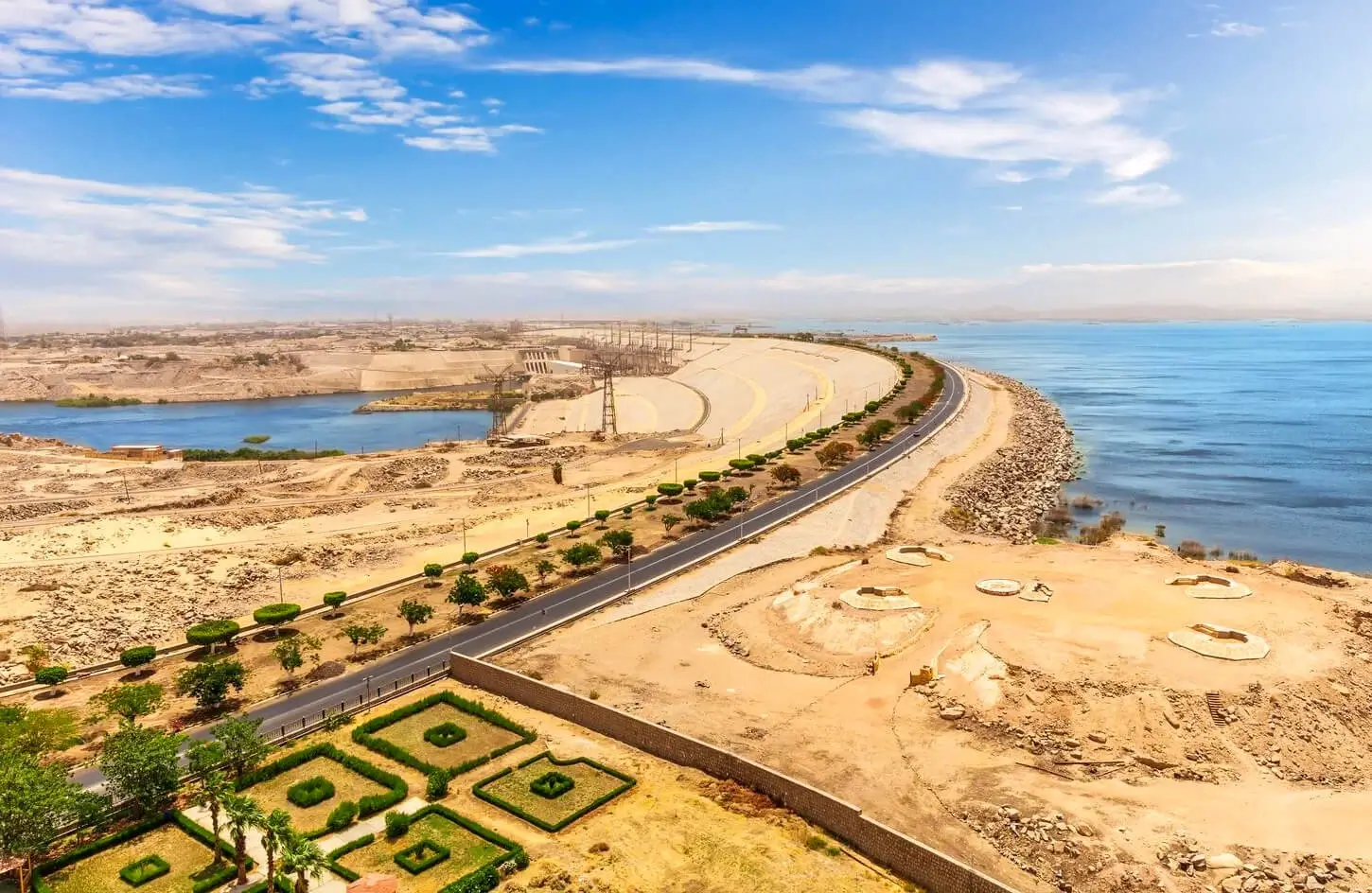
The Aswan High Dam is a massive rock-fill dam on the Nile River in southern Egypt, completed in 1970. Built to control Nile flooding, generate hydroelectric power (2,100 MW), and secure year-round irrigation, it created Lake Nasser — one of the world’s largest artificial lakes. Located 13 km south of Aswan city, it is open to visitors year-round. Entrance fee: EGP 200 for foreign visitors (approx. $6 USD as of 2026).
If you’re arriving in Aswan at the end of your Nile cruise — or setting off from there — you’ll probably hear someone mention the High Dam. Most tour itineraries include a 30-minute stop. Most travelers walk away impressed but not entirely sure what they just saw.
This guide is the one I wish existed when I started leading groups through Upper Egypt. It covers the history, the engineering, what the visit actually looks like on the ground, how to fit it into a Nile cruise day in Aswan, and a few things most other guides get wrong or leave out entirely.
Aswan High Dam Facts at a Glance
Before anything else, here are the numbers worth knowing:
| Fact | Detail |
|---|---|
| Built | 1960–1970 |
| Officially opened | 1971 (by President Sadat) |
| Height | 111 metres (364 ft) |
| Length at crest | 3,830 metres (~2.4 miles) |
| Base width | 980 metres |
| Volume of material | 43 million cubic metres (17× the Great Pyramid of Khufu) |
| Hydroelectric capacity | 2,100 MW (12 turbines × 175 MW each) |
| Lake Nasser length | ~500 km (extends into Sudan) |
| Lake Nasser surface area | ~5,250 km² |
| Water storage capacity | ~132 km³ |
| Entrance fee (foreign) | EGP 200 (~$6 USD) |
| Entrance fee (Egyptian) | EGP 30 |
| Soviet Friendship Monument | Additional EGP 300 (optional) |
| Typical visit duration | 30–45 minutes |
| Distance from Aswan city | 13 km south by road (~20–30 min by taxi) |
Why This Dam Matters to Every Nile Cruise Traveler
The Aswan High Dam is the reason your Nile cruise exists in its current form.
Before the dam was built, Nile cruise ships couldn’t sail reliably between Luxor and Aswan year-round. The river’s depth varied dramatically by season. The dam stabilized the flow — and with it, the entire modern cruise industry from Luxor to Aswan.
But there’s a more striking connection. The dam’s construction flooded a vast stretch of the Nile Valley, threatening dozens of ancient monuments. A massive UNESCO campaign in the 1960s and early 1970s mobilized 50 countries and $80 million to move the most important ones to safety. Two sites you’ll almost certainly visit on your cruise were among them:
- Temple de Philae — dismantled stone by stone and rebuilt on nearby Agilkia Island, 500 metres from its original location
- Abu Simbel — cut into 807 blocks and lifted 65 metres up the cliff face over four years
Without the dam, these temples would be submerged under Lake Nasser. The same lake you can see stretching south into the desert from the dam’s crest.
That’s the paradox at the heart of this place: the dam that threatened the monuments also funded the operation that saved them.
The Aswan High Dam is just one of the city’s incredible landmarks. Discover more ancient temples, scenic islands, and unique attractions in our complete guide to the best things to do in Aswan.
History of the Aswan High Dam
The Problem Before the Dam
For thousands of years, the Nile’s annual flood was both Egypt’s greatest resource and its most unpredictable force. The flood deposited the fertile silt that made the Nile Valley the most productive agricultural land in the ancient world. It also destroyed villages, drowned livestock, and made planning impossible.
Britain built a smaller dam at Aswan in 1902 — the Aswan Low Dam — and raised it twice. By the late 1940s it was clear that a larger dam built upstream was needed. Egypt’s population was growing rapidly. Electricity demand outpaced supply. And the Low Dam couldn’t prevent catastrophic floods.
Nasser’s Vision and the Cold War Dimension
President Gamal Abdel Nasser made the High Dam the centrepiece of Egypt’s post-independence modernisation programme. In 1956, the United States and Britain agreed to fund the project — then abruptly withdrew support, partly in response to Egypt’s arms deal with Czechoslovakia and its recognition of communist China.
Nasser responded by nationalising the Suez Canal to fund the dam himself. This triggered the Suez Crisis. And it pushed Egypt into an agreement with the Soviet Union, which provided both technical expertise and $1.12 billion in financing.
The dam became, whether Nasser intended it or not, a Cold War monument — proof that a post-colonial nation could build something bigger than the pyramids with Soviet help. On the western bank, the Soviet-Egyptian Friendship Monument still stands, a four-pronged lotus flower 74 metres tall, visible from the dam’s crest.
Construction: 1960–1970
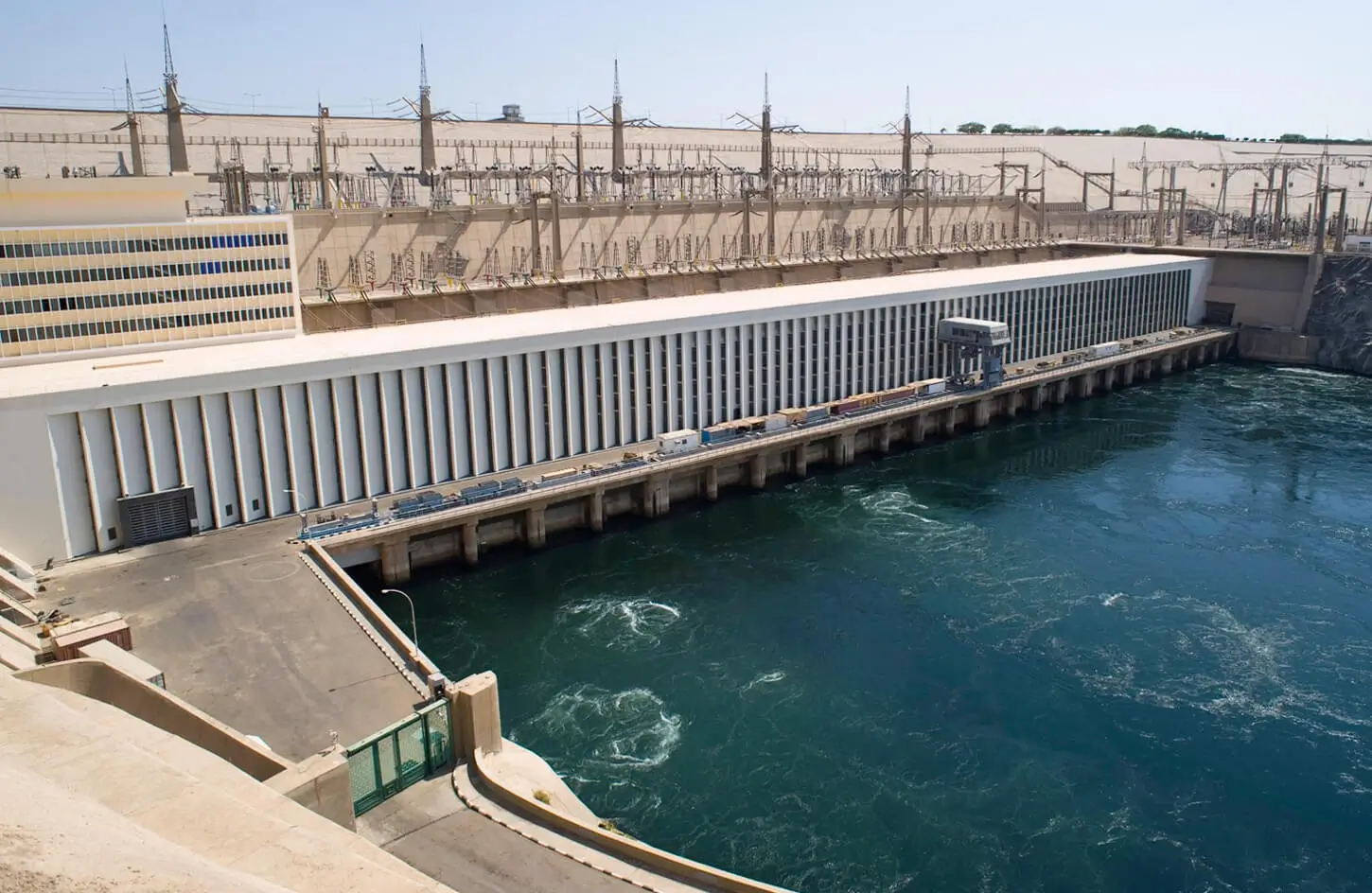
Construction began on 9 January 1960. At its peak, 25,000 Egyptian workers were on site. Soviet engineers supervised. The Nile was diverted through six tunnels drilled through the granite bedrock on the eastern bank — one of the most technically demanding phases of the project.
The first stage was completed in 1964, allowing the reservoir to begin filling. The dam was fully completed in July 1970, just months before Nasser’s death. His successor, Anwar Sadat, formally inaugurated it in 1971.
The Nubian Displacement
The dam’s human cost is the part of the story that most tour guides skip.
Lake Nasser flooded approximately 500 km of the Nile Valley, including 44 villages in Egypt and around 30 in Sudan. An estimated 100,000 Nubians — a distinct cultural and linguistic community who had lived along this stretch of the Nile for millennia — were relocated to towns north of Aswan and in Sudan.
The Nubian Museum in Aswan, opened in 1997, tells this story properly. It’s worth an afternoon of your time, especially if you’ve visited the High Dam or sailed through the area now covered by Lake Nasser.
Complete your Aswan itinerary with a visit to the magnificent Abu Simbel Temples, a UNESCO-listed masterpiece famous for its colossal statues, remarkable history, and breathtaking location.
What You’ll Actually See at the Aswan High Dam
Here’s what a visit looks like in practice — because there’s a gap between what brochures promise and what you find on the ground.
Getting There
The dam is 13 km south of Aswan city centre. A private taxi from the corniche takes 20–30 minutes depending on traffic and costs roughly 150–200 EGP one way. Most Nile cruise ships docked in Aswan include the dam as part of a half-day Aswan excursion combined with Philae Temple and the Unfinished Obelisk — the three together make a full morning.
There’s a security checkpoint at the entrance. Bring your passport (foreign visitors) or national ID. Video cameras, drones, and large tripods are not permitted. Personal phone cameras are generally fine but follow the guards’ instructions at checkpoints.
On the Dam’s Crest
Visitors are taken to the dam’s central walkway, roughly 40 metres wide with a road running along it. From here, you get two completely different views:
- Looking south: Lake Nasser stretches to the horizon — a vast, still blue expanse in the middle of the Sahara desert. In the late afternoon the light on the water is extraordinary.
- Looking north: the Nile resumes its normal course below the dam, noticeably narrower and calmer than the reservoir behind you.
L'échelle de la structure ne devient réelle que lorsque vous vous tenez dessus. Le barrage contient plus de matériaux que la Grande Pyramide — 17 fois plus, pour être précis. Vous ne pouvez pas ressentir cela à partir d'une photographie.
The Pavilion and Soviet Monument
At the eastern end of the dam, a small pavilion contains information boards about the dam’s dimensions and construction history. The displays are dated but informative.
On the western bank, visible from the crest, is the Soviet-Egyptian Friendship Monument — a stylised lotus flower rising 74 metres. Access requires a separate ticket (EGP 300 as of 2025). Most visitors who’ve done the short walk to the monument report it isn’t worth the extra cost on its own; the view from the dam’s crest is the real draw.
How Long Do You Need?
Thirty to forty-five minutes is enough for most visitors. There’s no museum, no interior tour, and no formal guided route on the structure itself. You walk to the viewpoint, take in the view, read a few information boards, and leave. It’s not Karnak Temple — the value is the scale and the story, not the detail.
Thinking about sailing the Nile after your Aswan adventure? Read our detailed guide to learn about Nile Cruise safety, travel tips, and how to enjoy a comfortable and worry-free journey.
Combining the High Dam with Your Nile Cruise or Aswan Day Tour
Almost every Nile cruise that begins or ends in Aswan includes a morning tour of the city’s three main modern-plus-ancient sites. The standard sequence:
| Site | Time Needed | Notes |
|---|---|---|
| Aswan High Dam | 30–45 min | First stop — usually 9:00–9:45 AM |
| Unfinished Obelisk | 40–50 min | Largest known ancient obelisk, in Aswan’s granite quarry |
| Philae Temple (Agilkia Island) | 90–120 min | Short motor boat to the island; dedicated to goddess Isis |
This combination covers ancient Egypt (Philae, Unfinished Obelisk) alongside modern Egypt (the dam) in a single half-day — which is one reason it works so well as a narrative arc.
If your cruise departs from Aswan heading north to Luxor, the Aswan tour typically takes place the morning of departure. If you’re arriving in Aswan at the end of a Luxor-to-Aswan cruise, the tour is often scheduled for your final morning before disembarkation.
Nile cruise ships from Nile Cruise Offers that include Aswan departure or arrival:
- Standard and Croisières de luxe on the Luxor–Aswan route (3 nights / 4 nights)
- Ultra Deluxe and Luxury cruises with Egyptologist guide included
- Dahabiya voyages on the Aswan–Luxor stretch for a slower, more personal experience
For the full route details, stops, and what to expect day by day, see our guide to the 4-night Nile cruise from Luxor to Aswan.
What the Dam Changed — and What It Cost
The Benefits
The case for the dam is straightforward and real:
- Flood control: the Nile’s destructive annual floods — which had plagued Egypt since antiquity — effectively stopped. Since 1970, there has been no major flood event in the Nile Valley.
- Electricity: the dam’s 12 turbines generate up to 2,100 MW. In the early 1970s this was roughly half of Egypt’s total electricity production. Today, as Egypt’s grid has grown, the dam contributes around 7–10% — still significant.
- Irrigation: Lake Nasser stores water that is released year-round through canals, allowing Egypt to farm land that was previously desert and enabling multiple harvests per year.
- Lake Nasser fishing: the reservoir supports a substantial fishing industry, with Nile perch among the main catches.
The Costs
The dam’s downsides are real too, and the honest version of this story includes them:
- Lost Nile silt: before the dam, annual floods deposited nutrient-rich silt across Egyptian farmland — a process that had sustained agriculture for 7,000 years. The dam stopped this completely. Egyptian farmers now depend heavily on chemical fertilisers.
- Coastal erosion: without the silt that used to reach the Mediterranean, the Nile Delta is eroding. Parts of the Delta coastline are retreating at measurable rates.
- Waterlogging and soil salinisation: year-round irrigation without the natural dry season has raised water tables in some agricultural areas, leading to salinity problems.
- Nubian displacement: as detailed above, approximately 100,000 people were relocated, losing their ancestral land, villages, and much of their material culture.
- Geopolitical tension: the dam stores water that upstream countries — particularly Ethiopia — also claim rights to. The Grand Ethiopian Renaissance Dam on the Blue Nile has added a new layer of complexity to Nile water politics that remains unresolved in 2026.
The dam is neither the triumphant modernisation story Egyptian textbooks tell nor the environmental catastrophe its critics emphasise. It’s both, in an uncomfortable proportion.
After visiting the impressive Aswan High Dam, take a journey into the heart of Nubian culture by exploring the colorful Nubian Village, where traditional houses, local customs, and warm hospitality create an unforgettable experience.
Practical Information for Visitors (2026)
| Detail | Information |
|---|---|
| Entrance fee (foreign) | EGP 200 (~$6 USD) |
| Entrance fee (Egyptian) | EGP 30 |
| Soviet Monument additional fee | EGP 300 (~$9 USD) |
| Opening hours | Daily, approx. 7:00 AM – 5:00 PM (confirm locally) |
| Photographie | Personal cameras/phones generally permitted; no drones, no tripods |
| Documents required | Passport (foreign visitors), national ID (Egyptians) |
| Getting there from Aswan | Private taxi: ~150–200 EGP one way; 20–30 min |
| Best time of day to visit | Early morning (cooler, fewer crowds) |
| Best season | October–April (temperatures moderate) |
| Typical visit time | 30–45 minutes |
| Nearby sites | Philae Temple, Unfinished Obelisk, Nubian Museum, Lake Nasser |
Frequently Asked Questions: Aswan High Dam
How much is the entrance fee for the Aswan High Dam?
Foreign visitors pay EGP 200 (approximately $6 USD at current exchange rates). Egyptian nationals pay EGP 30. If you want to visit the Soviet-Egyptian Friendship Monument on the western bank, there is an additional charge of EGP 300. Most people find the dam’s crest viewpoint alone is sufficient.
How far is the Aswan High Dam from Aswan city?
The dam is 13 km south of Aswan city centre. A private taxi takes 20–30 minutes and costs around 150–200 EGP one way. Most organised Aswan day tours include transport. If you’re on a Nile cruise, your ship’s excursion desk will arrange the transfer.
How long does a visit to the Aswan High Dam take?
Most visitors spend 30 to 45 minutes. There’s no interior tour or formal museum on-site — the visit centres on the crest viewpoint over Lake Nasser and the Nile. If you add the Soviet Friendship Monument, allow an extra 20–30 minutes.
Can you visit the Aswan High Dam as part of a Nile cruise?
Yes — almost all Nile cruise itineraries that include Aswan (whether as a starting or finishing point) incorporate a half-day Aswan city tour that includes the dam, Philae Temple, and the Unfinished Obelisk. Check your specific ship’s excursion list, or ask the excursion desk on board.
What temples were saved because of the Aswan High Dam?
The UNESCO Nubia Campaign (1960–1980) relocated 22 monuments threatened by the rising waters of Lake Nasser. The most famous are Abu Simbel (cut into 807 blocks and moved 65 metres uphill) and Philae Temple (moved to nearby Agilkia Island). Others include Kalabsha Temple, Amada, Wadi el-Sebua, and Beit el-Wali.
Is photography allowed at the Aswan High Dam?
Personal cameras and smartphones are generally permitted on the dam’s crest. Drones, tripods, and professional video equipment are not allowed without special permits. Security guards at the checkpoints will advise you if anything specific is restricted on the day of your visit. Always follow on-site instructions.
What is Lake Nasser?
Lake Nasser is the reservoir created by the Aswan High Dam, formed as the Nile’s flow was blocked and the valley behind the dam filled with water. It is one of the largest man-made lakes in the world, stretching approximately 500 km south of Aswan into Sudan (where the southern portion is called Lake Nubia). Its surface area is around 5,250 km². The lake supports fishing, limited boat tourism, and several relocated monuments on its banks.
When was the Aswan High Dam built?
Construction began on 9 January 1960 and the dam was completed in July 1970. It was formally inaugurated by President Anwar Sadat in January 1971. The first stage — diverting the Nile through bypass tunnels — was completed in 1964, at which point the reservoir began filling.
How much electricity does the Aswan High Dam produce?
The dam has 12 hydroelectric turbines with a total installed capacity of 2,100 megawatts (MW). In the early 1970s this represented around half of Egypt’s total electricity production. As Egypt’s energy grid has expanded, the dam now supplies approximately 7–10% of national electricity — still a meaningful contribution.
Is the Soviet-Egyptian Friendship Monument worth visiting?
The monument — a 74-metre stylised lotus flower built to commemorate Soviet-Egyptian cooperation during the dam’s construction — is visible from the dam’s crest at no extra cost. Visiting it up close requires an additional EGP 300 ticket. Most visitors who’ve done both say the dam’s viewpoint itself is the more impressive experience; the monument is interesting historically but not spectacular as a structure.
