

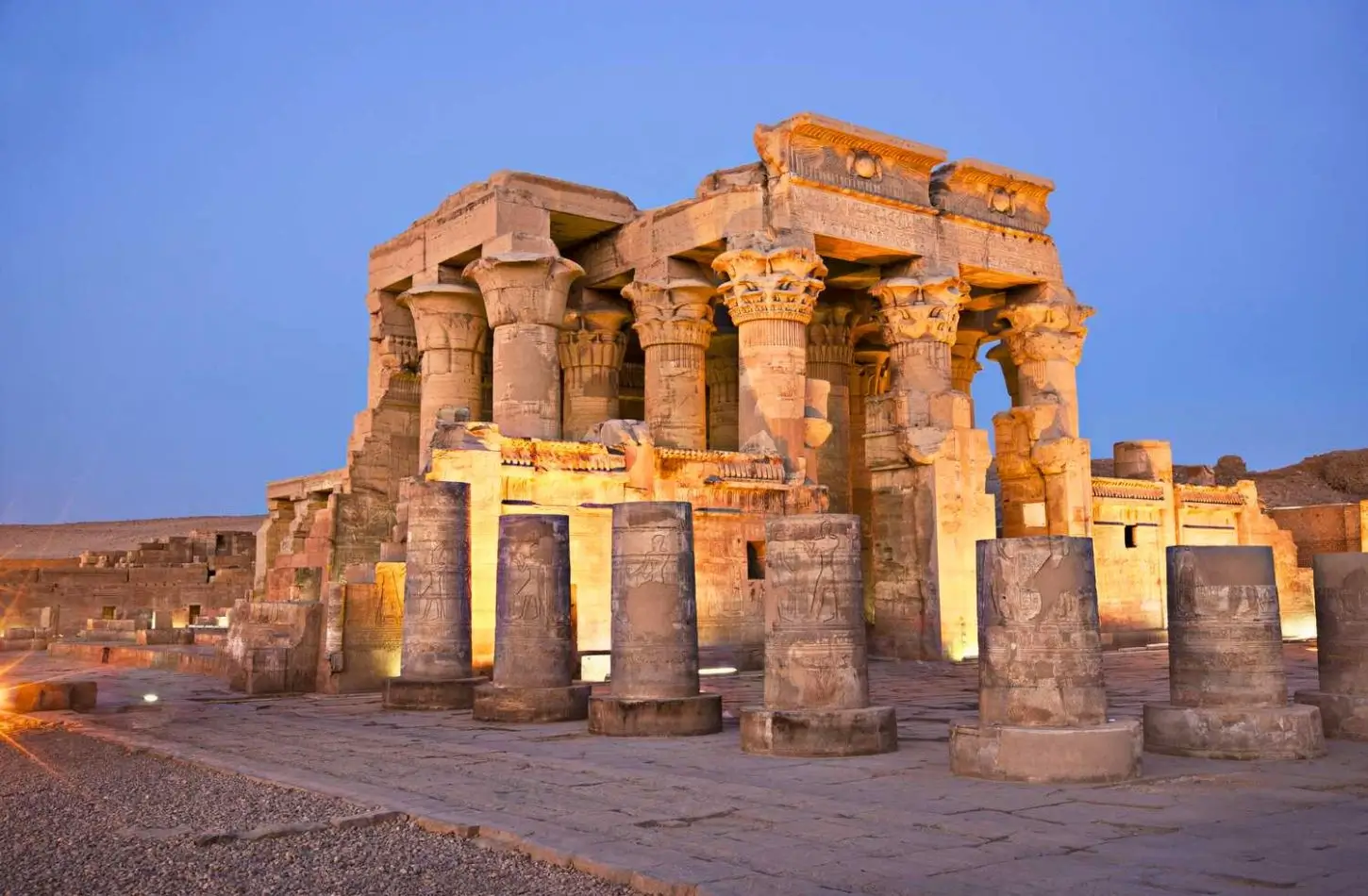
When you visit Egypt, don’t miss the Kom Ombo Temple. It’s a top spot for those who love history and culture. This temple is on the Nile River’s eastern bank in Upper Egypt. The temple is special because it honors two gods: Sobek, the crocodile, and Haroeris, the falcon. It was built during the Ptolemaic period. Many rulers helped make it what it is today.
Walking through the temple, you’ll see amazing carvings and hieroglyphics. You’ll learn about its history and why it was so important to ancient Egyptians. Kom Ombo Temple is a key spot for those who love ancient Egyptian culture. It’s by the Nile River. You can get there by the Nile or by road, making it a favorite on Nile cruises.
This site is famous for its unique design and the myths of the gods it celebrates. It’s a top tourist attraction in Egypt. Visitors can see its detailed carvings and learn about ancient Egypt‘s beliefs.
Visiting Kom Ombo Temple is a memorable experience. Its majestic architecture and rich history are impressive. The temple’s spot on the Nile makes it even more special, offering a peaceful and enriching visit for travelers.
The Architecture of Kom Ombo Temple
Exploring Kom Ombo Temple, you’ll see that its design is balanced, showing ancient Egyptian values. Its symmetrical layout stands out, unlike other temples.
The temple has two parts. One is for Sobek, the crocodile god. The other is for Haroeris, the falcon god. This makes Kom Ombo Temple special in Egypt’s history.
Like the nearby Edfu Temple in Egypt, it reflects the refined temple-building traditions of the Ptolemaic era, yet its double design makes it truly unique.
Design and Layout
The temple’s design features hypostyle halls and sanctuaries. These symbolize cosmic order and divine balance. Walking through, you’ll see detailed carvings and reliefs of ancient myths.
The temple’s layout shows ancient Egyptians’ engineering skills. Its symmetry is beautiful and reflects their beliefs in balance and harmony.
Kom Ombo Temple is a key landmark in Egypt. It draws visitors worldwide. Its architecture and history make it a top spot for those interested in Ancient Egypt.
The History Behind Kom Ombo Temple
Exploring Kom Ombo Temple is like stepping into a rich history. It began in the Ptolemaic period, under Ptolemy VI, around 170-145 BCE. This period is key to understanding the temple’s grandeur.
The temple sits on the Nile River. This spot was strategic and spiritually significant. It shows the cultural and religious life of ancient times.
Over time, the temple changed a lot. Rulers from the Roman era added to it. This mix of styles and gods shows the temple’s unique blend of cultures.
Historical Significance
Kom Ombo Temple is a window into ancient Egypt’s past. It was for Sobek, the crocodile god, and Horus, the falcon god. This shows the temple’s special place in ancient Egypt’s religion.
Many travelers combine their visit with other highlights such as Karnak Temple and the Valley of the Kings in Egypt, creating a deeper journey into the country’s ancient spiritual landscape.
Learning about Kom Ombo Temple’s history is vital. It helps us see its importance as a cultural and historical gem in Egypt. Its story reveals the many influences that made it what it is today.
Deities Worshipped at Kom Ombo Temple
The Kom Ombo Temple is famous for its worship of Sobek, the crocodile god, and Haroeris, a form of Horus. This unique setup is a key part of ancient Egyptian religion.
Sobek was seen as a god of fertility and linked to the Nile’s waters. His worship shows how vital the Nile was to ancient Egyptians. It symbolized protection and nature’s power. As you walk through the temple, you’ll see many pictures and writings of Sobek. They show his big role in ancient beliefs.
Haroeris was a form of Horus, representing justice and the sky’s power. His worship at Kom Ombo Temple shows the complex nature of ancient Egyptian religion. Haroeris stood for the divine right of rulers and justice and order.
The worship of Sobek and Haroeris at Kom Ombo Temple gives us a special look at ancient Egypt’s religion. When you visit this amazing site on your Egypt travel, you’ll learn more about these gods. The temple is a symbol of Ancient Egyptian temples‘ rich history. It shows the complex beliefs and practices of a civilization that still fascinates us today.
If you’re planning your journey, understanding what is included in a Nile cruise can help you make the most of your temple visits along the river.
Notable Inscriptions and Reliefs
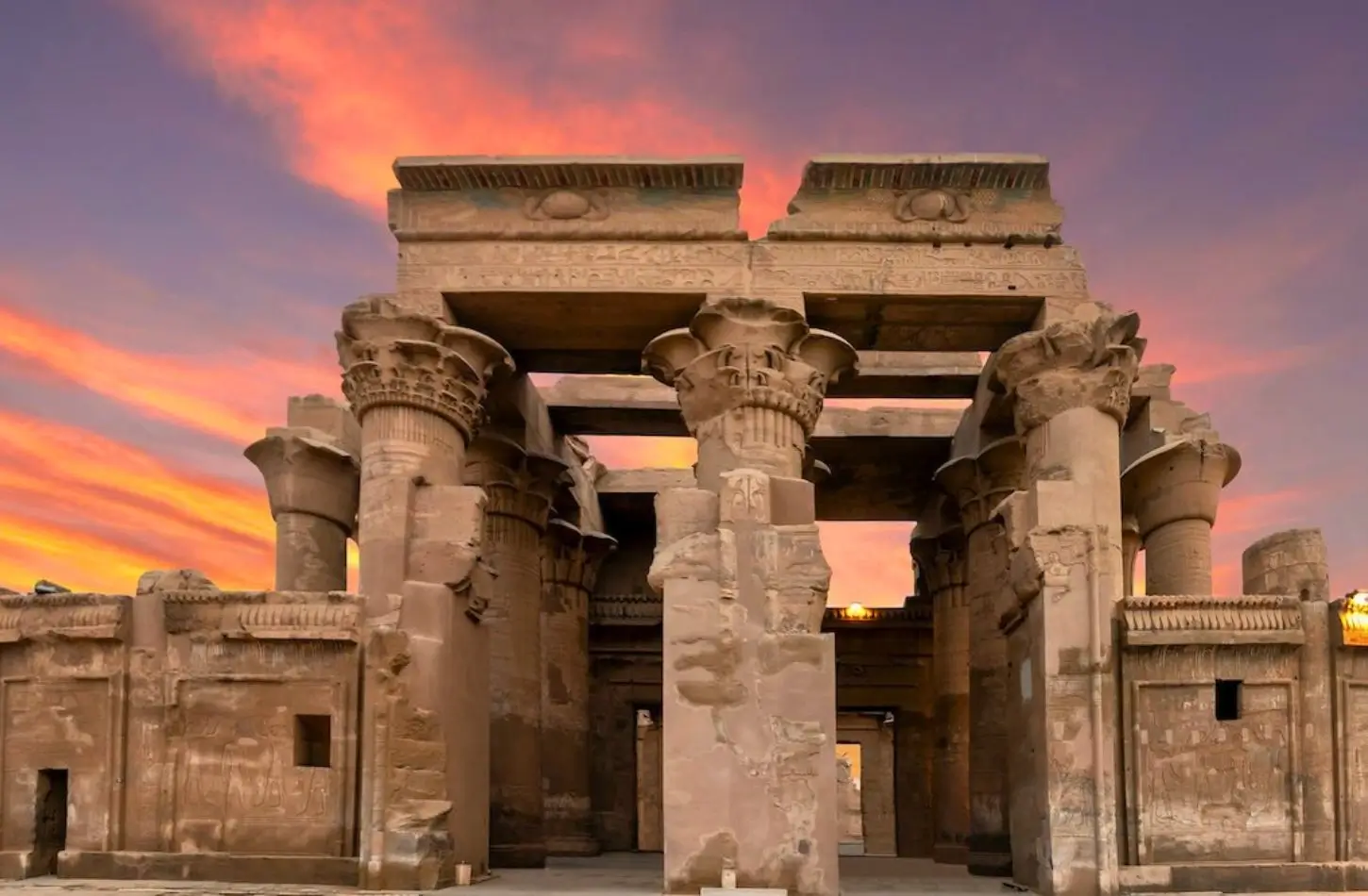
Kom Ombo Temple is famous for its many inscriptions and reliefs. These show the ancient Egyptians’ advanced knowledge and art skills.
The temple’s walls have detailed carvings. They show religious rituals and mythological scenes. These inscriptions and reliefs are not only beautiful but also give us a peek into ancient Egyptian culture and knowledge.
Medical Inscriptions and Reliefs
The medical inscriptions at Kom Ombo Temple are very interesting. They show the ancient Egyptians knew a lot about medicine, including surgery. The reliefs of surgical tools prove they had a deep understanding of medicine.
Visitors can see the carvings that show different medical procedures. This gives us a unique look at ancient medical practices. The medical inscriptions and reliefs make Kom Ombo Temple a historical site that still educates and amazes visitors. Exploring the temple lets you see its rich cultural heritage and historical value. Kom Ombo Temple is a key landmark in Egypt.
Visiting Kom Ombo Temple
The Kom Ombo Temple is a key landmark in Egypt. It’s open all year. It sits on the Nile’s banks, mixing history, architecture, and nature.
Think about the season when you plan to go. The temple is always open, but it’s cooler in winter. This makes it a great tourist attraction then. You can learn more about the best time for a Nile cruise to align your visit with ideal weather conditions.
Practical Information for Visitors
Guided tours are a great way to see the Kom Ombo Temple. They give you deep insights into its history and architecture. You’ll learn about the gods worshipped there too.
If it’s your first time exploring the Nile region, these first-time Nile cruise tips can help you prepare for a smoother and more enjoyable experience.
There are also basic amenities for a comfortable visit. You can see the temple’s detailed carvings and inscriptions. This helps you understand this ancient landmark better.
Guided Tours and Experiences
Join a guided tour at Kom Ombo Temple for a deeper look at its history and culture. These tours give you a full view of the temple’s design, the myths of Sobek and Haroeris, and the old religious practices.
Knowledgeable guides lead these tours. They share their knowledge and the stories behind the temple’s detailed carvings and writings. You’ll leave with a deeper understanding of this ancient place, making your visit unforgettable.
On your tour, you’ll see the temple’s special double design. It honors Sobek, the crocodile god, and Haroeris, the falcon god. Your guide will point out important artifacts and structures, like the sacred crocodile mummies and the well-preserved carvings.
Going on a guided tour lets you dive into Kom Ombo Temple’s world. You’ll also get a taste of Egypt’s lively culture and history. This immersive experience is perfect for anyone visiting Egypt and wanting to learn about its heritage.
Nearby Attractions to Explore
There’s more to see than just Kom Ombo Temple. The area is full of historical sites and temples along the Nile River.
While at Kom Ombo, check out other historical spots nearby. A Nile cruise is a great way to see Egypt’s history and culture.
Many archaeological sites and temples are around. You can see the Philae Temple on Philae Island or the Abu Simbel Temples. Both are key historical sites in Egypt.
Exploring the local area is rewarding. You’ll find history, culture, and the Nile’s beauty. It’s a trip that enriches your experience.
Other Activities in the Area
There’s more to do than just visit temples. Try a felucca ride on the Nile or visit local markets. It’s a way to learn about Egyptian culture and life.
Preserving Kom Ombo Temple for Future Generations
Exploring Kom Ombo Temple is more than just seeing a site. It’s a chance to see a part of Egypt’s rich culture. Keeping this temple safe is important so future generations can enjoy it too.
Work has been done to keep Kom Ombo Temple safe. This includes fixing it up and protecting it from nature. The Egyptian government and international groups have teamed up to save this important place.
Tourism helps keep the temple safe. It brings in money that helps with upkeep. But it also causes wear and tear. Finding a balance is crucial for the temple’s future.
By supporting good tourism and conservation, you help protect Kom Ombo Temple. This ensures it stays a key part of Egypt’s culture for many years.