

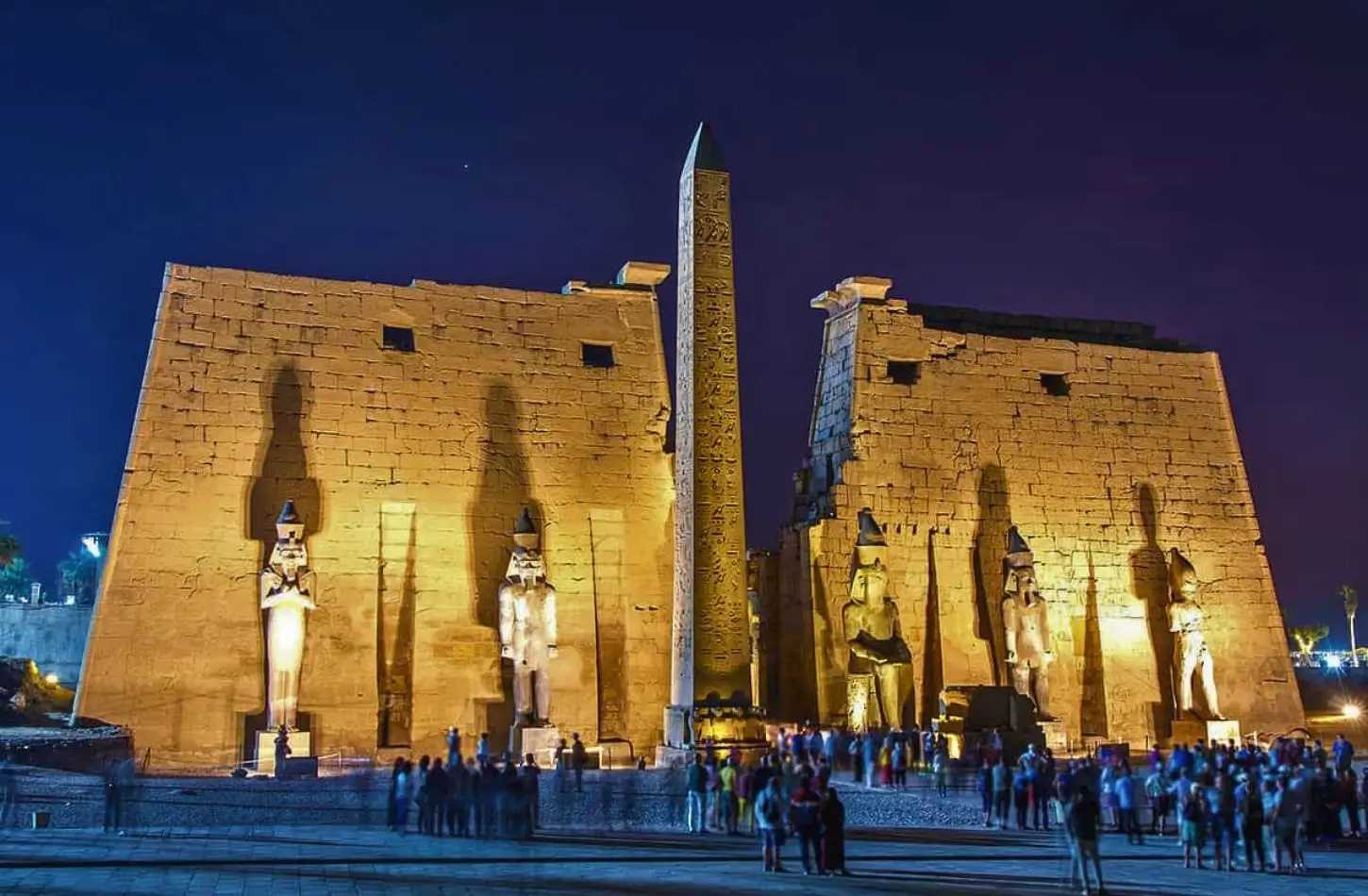
The Temple of Luxor in Egypt is one of the most captivating ancient monuments in the world, standing proudly on the east bank of the Nile River in the modern city of Luxor. Unlike many other temples built primarily for worship of a single god, Luxor Temple served a deeper ceremonial and political purpose tied to kingship, renewal, and divine power. Walking through its colossal gateways today, visitors can still feel the spiritual energy that once connected gods, pharaohs, and the people of ancient Thebes.
This temple is not just an archaeological site; it is a living record of Egypt’s golden age. From its monumental architecture to its richly decorated interiors, the Temple of Luxor in Egypt tells a story of faith, authority, and artistic brilliance that spanned centuries.
Historical Background of the Temple of Luxor in Egypt
Origins and Construction
The history of the Temple of Luxor in Egypt dates back to the New Kingdom, around 1400 BCE. Construction began during the reign of Pharaoh Amenhotep III, one of the most powerful rulers of the 18th Dynasty. He envisioned the temple as a sacred space dedicated mainly to Amun-Ra, the king of the gods, along with his divine consort Mut and their son Khonsu.
Later pharaohs expanded the temple, most notably Ramses II, who added massive statues, a grand pylon, and an open courtyard bearing his name. Each ruler left architectural and artistic marks, turning the temple into a layered historical document rather than a single-period monument.
Role in Ancient Thebes
In ancient times, Luxor was known as Thebes, the religious capital of Egypt. The Temple of Luxor in Egypt played a central role in the Opet Festival, one of the most important religious celebrations of the New Kingdom. During this annual event, statues of the Theban Triad were transported from Karnak Temple to Luxor Temple along a ceremonial route to symbolize the renewal of divine and royal power.
Purpose and Religious Significance
A Temple of Kingship and Renewal
Unlike other temples focused on daily rituals, the Temple of Luxor in Egypt was closely associated with the divine nature of the pharaoh. It was believed to be the place where the king was spiritually reborn and reaffirmed as the chosen ruler of the gods. This concept of renewal made Luxor Temple unique in both purpose and symbolism.
Connection to the Opet Festival
The Opet Festival was the heart of the temple’s religious function. During the celebration, priests carried sacred barques along the avenue linking Karnak and Luxor. The journey ended inside Luxor Temple, where rituals took place to renew the cosmic order and the pharaoh’s right to rule. This festival strengthened the bond between the gods, the king, and the people.
Architecture of the Temple of Luxor in Egypt
Overall Layout and Design
The architecture of the Temple of Luxor in Egypt reflects classical New Kingdom temple design while also showcasing creative variations. The temple is aligned from north to south, following the curve of the Nile rather than the traditional east-west orientation. This unusual alignment emphasizes its connection to Karnak Temple rather than the rising sun.
The structure unfolds through a sequence of monumental spaces, including pylons, courtyards, colonnades, and sanctuaries. Each area becomes progressively more sacred as one moves deeper into the temple.
The Great Pylon and Ramses II Statues
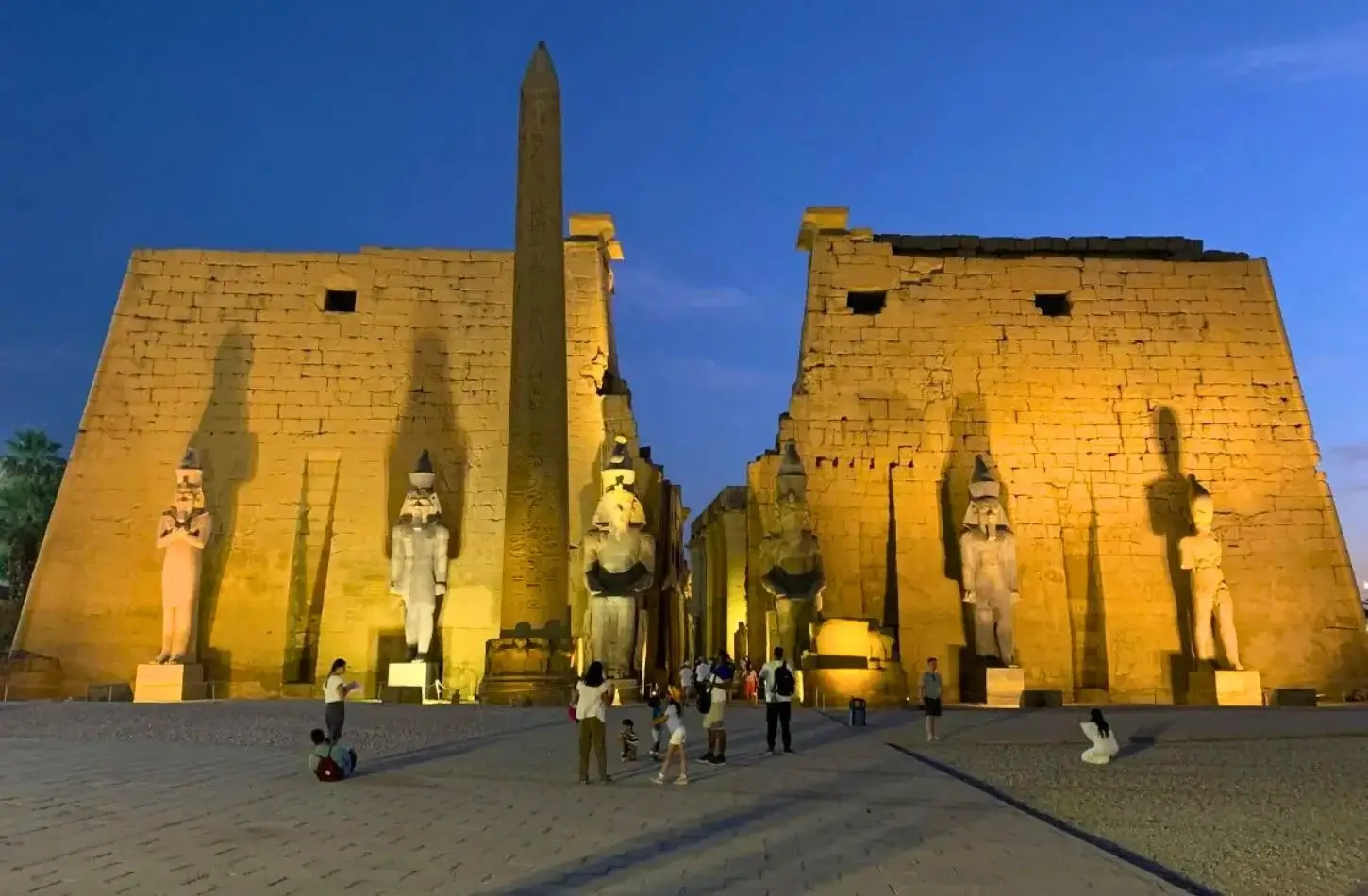
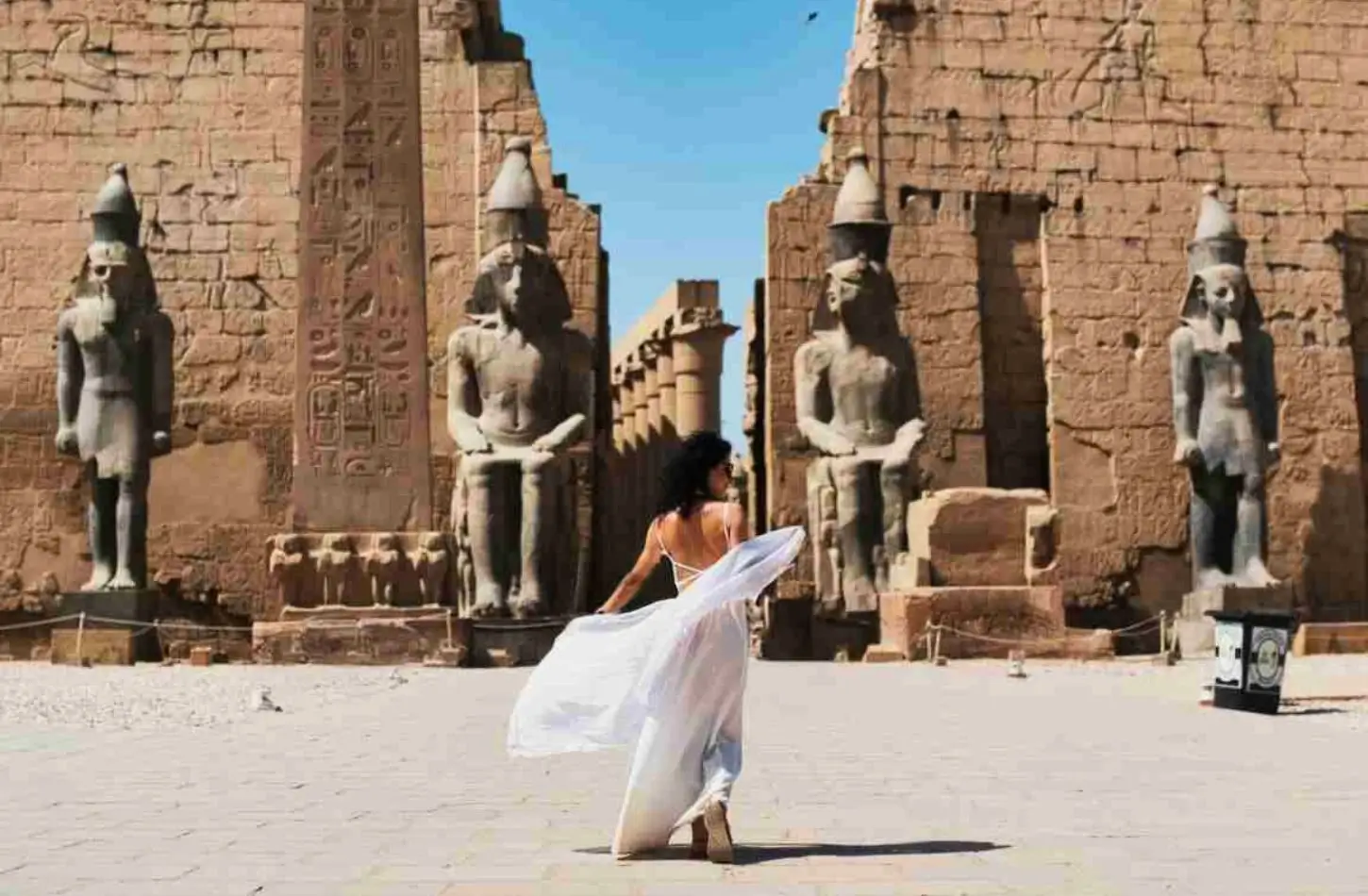
At the entrance stands the imposing pylon built by Ramses II. It features towering reliefs depicting the pharaoh’s military victories, including scenes from the Battle of Kadesh. Colossal seated statues of Ramses II once guarded the gateway, symbolizing royal strength and divine authority.
Originally, two obelisks flanked the entrance. Today, only one remains in place, while its twin stands in the Place de la Concorde in Paris, a reminder of the temple’s global historical influence.
The Grand Colonnade
One of the most striking architectural elements of the Temple of Luxor in Egypt is the colonnade built by Amenhotep III and completed by Tutankhamun and Horemheb. This corridor is lined with massive papyrus-shaped columns and decorated with reliefs showing the Opet Festival procession. The sense of scale and harmony here demonstrates the architectural mastery of ancient Egyptian builders.
Interior of the Temple of Luxor in Egypt
Inner Sanctuaries and Chambers
The interior of the Temple of Luxor in Egypt becomes more intimate and mysterious as visitors move toward the sanctuaries. These inner rooms were once accessible only to priests and the pharaoh. Here, rituals honoring Amun-Ra took place in an atmosphere of incense, chants, and flickering torchlight.
The sanctuaries contain finely carved reliefs and inscriptions that preserve hymns, offerings, and scenes of divine interaction. Despite centuries of wear, many details remain remarkably clear.
Roman and Islamic Influences Inside the Temple
One fascinating aspect of the interior is how it reflects layers of history beyond ancient Egypt. During the Roman period, parts of the temple were converted into a military fortress and even a church. Frescoes from this era can still be seen on some walls.
Later, a mosque was built within the temple complex, which remains active today. This continuous use of the site highlights how the Temple of Luxor in Egypt has remained spiritually significant for thousands of years.
Decorative Art and Symbolism
Wall Reliefs and Hieroglyphs
The walls of the Temple of Luxor in Egypt are covered with intricate reliefs and hieroglyphic texts. These carvings were not merely decorative; they served as sacred records of rituals, festivals, and royal achievements. The vivid scenes of gods interacting with pharaohs reinforce the idea of divine kingship.
Color and Artistic Techniques
Although much of the original paint has faded, traces of vibrant reds, blues, and yellows can still be seen in sheltered areas. These colors once brought the temple to life, creating a powerful visual experience that complemented its religious functions.
Interesting Facts About the Temple of Luxor in Egypt
A Temple Within a City
Unlike many ancient temples located in remote areas, the Temple of Luxor in Egypt sits in the heart of a modern city. This unique setting creates a striking contrast between ancient stone monuments and contemporary urban life.
Night Illumination Experience
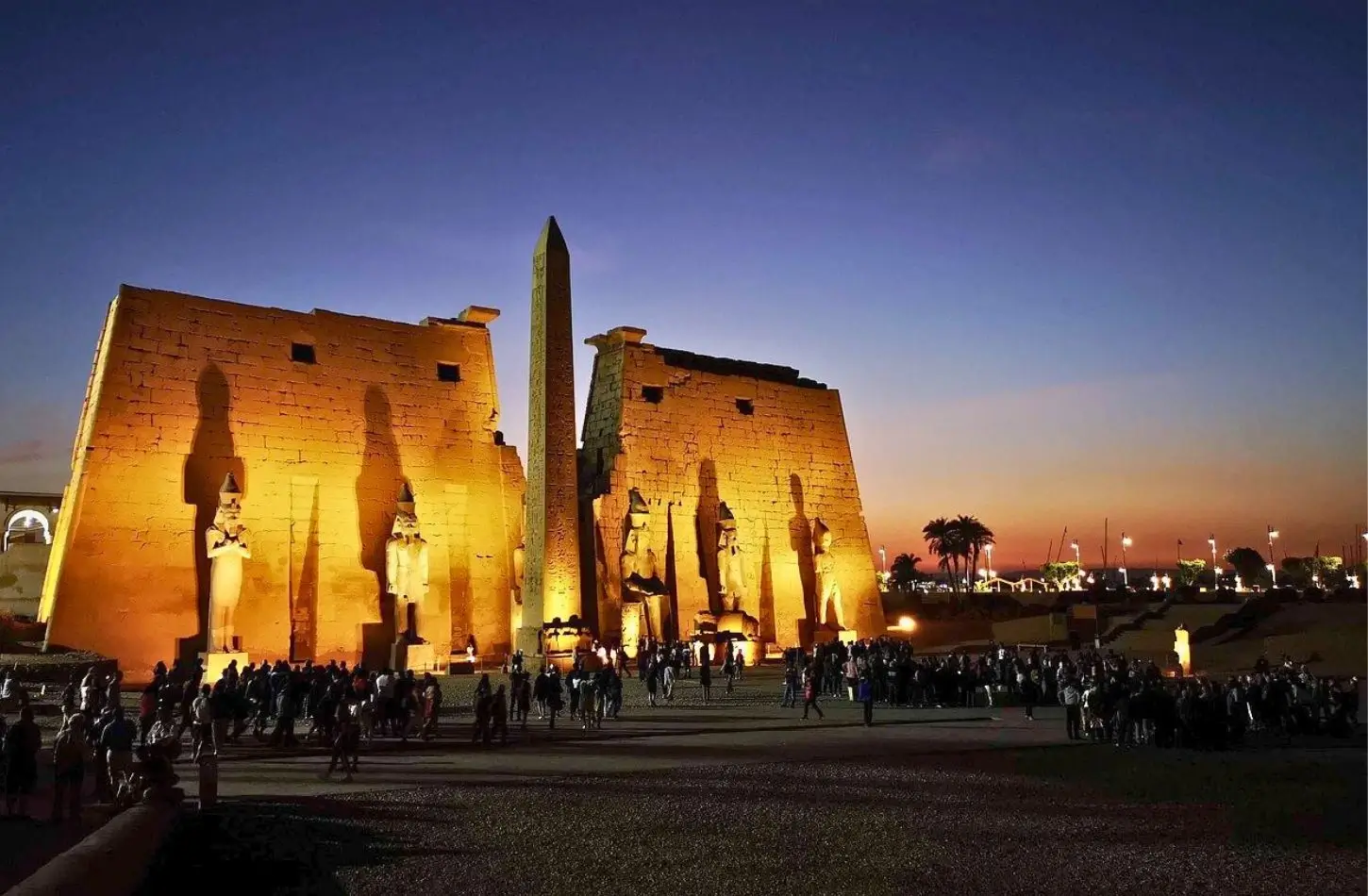
The temple takes on a magical atmosphere at night when it is illuminated. The lighting highlights architectural details and reliefs, offering a completely different perspective compared to daytime visits.
Part of a Greater Sacred Landscape
Luxor Temple was never meant to stand alone. It was part of a vast sacred network that included Karnak Temple and the Avenue of Sphinxes. This processional route symbolized unity between divine realms and earthly rule.
The Temple of Luxor in Egypt Today
Preservation and Tourism
Today, the Temple of Luxor in Egypt is one of the most visited archaeological sites in the country. Ongoing conservation efforts aim to protect its structures from environmental damage and the effects of mass tourism. Restoration projects have revealed original carvings and reopened ancient pathways, enhancing the visitor experience.
Cultural and Educational Importance
Beyond tourism, Luxor Temple serves as an open-air classroom for historians, archaeologists, and travelers. It offers invaluable insights into ancient Egyptian religion, art, and political ideology, making it a cornerstone of Egypt’s cultural heritage.
Why the Temple of Luxor in Egypt Still Matters
The enduring importance of the Temple of Luxor in Egypt lies in its ability to connect past and present. It is not merely a relic of a vanished civilization but a testament to humanity’s quest for meaning, power, and beauty. Every column, relief, and sanctuary reflects the beliefs and ambitions of a society that shaped world history.
For modern visitors, exploring Luxor Temple is more than sightseeing. It is an immersive journey into ancient thought, where architecture, religion, and art unite to tell a timeless story.
Conclusion
The Temple of Luxor in Egypt stands as one of the most remarkable achievements of ancient civilization. Through its rich history, symbolic purpose, breathtaking architecture, and layered interior, it offers a complete picture of life and belief in ancient Egypt. Whether admired for its monumental scale or its spiritual depth, Luxor Temple continues to inspire awe and curiosity.
As you walk through its grand halls and sacred chambers, you are not just observing history—you are stepping into a space where gods and kings once met, and where the legacy of ancient Egypt still lives on.
FAQ
Q. How is the Temple of Luxor connected to Karnak Temple?
The Temple of Luxor was linked to Karnak Temple by the Avenue of Sphinxes, a ceremonial road used during the Opet Festival. Along this route, statues of the gods were carried in sacred processions to symbolize renewal, unity, and divine harmony.
Q. Is the Temple of Luxor open to visitors today?
Yes, the Temple of Luxor is open to visitors throughout the year and is one of Egypt’s most accessible ancient monuments. It is especially popular in the evening, when professional lighting enhances the carvings, columns, and overall atmosphere of the site.
Q. What is the best time to visit the Temple of Luxor?
The best time to visit the Temple of Luxor is early in the morning or after sunset, particularly during warmer months. These times offer more comfortable temperatures, fewer crowds, and better lighting for photography and exploration.
Q. How long does it take to visit the Temple of Luxor?
A typical visit to the Temple of Luxor takes between one and two hours. This allows enough time to walk through the main courtyards, colonnades, and inner chambers while appreciating the history, architecture, and inscriptions.