

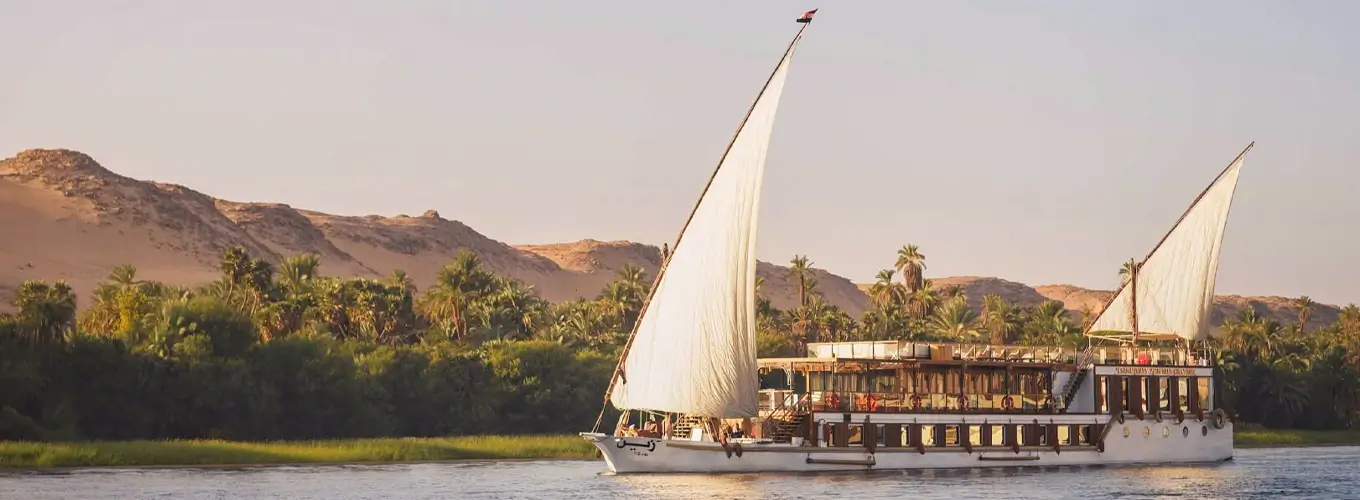
You may have pictured quiet decks and the hush of sails at golden hour. That feeling can stay with you long after a day ends.
On this page, Nile Cruise Offers walks you through the intimate world of dahabiya Nile travel. You’ll learn how these small boats differ from bigger ships and why many U.S. travelers choose this slow, personal way to see Upper Egypt.
History ties these vessels to 19th-century grand tours, yet modern comforts now include air-conditioned cabins and chef-prepared meals. Typical trips run four to five nights, though longer journeys are common for those who crave deeper exploration.
Expect calm decks, fewer fellow guests, and stops at lesser-known sites like El Kab and Gebel el-Silsila. We’ll also show how to match time and budget, plus tips for choosing the right itinerary on Nile Cruise Offers.
Key Takeaways
- Small-ship travel that blends history with modern comfort.
- Quiet pace and personal service are ideal for mindful travelers.
- Typical sailings last 4–5 nights; longer options available.
- Access to off-the-beaten-path sites and calmer decks.
- Practical buying tips to plan time, season, and budget.
What Is a Dahabiya Nile Cruise?
Imagine gliding past riverbank palms on a small, graceful craft that favors calm over crowd. On Nile Cruise Offers, you’ll find these twin-masted vessels carry just 8–20 guests in 4–8 cabins. They rely mainly on wind and sails, with a tug used when needed for steady progress.
The scale matters. Fewer cabins mean personal service, flexible timing, and access to tiny moorings that larger boats skip. Typical routes run from Luxor to Aswan or the reverse, with stops at both famous temples and quiet villages.
Onboard comforts often include air-conditioned en-suite cabins, shaded sun decks, and fresh meals prepared by an onboard chef. High crew-to-guest ratios make daily plans relaxed and tailored to your pace.
- Quiet, wind-driven sailing with unobtrusive engine support
- Intimate atmosphere and curated shore visits
- Simple modern comforts without large-ship crowds
| Feature | Capacity | Power | Common Route |
| Small sailing boat | 8–20 guests | Wind + tug | Luxor–Aswan |
| Cabins & service | 4–8 cabins | En-suite, AC | Temple stops & villages |
| Experience | High crew ratio | Shaded deck lounges | Slow, curated visits |
The Romance and History Behind the Dahabiya
Step aboard and feel river life stretch slow, like sunlight over carved stone. The name comes from the Arabic for “gold,” a nod to ornate state barges of old.
In the 19th century, these elegant vessels carried grand tourists from Cairo toward Upper Egypt. Trips often ran many weeks, letting you linger at temple sites and small river ports. Baedeker praised them for their freedom and independence, while later advancements in steam technology and the Aswan railway changed travel habits.
- Romance born in the 19th century: slow passages past palm-lined banks and ancient temples.
- Design links to gilded barges—wood finishes and graceful lines remain.
- Modern revival: boutique, sail-powered boats that return quiet, wind-led life to the river.
Today, Nile Cruise Offers helps you find vessels that blend history with modern comforts. You get hand-tended sails, hush on deck, and cabins with AC and en-suite baths. Choosing this option means selecting a mode of travel that prioritizes presence, detail, and unhurried discovery.
| Era | Feature | Experience |
| 19th century | Grand, long voyages | Slow, ceremonial travel past temples |
| Early 20th century | Steamboats & rail | Faster routes, less solitude |
| Late 20th–now | Boutique sail revival | Wind-driven calm with modern comforts |
Dahabiya vs. Modern Nile Cruise Ships: Which Fits Your Travel Style?
If you prefer quiet mornings and flexible landings, steer toward an intimate sailing option. On small boats, you get calm decks, al fresco dining, and higher crew attention that remembers names and routines.
Large cruise ships offer pools, shows, and multiple restaurants. They carry 100–300 passengers and follow fixed itineraries, which suits travelers who want hotel-like facilities and steady schedules.
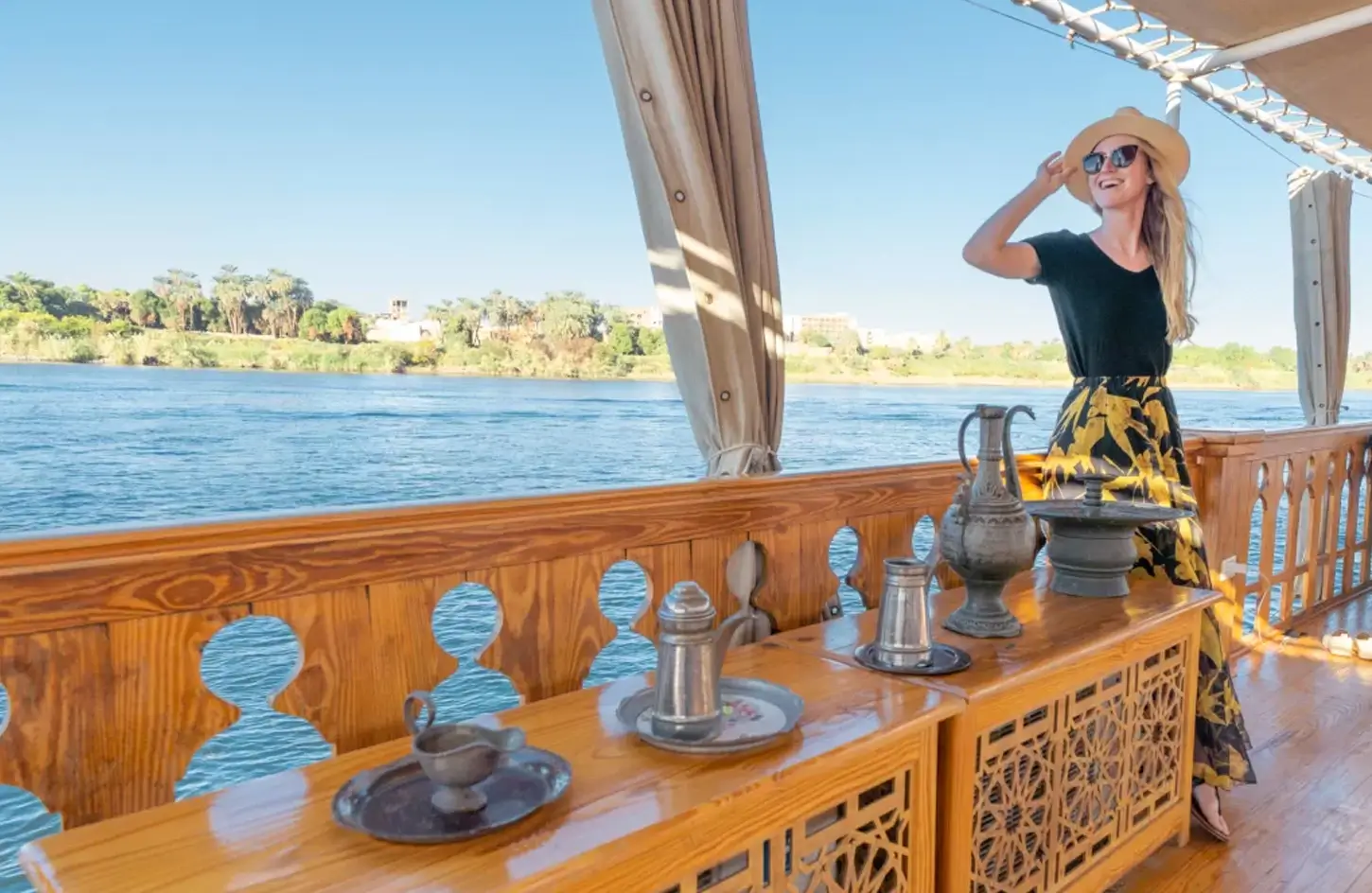
- Feel: quiet, tailored days on a Dahabiya Nile cruise versus lively, amenity-rich ships.
- Capacity: 8–20 guests on a classic boat compared to 100–300 on big cruise ships.
- Access: shallow draft lets smaller vessels moor at El Kab or Gebel el-Silsila when larger hotels cannot.
- Service & comfort: personalized service and shaded lounges versus multiple dining venues and pools.
Both ways have merit. Use Nile Cruise Offers to compare dates, inclusions, and cabin choices so you pick the service level and comfort that match your pace.
| Feature | Small Sailing Option | Large Cruise Ships | Best For |
| Passengers | 8–20 | 100–300 | Intimacy vs. social scene |
| Itinerary | Flexible stops, quiet timing | Fixed schedule, set excursions | Unhurried visits vs. planned transit |
| Onboard Comfort | Al fresco meals, shaded lounges | Pools, multiple restaurants | Personal service vs. facilities |
| Access | Small moorings, local villages | Main ports only | Off-the-beaten-path sites vs. major spots |
Itineraries and Routes: Where You’ll Sail and What You’ll See
Start your days with slow river miles, then step ashore to quiet ruins and village lanes.
The classic itinerary runs between Luxor and Aswan, or the reverse, with each day set for sailing and guided stops. Typical trips last 4–5 nights for first-timers; 7+ nights suit deeper cultural time or private charters.
- Shallow draft access lets the boat reach small villages and islands larger vessels miss.
- Expect major temples plus quieter sites like El Kab and Gebel el-Silsila, where crowds thin and atmosphere rises.
- Onboard Egyptologists and crew often time temple visits to avoid peak hours for calmer, richer tours.
- Deck hours, tea breaks, and short excursions balance each day so your journey feels unhurried.
| Route | Common Stops | Best For |
| Luxor → Aswan | Valley temples, El Kab, Gebel el-Silsila | First-time visitors, 4–5 nights |
| Aswan → Luxor | Quiet villages, small moorings, island walks | Slow travel, 7+ nights |
| Private charter | Custom stops, extra time ashore | Tailored experiences via Nile Cruise Offers |
Think about cabins, sunrise or shaded spots, and how many days you can spare. Use Nile Cruise Offers to match length, crew style, and the way you want to explore.
Onboard Experience: Cabins, Dining, and Daily Life Under Sail
Onboard life blends calm routines with attentive service, making each day feel gently curated. You’ll find air-conditioned, en-suite cabins with large windows that frame the river and let morning light in. Some boats offer suites with private terraces if you want extra space and privacy.
Dining centers on fresh, chef-prepared meals. Breakfasts are light and relaxed. Evening table d’hôte or à la carte dinners mix local spices with familiar favorites. Tell the team about dietary needs before you travel; most menus can adapt.
Days follow a slow rhythm: tea at sunrise, mid-day sailing, short guided stops, then easy evenings swapping stories with fellow guests. The high crew-to-guest ratio means service feels personal. A resident Egyptologist often joins shore visits for a richer context.
- Cabins: AC, en-suite bathrooms, large windows, optional suites with terraces.
- Meals: fresh, deck service, special diets on request; chef onboard.
- Daily life: shaded lounges, sunbeds, limited Wi‑Fi—ideal for digital downtime.
| Onboard Feature | What to Expect | Practical Tip |
| Cabin layout | Comfortable storage, plugs, and simple housekeeping | Pack adaptable chargers and light luggage |
| Dining style | Shared meals, attentive service, local ingredients | Notify dietary needs before boarding |
| Guest life | Quiet corners, shaded lounges, books, and conversation | Use Nile Cruise Offers to compare deck plans |
Pricing and Value Today: What’s Included and What’s Not
Knowing typical fares today helps you pick nights and days that match your budget. Standard 4-day trips run about $750–$1,200 per person; standard 7-day options fall near $1,500–$2,200. Luxury 4-day rates sit around $1,200–$1,800, while luxury 7-day packages range $2,500–$3,500.
Private charters for 4–7 days cost roughly $7,000–$15,000 for the full boat. Prices rise in high season (Oct–Apr) and dip in shoulder months. Cabin category, included extras, and itinerary choices also change final totals.
Most offers include an en-suite cabin, all meals prepared by an onboard chef, tea/coffee, guided excursions with an Egyptologist, many entrance fees, and transfers. Common exclusions: international flights, alcohol and soft drinks, tips, and personal purchases. Tip norms run $10–$20 per person per day.
- Compare standard vs luxury for space and service differences.
- Weigh 4–5-night trips against 7-night journeys for depth vs cost.
- Use Nile Cruise Offers to view full inclusions line by line and find promotions.
| Package | Typical Price (per person) | Included | Excluded |
| Standard (4 days) | $750–$1,200 | Cabin, meals, guide, many fees, transfers | Flights, alcohol, tips, extras |
| Luxury (7 days) | $2,500–$3,500 | Upgraded cabin, chef meals, guide, most fees, transfers | Flights, premium drinks, tips, personal shopping |
| Private charter (4–7 days) | $7,000–$15,000 (full boat) | Custom itinerary, full boat, crew, chef, transfers | Flights, group tips, extras |
How to Choose the Right Dahabiya for You
Match cabin comfort, onboard service, and itinerary pace to the way you want to spend your days. Start by deciding between private charter control or shared sailing if you prefer meeting new companions.
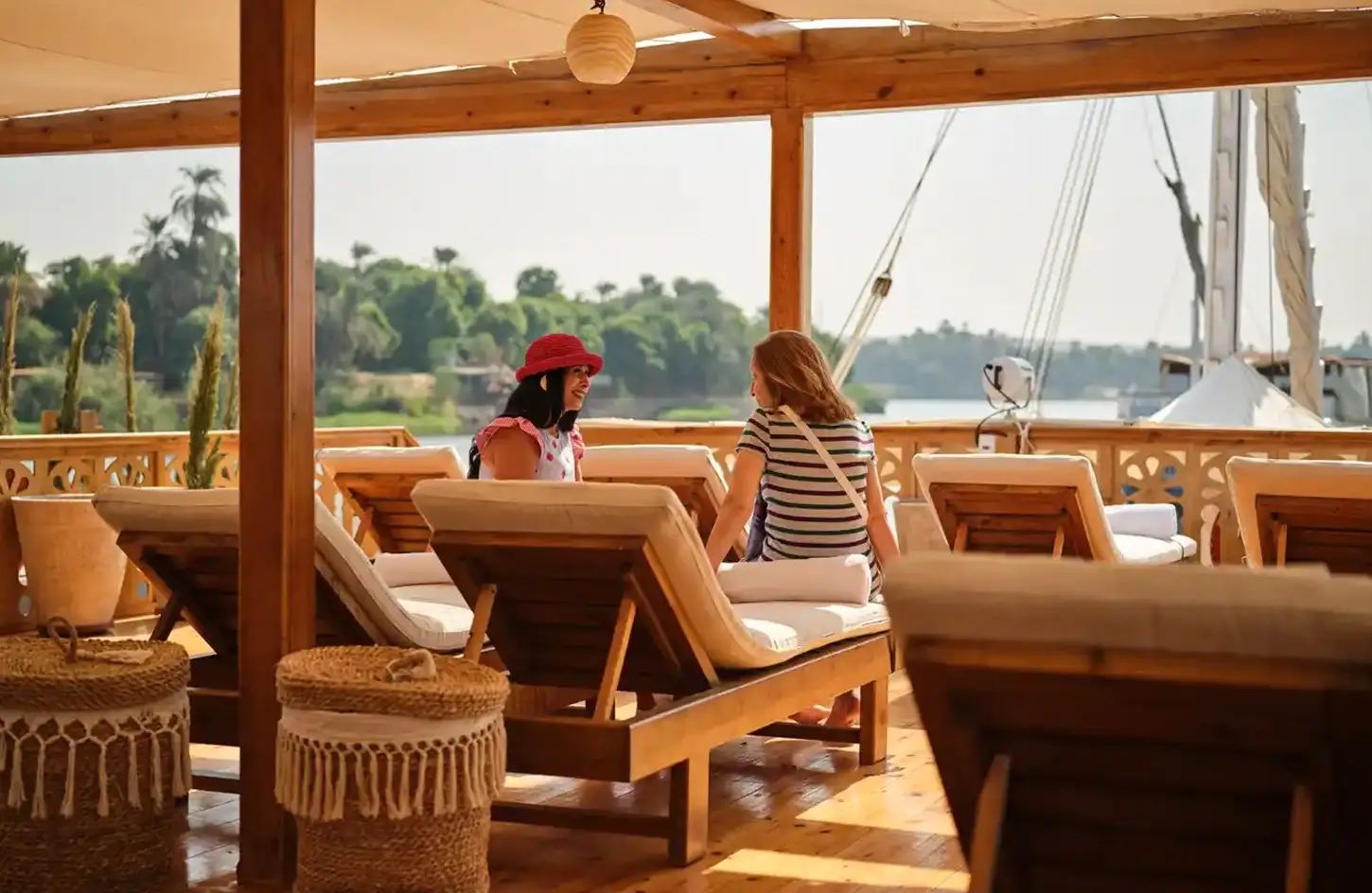
Check guest capacity: fewer cabins usually mean quieter decks and more personalized service. Look for air-conditioned, en-suite cabins, ample deck shade, and flexible dining options.
- Ask about an onboard egyptologist and tour pacing for deeper context at major sites.
- Confirm sample itineraries and whether lesser-visited stops like El Kab and Gebel el-Silsila appear on your dates.
- Consider your group’s needs—families or special events may benefit from a private option.
- Tell Nile Cruise Offers about dietary or accessibility needs well in advance.
| Decision | Consider | Why it matters |
| Charter vs shared | Privacy, cost, group size | Control itinerary and pace |
| Boat size | Cabins, guest capacity | Service level and deck quiet |
| Amenities | AC, en-suite, dining | Comfort during travel |
| Itinerary stops | El Kab, Gebel el-Silsila inclusion | Access to quieter sites |
Use Nile Cruise Offers to shortlist options, compare inclusions, and lean on our guide advisors to balance service, cabins, and route for the ideal dahabiya nile cruise experience.
When to Go and What to Pack for a Smooth Journey
Pick a travel time that balances comfortable weather with good value and calm days. Aim for October through April when cooler temperatures make deck hours pleasant. Nights in January can get chilly, so pack layers for dawn and evening.
Summer brings deep discounts but very high heat. If you travel then, choose breathable fabrics, strong sunscreen, and a wide-brim hat. Expect limited Wi‑Fi aboard; download maps, books, and playlists before you leave.
- Aim for October–April for milder weather and comfortable deck time; bring a light jacket for breezy evenings.
- Summer travelers: pack breathable clothing, sunscreen, and a hat for hot afternoons.
- For sailing days bring layers, sunglasses, comfy walking shoes, and a small day bag for water and a camera.
- Download media beforehand; onboard connectivity is often limited—treat it as part of the adventure.
- Carry cash (Egyptian pounds) for tips and small buys in riverside villages.
- Wind can vary; on low-wind days, a tug may assist, yet the calm rhythm of the boat remains.
- For families, bring sun protection, snacks, and simple games to make deck time easy for all ages.
- Add a warm layer for cool nights and morning starts, and bring small comforts like your favorite tea and a power bank.
| Season | Comfort | Packing Tip |
| Oct–Apr | Cool days, cool nights | Layers, light jacket |
| Summer | Hot days, warm nights | Breathable fabrics, sun gear |
| Any time | Limited Wi‑Fi, cash is useful | Download media, carry local currency |
Before you pack, ask Nile Cruise Offers for date-specific advice and which items the boat already provides. That saves space and makes your trip smoother from embarkation to last tea on deck.
Conclusion
Finish your journey with small-boat rhythms, expert guiding, and easy evenings on deck. A dahabiya nile offers a rare blend of calm, culture, and deep connection that many travelers seek.
You’ll explore temples and riverside villages with an Egyptologist, then return to chef-prepared meals and quiet night skies. Compared with big nile cruise options, you trade spectacle for substance: fewer people, more flexibility, and richer moments ashore.
Whether you have several nights or a full week, the experience feels unhurried and rewarding. Visit Nile Cruise Offers to browse sailings, compare inclusions, and let our specialists match your dates, budget, and style for the ideal dahabiya nile cruise.
FAQ
Q: What can you expect aboard a traditional dahabiya sailing experience?
A: You’ll enjoy a slow, intimate voyage aboard a traditional wooden sailing boat modeled on 19th-century designs. Expect fewer guests, spacious decks, and a relaxed pace that lets you watch riverside life, small villages, and ancient temples pass by while staff prepare fresh meals and attend to your needs.
Q: How does this type of sailing compare with large modern cruise ships?
A: This style focuses on calm, personalized service instead of entertainment and crowds. Cabins are fewer and often more charming; shore stops are more flexible; and the atmosphere feels like a private floating guesthouse rather than a resort. If you value quiet, cultural immersion, this fits better than big ships that carry hundreds.
Q: Which routes and temple stops are common on these journeys?
A: Typical itineraries include stretches between Luxor and Aswan with visits to Kom Ombo, Edfu, and temples around Luxor such as Karnak and the Valley of the Kings. Trips range from short day sails to multi-night journeys that let you explore villages and archaeological sites at a leisurely pace.
Q: What are cabin and dining arrangements like during the voyage?
A: Cabins are cozy and often feature wood finishes, private bathrooms, and simple comforts. Meals are prepared on board by a chef, emphasizing Egyptian and international flavors, with tea and snacks available throughout the day. Dining often takes place alfresco to enjoy river views and evening breezes.
Q: What costs are usually included, and what should you budget for separately?
A: Most packages include accommodation, meals, basic drinks, crew service, and guided shore excursions. Extras can include alcoholic beverages, private transfers, gratuities, specialty tours, and museum or temple entrance fees, so budget accordingly.