

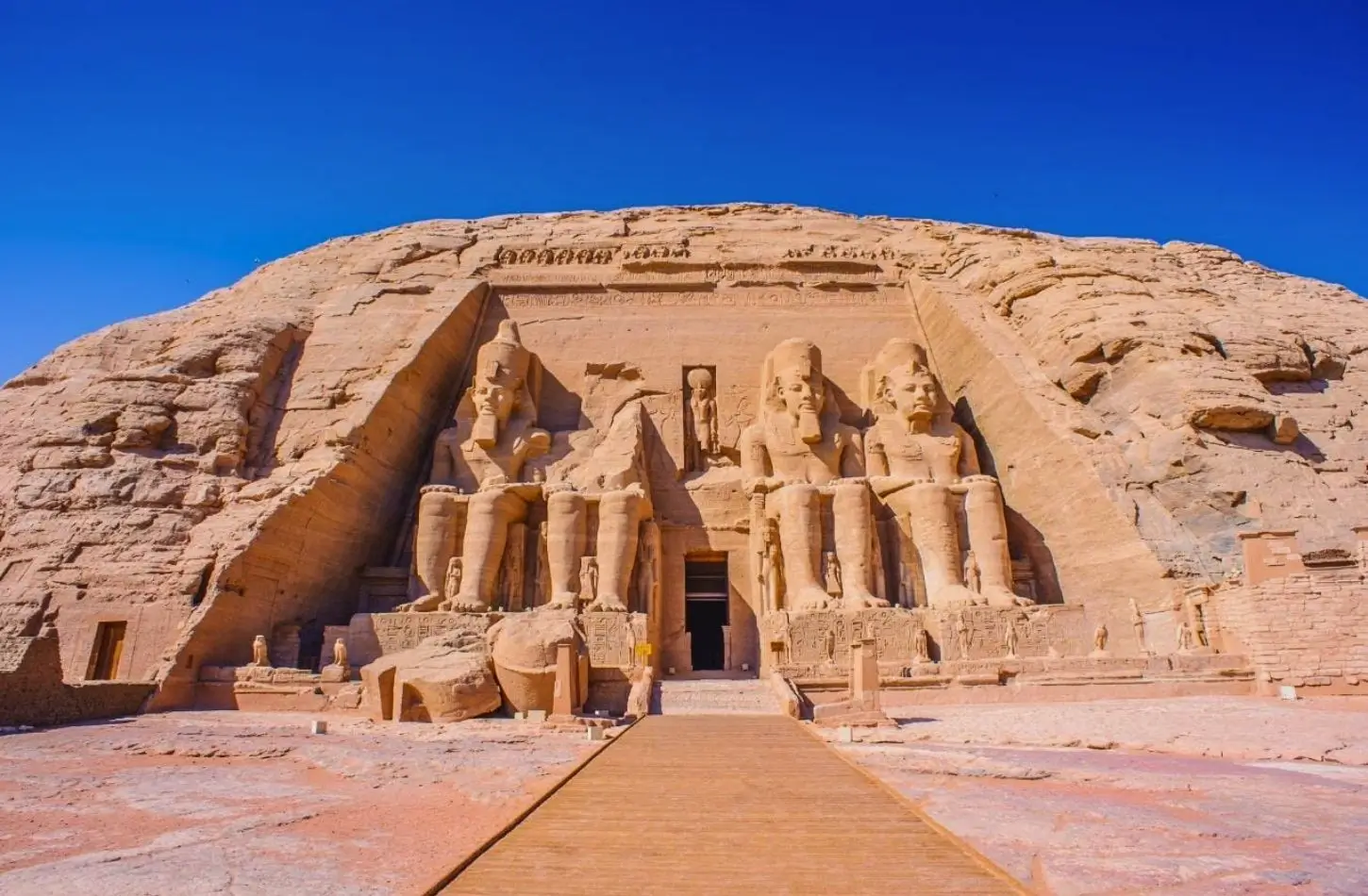
The Abu Simbel Temple in Egypt stands as one of the most extraordinary monuments ever created by ancient civilization. Carved into a solid rock cliff more than 3,000 years ago, this temple reflects the ambition, artistic brilliance, and spiritual devotion of ancient Egypt. Its massive statues, remarkable interior, and precise solar alignment make it one of the most fascinating historical sites in the world.
Located in southern Egypt, this iconic temple attracts visitors who want to experience the greatness of ancient Egyptian architecture and understand the powerful legacy of Pharaoh Ramses II. Whether you are interested in history, design, or culture, the temple offers a unique journey into the past.
Where Are the Abu Simbel Temples Located?
The Abu Simbel Temples are located in southern Egypt, about 280 kilometers from Aswan, near the border with Sudan. They stand on the western bank of Lake Nasser, one of the largest artificial lakes in the world. Originally, the temples were carved into a cliff overlooking the Nile River in ancient Nubia. However, during the 1960s, the construction of the Aswan High Dam created Lake Nasser, which threatened to submerge the temples. In an extraordinary international rescue mission led by UNESCO, the temples were carefully relocated to higher ground, preserving one of Egypt’s greatest treasures for future generations.
Many travelers visit the temples as part of a guided Abu Simbel Tour or a Nile cruise itinerary. Wiches often include transportation and a professional guide to enrich the experience.
No matter how you choose to travel, reaching Abu Simbel allows you to witness one of the most iconic and awe-inspiring monuments of ancient Egypt.
Why Were the Abu Simbel Temples Built?
The Abu Simbel Temple in Egypt was built by the powerful pharaoh Ramses II during the 13th century BCE. Ramses II ruled Egypt for over 60 years and was known for his military strength, political leadership, and impressive building projects.
The main purpose of the temple was to demonstrate the pharaoh’s power and divine authority. It was strategically built in Nubia to impress Egypt’s southern neighbors and reinforce Egyptian dominance in the region. The temple also served as a place of worship dedicated to the gods Amun, Ra-Horakhty, and Ptah, as well as Ramses himself, who was considered a living god.
The temple of Abu Simbel symbolized both political power and religious devotion, ensuring that Ramses II’s legacy would live forever.
Architecture and Exterior Design
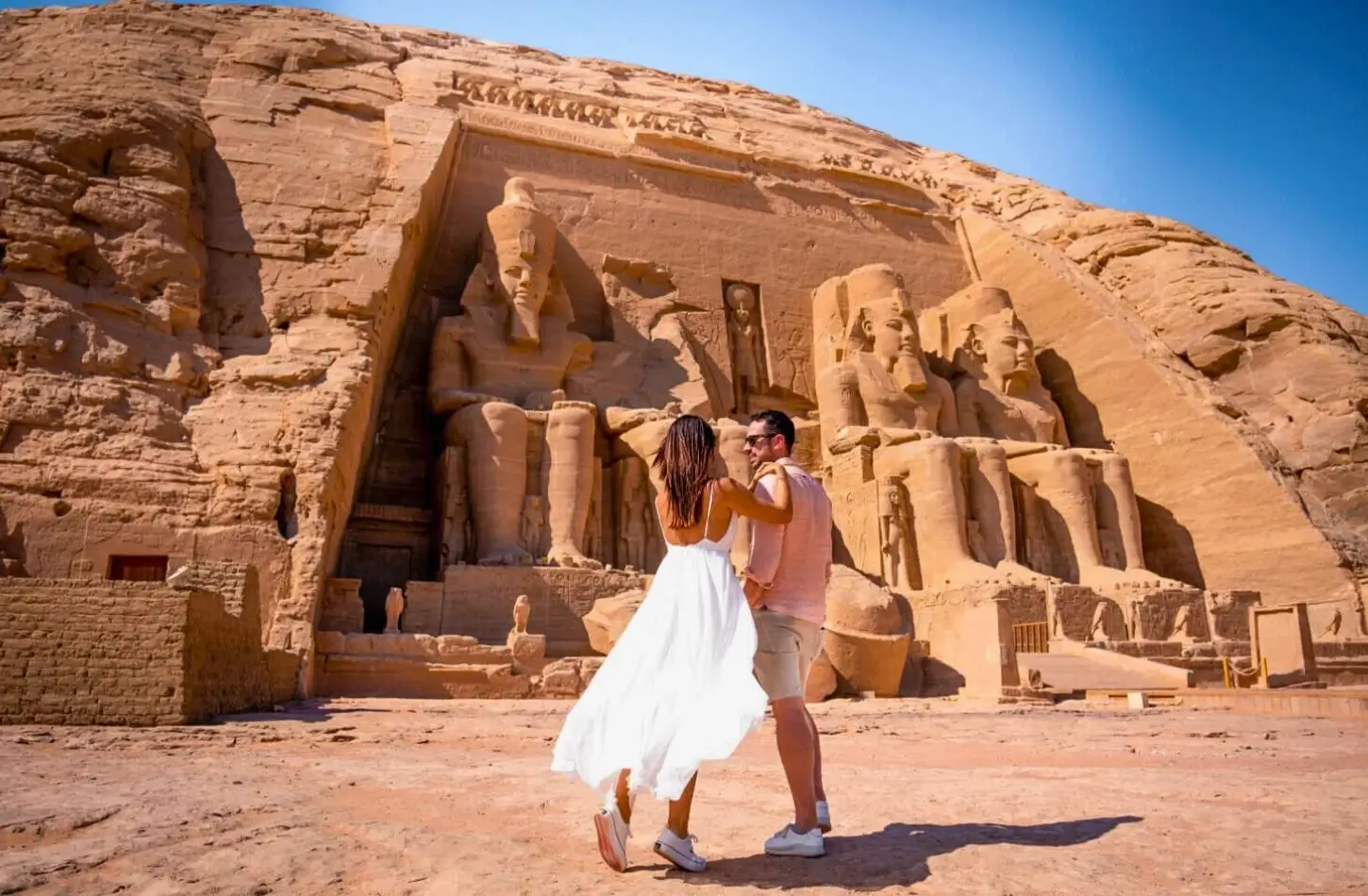
The architecture of the Abu Simbel Temple in Egypt is one of its most impressive features. The temple facade is dominated by four enormous seated statues of Ramses II, each standing about 20 meters tall. These statues represent the pharaoh wearing the double crown of Upper and Lower Egypt, symbolizing his complete authority over the kingdom.
The statues were carved directly into the rock with incredible precision. Smaller figures at their feet represent members of the royal family, including Ramses’ wife and children, highlighting the importance of family and royal continuity.
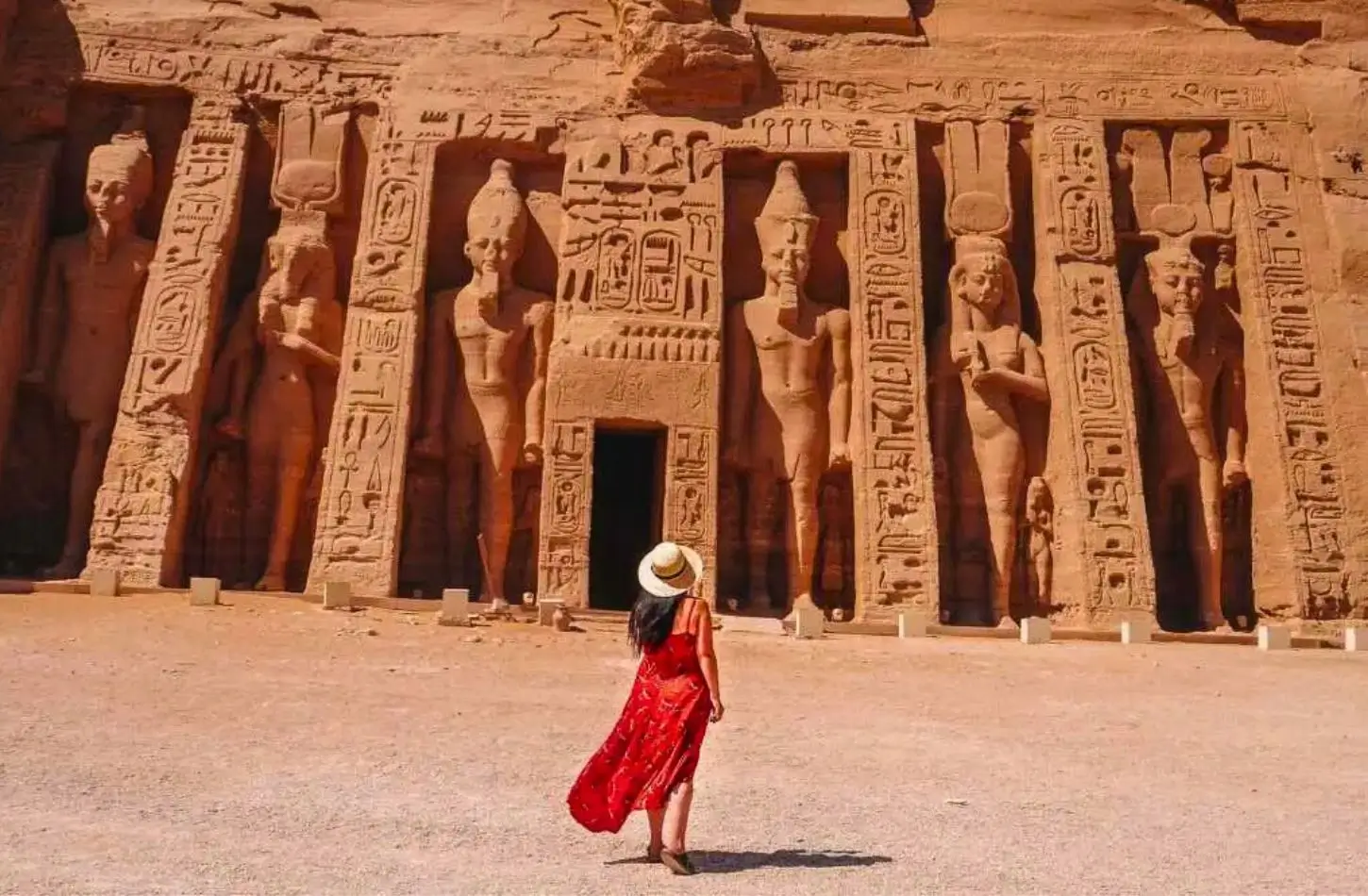
Next to the main temple is the smaller Temple of Hathor, dedicated to the goddess Hathor and Queen Nefertari. This temple is unique because the queen’s statues are equal in size to the king’s, reflecting her importance and influence.
The overall design of the complex shows advanced engineering skills and a deep understanding of symmetry, balance, and artistic harmony.
Abu Simbel Temple Inside
The Abu Simbel Temple inside is just as impressive as its exterior. Visitors enter a large hall supported by massive pillars carved in the shape of Ramses II as Osiris, the god of the afterlife. These pillars symbolize eternal life and divine protection.
The walls are decorated with detailed carvings showing Ramses II’s military victories, including the famous Battle of Kadesh. These carvings served as historical records and propaganda, presenting the pharaoh as a powerful and victorious ruler.
Deeper inside the temple is the sanctuary, the most sacred room. It contains four seated statues representing the gods Amun, Ra-Horakhty, Ptah, and Ramses II himself. This arrangement shows that the pharaoh was considered equal to the gods.
The temple’s interior design uses light and space to create a spiritual atmosphere, guiding visitors from the outer world into a sacred space.
Sun Alignment at Ramses II Temple, Abu Simbel Temple in Egypt
One of the most fascinating features of the Abu Simbel Temple in Egypt is its solar alignment. Ancient Egyptian architects designed the temple so that sunlight enters the sanctuary on specific days each year.
Twice annually, the rising sun travels through the temple’s entrance and illuminates the statues of Amun, Ra-Horakhty, and Ramses II. The statue of Ptah remains in shadow because he was associated with darkness and the underworld.
This incredible alignment demonstrates the Egyptians’ advanced knowledge of astronomy and engineering. Even after the temple was relocated, experts successfully preserved this solar phenomenon.
What Is the Abu Simbel Sun Festival?
The Abu Simbel sun festival takes place twice each year, on February 22 and October 22. On these days, the sun aligns perfectly with the temple’s sanctuary, illuminating the statues inside.
This rare event attracts visitors from around the world who gather early in the morning to witness the sunlight entering the temple. The festival celebrates ancient Egyptian culture and highlights the brilliance of its architectural design.
Many travelers plan their visit around this event to experience one of Egypt’s most unique historical moments.
Opening Hours and Entrance Fee
The Abu Simbel Temple in Egypt is open daily from 5:00 AM to 6:00 PM. Visiting early in the morning is recommended, especially for those traveling from Aswan, to avoid the heat and enjoy the best lighting.
The entrance fee Prices may change, so visitors should check the latest updates before their visit.
Cultural Importance and Tourism Today
Today, the Abu Simbel Temple in Egypt is one of the country’s most important tourist attractions. It represents the greatness of ancient Egyptian civilization and continues to inspire visitors with its beauty and historical significance.
Many visitors include the temple as part of Egypt Tailor Made Tours, allowing them to explore this incredible monument along with other famous historical sites.
The temple’s location near Lake Nasser adds to its beauty, offering stunning views and a peaceful atmosphere.
Conclusion
The Abu Simbel Temple in Egypt is a masterpiece of ancient architecture, engineering, and religious symbolism. Built by Ramses II to demonstrate his power and honor the gods, it continues to stand as a symbol of Egypt’s greatness.
From its massive statues and detailed interior carvings to its remarkable solar alignment, every part of the temple reflects the brilliance of ancient Egyptian civilization.
Today, Abu Simbel remains one of the most unforgettable destinations in Egypt, offering visitors a chance to connect with history and experience one of the world’s greatest cultural treasures.