

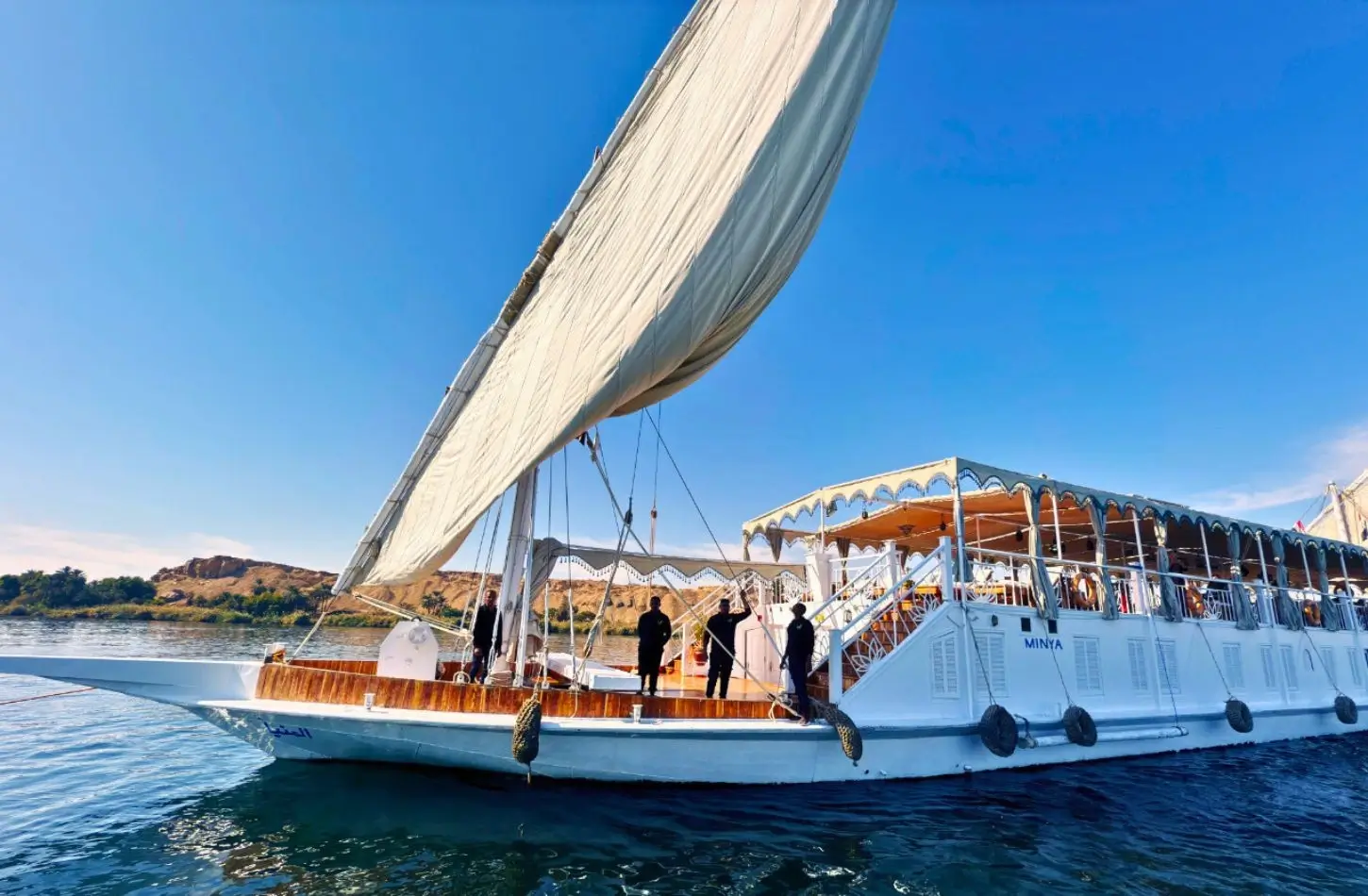
Is Nile Cruise worth it? For most travelers heading to Luxor and Aswan, yes — and the reason comes down to simple math. A 3-night standard cruise starts at roughly $400–$700 per person, a deluxe sailing runs closer to $650–$900, and a luxury vessel can begin around $769 and climb well past $1,500 for premium ships. Booked separately, the same week of hotels, private guides, entrance fees, and transfers between Luxor and Aswan typically costs more — and takes more planning to pull off.
I’m Mohamed Atta, and I’ve spent years helping international travelers plan Nile cruises out of Luxor and Aswan. I’ve watched first-time visitors agonize over this exact question, so here’s the honest version: what a Nile cruise actually costs, what you get for it, where it falls short, and who should book a hotel instead.
What Is a Nile Cruise? and What’s Actually Included
A Nile cruise is a multi-day sailing between Luxor and Aswan — or the reverse — aboard a ship that doubles as your hotel, your transport, and your guided tour all in one. Instead of packing up and changing hotels every night, you unpack once, and the ship moves you to the next temple while you sleep, swim, or watch the riverbanks drift by.
Most itineraries run 3 nights (Aswan to Luxor) or 4 nights (Luxor to Aswan), with 7-night round-trip sailings available on some ships for travelers who want to cover both directions without disembarking. Across our standard and luxury fleets, a typical package includes:
- Full-board meals (breakfast, lunch, dinner) served buffet or set-menu style
- Guided shore excursions with a licensed Egyptologist at every major site
- Entrance fees to the temples on the itinerary
- Transfers between the ship and the airport, train station, or your hotel
- Onboard amenities: sun deck, swimming pool, lounge bar, and evening entertainment
What’s typically not included: alcoholic drinks, spa treatments, laundry, Wi-Fi on some ships, optional add-on excursions like Abu Simbel, and gratuities for guides and crew. Budget an extra $30–$50 a day if you plan to use any of these, plus tipping money — more on that below.
The standard route stops at Karnak Temple, Luxor Temple, the Valley of the Kings, and the Temple of Hatshepsut on the Luxor side, then Edfu Temple, Kom Ombo, the Aswan High Dam, the Unfinished Obelisk, and Philae Temple as you move south. Whichever ship you choose, the sites covered are largely the same — what changes between standard, deluxe, and luxury categories is cabin size, dining quality, and onboard service level, not the itinerary itself.
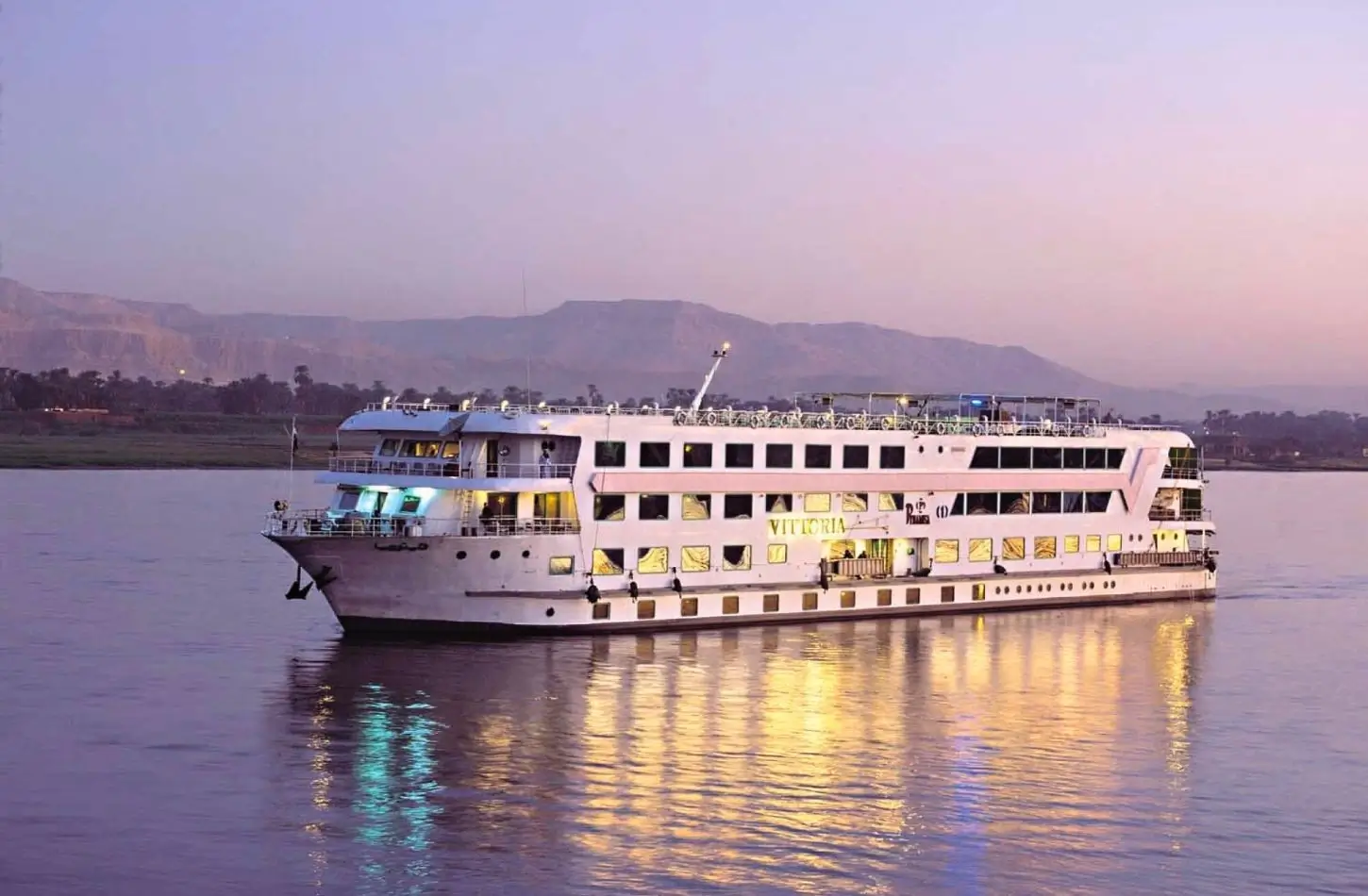
Is Nile Cruise worth the Money? The Real Cost Comparison
This is the question underneath the question, so let’s run the numbers.
Nile cruise pricing by category:
| Category | Typical 3–4 night price (per person) | What you get |
|---|---|---|
| Standard | $400–$700 | Comfortable cabins, full board, guided tours, named ships like Royal Esadora or Radamis II |
| Deluxe | $650–$900 | Larger cabins, panoramic windows, upgraded dining |
| Luxury | $769–$1,500+ | Suites, premium service, ships like the Soleil Nile Cruise (from $1,320) or Oberoi vessels |
Now compare that to doing it independently. A week split between Luxor and Aswan means booking two hotels, a private guide for each city, a driver or domestic flight between them, individual entrance tickets for every temple, and meals on top of all of it. Add those up — mid-range hotel at $80–$150/night, a private guide at $50–$80/day, entrance fees that run $10–$25 per site — and a mid-range independent trip often lands at or above what a standard or deluxe cruise costs, with considerably more logistics to manage yourself.
Where independent travel wins is at the top end: if you want five-star hotel rooms with full flexibility and no fixed schedule, staying at properties like the Old Cataract in Aswan will likely cost more than even a luxury cruise cabin, but you trade the cruise’s convenience for total control over your days.
Hidden costs to budget for either way:
- Egypt tourist visa: around $25 USD on arrival for most nationalities
- Gratuities: $8–$12 per person per day, split among cabin crew, restaurant staff, and your guide — this is called baksheesh and is expected, even if not strictly mandatory
- A 25% holiday surcharge applies on most Nile cruises and tours booked over Christmas, New Year, or Easter, so factor that in if you’re traveling during peak dates
- Optional extras: Wi-Fi, alcohol, spa treatments, and add-on excursions like Abu Simbel
The honest bottom line: for a standard or deluxe sailing, a Nile cruise is usually the cheaper and easier option versus piecing together the same week independently. For ultra-luxury travelers, it’s close to a wash — you’re paying for a different kind of comfort, not necessarily a better price.
The Honest Downsides What Nobody Tells You
Every Nile cruise page talks about temples and sunsets. Fewer talk about what it’s actually like living on a boat for several days, so here’s the part I tell clients before they book.
- Cabins are smaller than a hotel room. Standard cabins run roughly 15–20 square meters — comfortable, but not spacious, and bathrooms in particular are compact. If you’re used to a full-size hotel bathroom, this is the biggest adjustment on a budget or standard ship. Luxury suites are larger, but you’re still on a vessel, not in a hotel.
- You’re on a fixed schedule. Dinner is usually served at a set time, typically around 8pm, and there’s no 24-hour dining like you’d find on an ocean cruise. If you’ve got an early excursion the next morning — a 4am wake-up for Abu Simbel is common — that late dinner and early start back-to-back can wear on you by day three or four.
- It’s a social experience, whether you want it to be or not. You’ll eat, tour, and relax alongside the same group of passengers for the whole sailing. For many travelers this is part of the appeal — you make fast friends. If you’re someone who needs real downtime to recharge, the lack of personal space can feel like a lot.
- Soundproofing varies by ship. Engine noise and conversation through cabin walls are more noticeable on older or budget vessels. If you’re a light sleeper, this is worth asking about when you book, and it’s a reasonable question to put to your travel planner before you choose a ship.
- Mobility is a real consideration. Many Nile cruise ships don’t have elevators, so moving between decks means stairs. If you or someone in your group has mobility limitations, this is worth raising directly with whoever books your cruise, since some ships handle this better than others.
- Swimming in the river itself isn’t permitted on organized itineraries — the Nile carries pollution and current risks in places — so the onboard pool is your only swimming option, which is one more reason ship choice matters more than people expect.
None of this means a cruise isn’t worth it. It means going in with accurate expectations is what makes the difference between a trip that delights you and one that just meets the brochure.
Who Should (and Shouldn’t) Take a Nile Cruise
Not every traveler gets the same value out of a Nile cruise, so here’s how it breaks down by traveler type.
- First-time visitors to Egypt get the most out of cruising. The guided structure means you’re never wondering what you’re looking at or whether you’re missing something important — a licensed Egyptologist walks you through Karnak, the Valley of the Kings, and Philae Temple with context you simply won’t get reading a plaque on your own.
- Couples and honeymooners consistently rate the cruise experience highly. Sunset views from the deck, the slower pace between excursions, and not having to plan a single meal or transfer leaves more room for actually enjoying the trip together rather than managing logistics.
- Older or mobility-conscious travelers generally do well on a cruise, provided the elevator question above is addressed in advance. The reduced walking and consistent climate control compared to multi-city land travel is a real advantage — just confirm the specific ship’s layout first.
- History and archaeology enthusiasts benefit from the depth: multiple temple visits over several days lets you compare architectural periods and ask your guide detailed questions you wouldn’t get time for on a single day trip from Cairo.
- Who might be better served by a hotel-based itinerary instead: travelers who want full schedule flexibility, anyone planning to explore Luxor or Aswan at their own pace outside organized excursion hours, light sleepers who are sensitive to shared accommodation noise, and solo travelers who specifically want more personal space than a shared social itinerary allows. For this group, a tailor-made land itinerary using nicer hotels and private guides, booked independently, is often the better fit even though it usually costs more.
Families with children can go either way — most cruises welcome kids and offer family rates when sharing a cabin with two paying adults, but the fixed mealtimes and limited onboard activities for younger kids are worth weighing against a more flexible land-based trip.

Best Time to Take a Nile Cruise
Timing affects both price and comfort, so it’s worth planning around.
1- Peak season (October through April) is when most travelers sail. Daytime temperatures sit in a comfortable range for walking around open-air temples, and this is also when prices run highest — book a few months ahead if you want a specific ship or cabin category during these months. December and January nights can be cool on deck, so pack a light layer for evenings.
2- Shoulder and summer months (May through September) bring lower prices, sometimes 30–40% below peak rates, and noticeably thinner crowds at the major sites. The tradeoff is heat — daytime temperatures can reach 40°C (104°F) in Upper Egypt during summer. Cruise ships are air-conditioned, and excursions are typically scheduled early in the morning specifically to avoid the worst of the midday sun, so it’s manageable if you don’t mind the heat between stops.
3- Holiday periods (Christmas, New Year, Easter) carry a 25% surcharge on most Nile cruises due to peak demand, on top of already-elevated peak-season pricing. If your travel dates are flexible, shifting even a week or two outside these windows can meaningfully lower your total cost.
Whichever season you choose, book your cabin category in advance during peak months — the most popular ships and the best cabin positions (lower deck, away from engine noise) sell out first.
If you’re sure a Nile cruise is worth experiencing, find out now from our complete guide about the best time to take a Nile River cruise.
What to Pack and What to Wear
A few practical notes that make the difference between a smooth trip and a frustrating one.
- Clothing: Lightweight, loose-fitting cotton or linen handles Egypt’s heat better than anything tight or synthetic. At temples and any religious site, modest dress is required — shoulders and knees covered, for both men and women. A light scarf or pashmina does double duty: sun protection during the day, warmth on deck in the evening. Smart casual is fine for dinner; nothing more formal is expected unless your ship hosts a themed night.
- Footwear: Comfortable walking shoes with good grip are non-negotiable. Temple floors are uneven stone, and you’ll be on your feet across multiple sites each day. Bring a second pair if you have room — useful if one pair gets damp from morning dew or an early start.
- Other essentials: Sunscreen, a reusable water bottle (most ships provide complimentary water daily), any prescription medication you need, and small USD or EGP bills for tipping. Most international visitors need a tourist visa, available on arrival in Cairo or Luxor for about $25 USD for many nationalities — check current requirements for your specific passport before you travel, since policies can change without much notice.
One thing to know in advance: photography is restricted or banned inside certain tombs, including the Valley of the Kings, where cameras and phones are typically left at the entrance. Your guide will flag site-specific rules as you go, so you’re not caught off guard.
Read our complete guide on What to Pack and What to Wear on a Nile River cruise.
FAQs: Is Nile Cruise worth it:
How much does a Nile cruise cost?
Standard cruises start around $400–$700 per person for 3–4 nights. Deluxe ships run roughly $650–$900, and luxury sailings begin near $769 and climb past $1,500 for premium vessels like the Oberoi ships. Pricing depends on season, cabin category, and ship.
How long should a Nile cruise be?
3 nights (Aswan to Luxor) or 4 nights (Luxor to Aswan) covers the core sites comfortably. Both directions visit the same major temples; the 4-night option gives a slightly more relaxed pace. Some ships offer 7-night round trips for travelers who want to see both directions without disembarking.
Is a Nile cruise safe?
Nile cruises are a well-established part of Egypt’s tourism industry, operated under Egyptian Ministry of Tourism regulations with licensed guides and crew. As with any travel decision, it’s worth checking current government travel advisories for Egypt closer to your travel dates, since conditions can shift.
What’s the best time of year for a Nile cruise?
October through April offers the most comfortable temperatures and is peak season, with the highest prices. May through September is hotter but cheaper, with smaller crowds at major sites.
Are gratuities included in the price?
No. Budget $8–$12 per person per day for tipping, distributed among cabin stewards, restaurant staff, and your guide. This is customary in Egypt and expected, even though it isn’t legally mandatory.
Do Nile cruise ships have elevators?
Many do not, particularly older or standard-category vessels. If mobility is a concern, ask specifically about elevator access when booking, since this varies considerably by ship.
Can I swim in the Nile during my cruise?
No, swimming directly in the river isn’t permitted on organized itineraries due to pollution and current risks in certain stretches. Onboard pools are the standard alternative.
Are Nile cruises suitable for families with children?
Yes, most cruises welcome children and offer discounted rates when sharing a cabin with two full-paying adults. Fixed mealtimes and limited dedicated kids’ activities are worth considering against your children’s ages and routines.
Final Verdict — Is Nile Cruise worth it?
So, is a Nile cruise worth it? For most travelers planning their first trip through Luxor and Aswan, yes. The math works in your favor for standard and deluxe categories, the logistics are far simpler than coordinating hotels, guides, and transfers yourself, and the experience of waking up moored beside a temple you’ll explore that same morning is genuinely hard to replicate any other way.
It’s not the right fit for everyone. If you want full schedule flexibility, need real personal space away from a shared group itinerary, or you’re chasing five-star hotel-level comfort above all else, a tailor-made land itinerary may serve you better — even at a higher price.
For everyone else, the choice comes down to category and timing: a standard or deluxe cruise during shoulder season gets you the full experience at the best value, while a luxury sailing during peak months trades some savings for extra comfort and space. Either way, going in with real numbers and realistic expectations — rather than just the brochure version — is what actually determines whether your Nile cruise feels worth it once you’re home.