

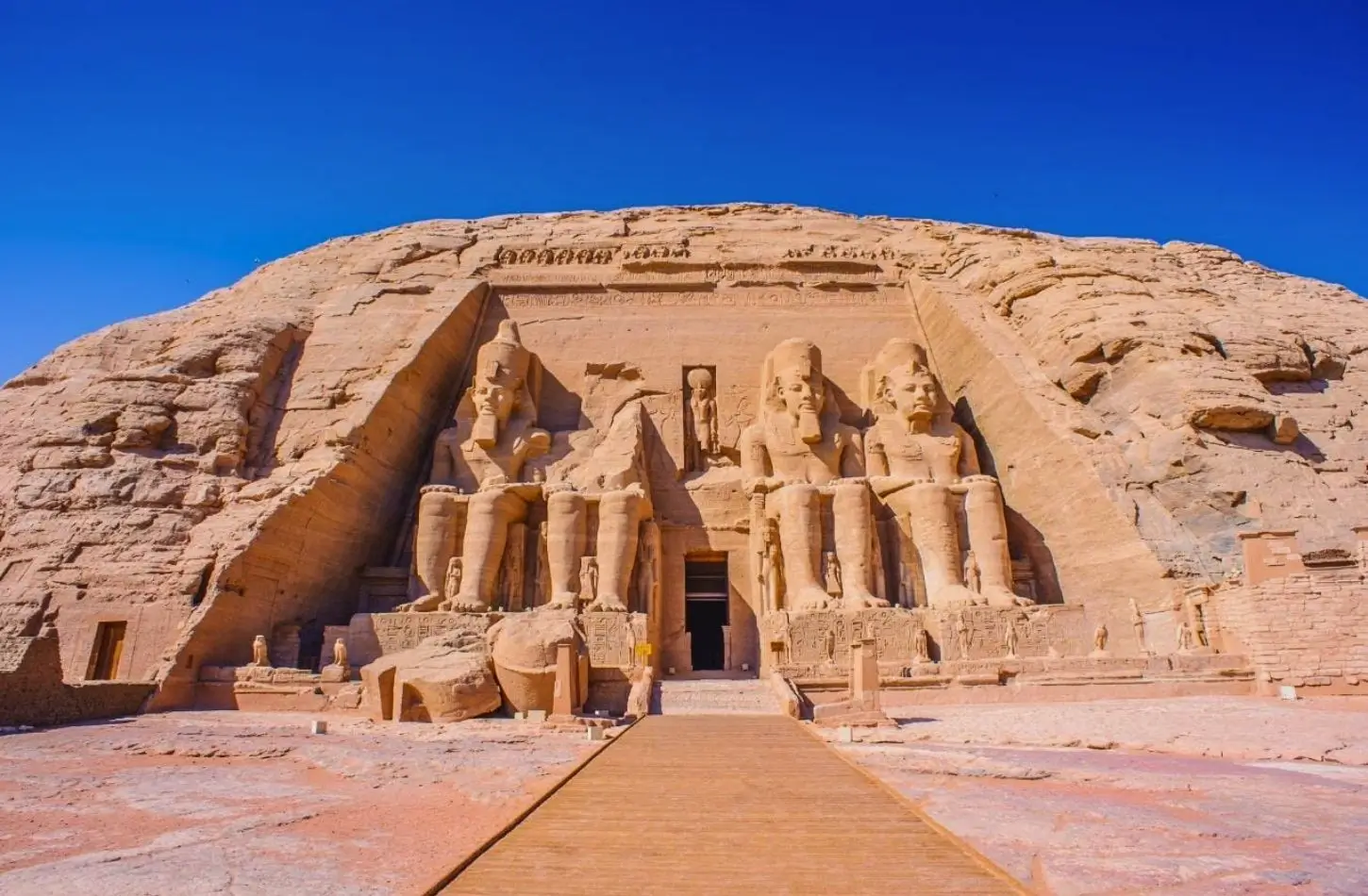
Few places on Earth stop you in your tracks the way Abu Simbel does. You follow a dusty road through the Nubian desert, round a bend above the shores of Lake Nasser — and suddenly, four colossal stone pharaohs, each the height of a six-story building, stare back at you across three thousand years of silence.
This isn’t just a temple. It’s a declaration in rock — Ramses II announcing his power to the ancient world, and modern engineers declaring their own genius when they saved the entire complex from the rising waters of Lake Nasser in the 1960s.
Whether you’re planning a luxury Nile cruise that ends in Aswan, booking an Abu Simbel day trip, or timing your visit around the legendary Sun Festival, this guide covers everything you need to know before you go.
What Is the Abu Simbel Temple?
Quick Answer: Abu Simbel is a complex of two ancient rock-cut temples in southern Egypt, built by Pharaoh Ramses II around 1264 BCE. The Great Temple features four 20-meter statues of the pharaoh, while the smaller Temple of Nefertari honors his queen. Both are UNESCO World Heritage Sites and among the most visited monuments in Egypt.
The site consists of two temples carved directly into a sandstone cliff in what was once ancient Nubia — today the far south of Egypt, near the Sudanese border. The temples were designated a UNESCO World Heritage Site in 1979 under the name Nubian Monuments from Abu Simbel to Philae.
What makes Abu Simbel unlike any other site in Egypt is its story: built to project power, lost to the sands for centuries, rediscovered by a Swiss explorer in 1813, and then heroically relocated block by block in the 1960s to save it from the rising waters of Lake Nasser.
 Planning your trip soon? Discover the best time to take a Nile cruise in Egypt before you pack your bags.
Where Is Abu Simbel Located?
Abu Simbel sits on the western bank of Lake Nasser in southern Egypt, approximately 280 km south of Aswan and just 40 km north of the Sudanese border. The nearest city with an international airport is Aswan.
The temples originally overlooked the Nile River in ancient Nubia. When Egypt built the Aswan High Dam in the 1960s, the rising waters of Lake Nasser threatened to submerge it permanently. In a remarkable international rescue operation, the entire complex was dismantled, raised 65 meters, and reassembled on an artificial cliff above the lake.
Today, the lakeside setting adds an otherworldly quality to the visit — golden desert, cobalt sky, and the enormous blue mirror of Lake Nasser stretching south toward Sudan.
Why Were the Abu Simbel Temples Built?
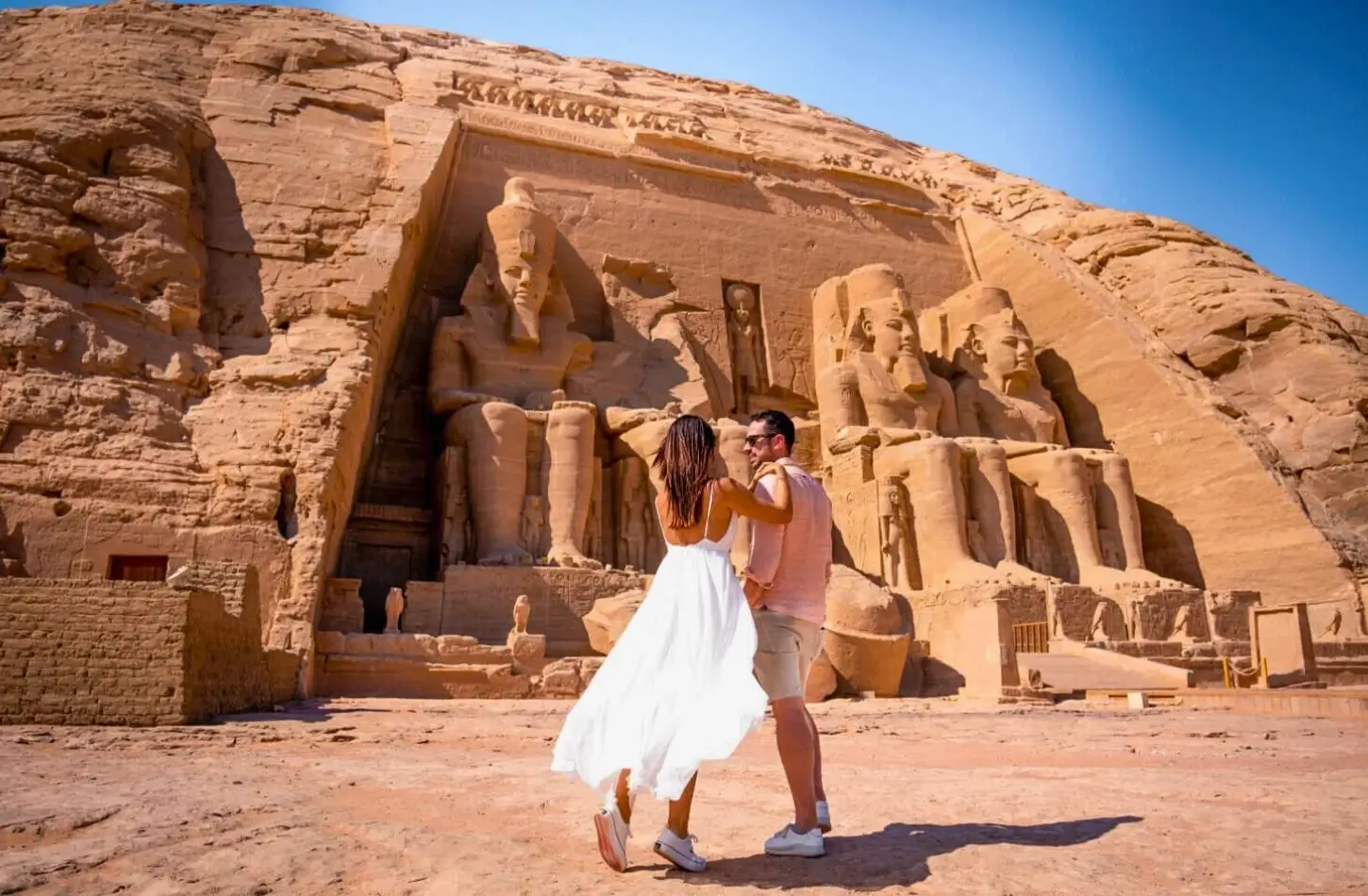
Ramses II — known to Egyptians as Ramesses the Great — commissioned Abu Simbel around 1264 BCE during his reign in Egypt’s 19th Dynasty. He was one of Egypt’s most prolific builders and its longest-reigning pharaoh, ruling for over 66 years.
The temples served several purposes at once:
- Political intimidation: Built in Nubia, at the southern edge of Egypt’s empire, the temples announced Egyptian dominance to neighboring kingdoms.
- Religious devotion: The Great Temple was dedicated to the gods Amun, Ra-Horakhty, and Ptah — Egypt’s most powerful deities — as well as Ramses himself, who was worshipped as a living god.
- Propaganda: The interior walls depict Ramses’ military victories, most famously the Battle of Kadesh (c. 1274 BCE) — a clash with the Hittite Empire that ended in the world’s first known peace treaty. The carvings show Ramses as an all-conquering hero, though historians note the battle was effectively a draw.
- Eternal legacy: Ramses wanted to be remembered forever. Carved into living rock rather than built from stone blocks, Abu Simbel was designed to be indestructible.
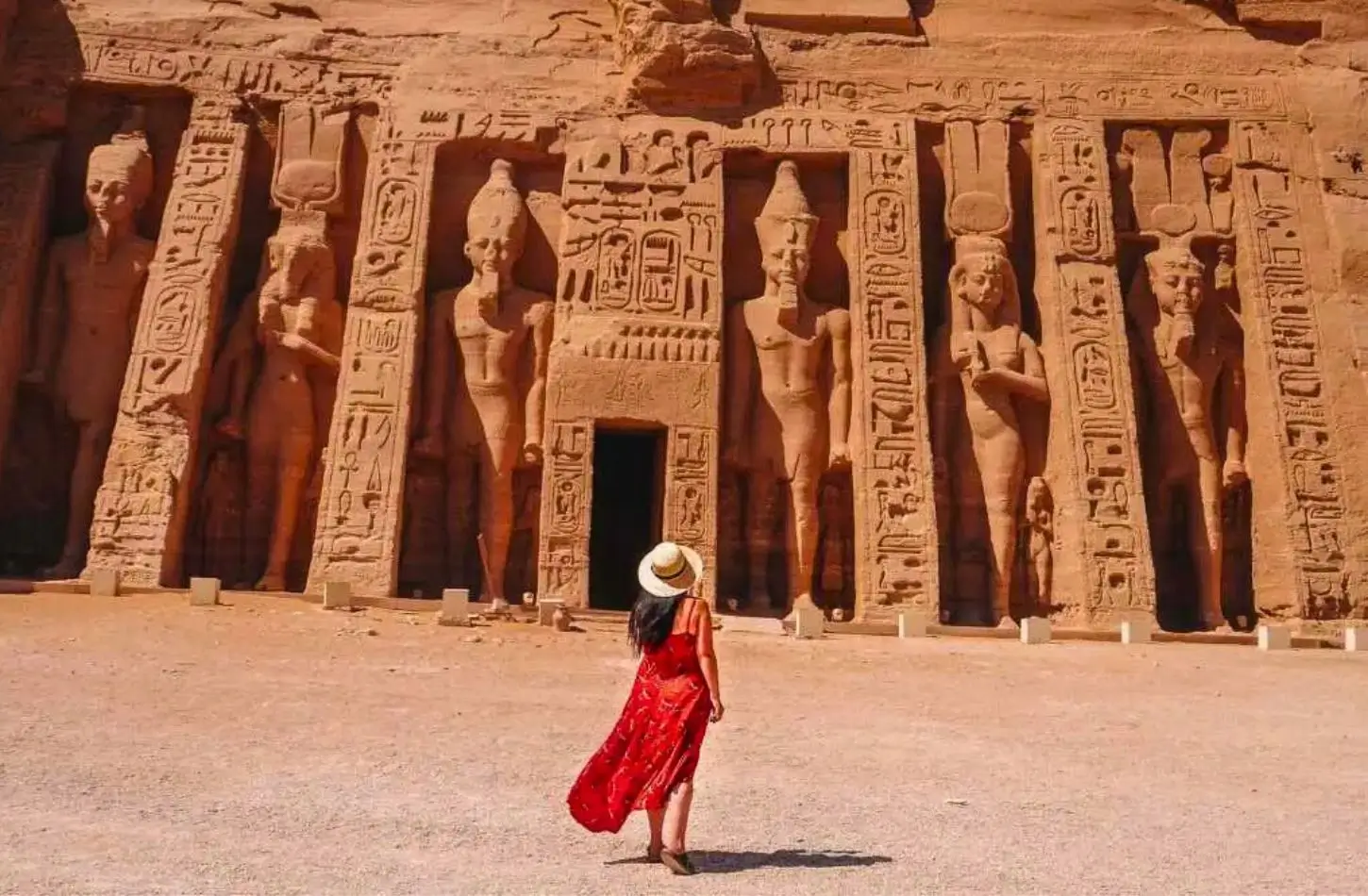
The smaller Temple of Hathor was dedicated to the goddess of love and music — and to Ramses’ beloved wife, Queen Nefertari. In a remarkable departure from Egyptian convention, Nefertari’s statues are the same size as the king’s — a profound expression of love and respect.
The Architecture: What You’ll See Outside
Standing before the Great Temple for the first time is genuinely breathtaking. The facade — 33 meters wide and 30 meters high — is dominated by four colossal seated statues of Ramses II, each measuring approximately 20 meters tall. They wear the double crown of Upper and Lower Egypt, signaling complete authority over the kingdom.
Look carefully at the figures between and beside the pharaoh’s feet: small carved figures represent members of his royal family — his mother, Muttuya, his wife, Nefertari, and several of his children. Their scale, dwarfed by the pharaoh’s legs, is intentional.
Above the entrance, a carved figure of the falcon-headed sun god Ra-Horakhty stands in a niche, arms outstretched — a visual pun in hieroglyphs that spells out one of Ramses’ royal names.
The Temple of Nefertari stands 150 meters to the north. Its six standing statues — alternating between Ramses and Nefertari — are all the same height, a fact that would have astonished ancient Egyptians. Queens were almost never depicted at the same scale as the pharaoh.
Read our complete guide to Nile cruise travel tips for beginners.
Inside Abu Simbel Temple: What to Expect
Photography is not permitted inside the temples, so prepare to experience the interior with your eyes rather than your lens.
Entering the Great Temple, you pass through into the Great Hypostyle Hall — a large columned chamber flanked by eight massive pillars, each carved in the form of Ramses as Osiris, god of the afterlife. The walls are alive with color: battle scenes, offerings to the gods, processions of prisoners from Nubia, Libya, and the Levant.
The famous Battle of Kadesh reliefs cover the northern and southern walls — chariot charges, hand-to-hand combat, panicking Hittite warriors tumbling into the Orontes River. It’s ancient propaganda, but it’s extraordinary art.
Moving deeper, a second hall leads to the innermost sanctuary — the holiest room in the temple. Here, four seated statues wait in near-darkness: Ptah (god of creation and darkness), Amun (king of the gods), Ramses II himself (deified), and Ra-Horakhty (the sun god). On two mornings each year, sunlight travels the entire length of the temple to illuminate three of these four figures — while Ptah, god of darkness, remains in shadow.
The Temple of Nefertari’s interior features its own columned hall and sanctuary, with carvings of Nefertari making offerings to Hathor, one of the most elegantly decorated temple interiors in all of Egypt.
The Abu Simbel Sun Festival: A Once-in-a-Year Phenomenon
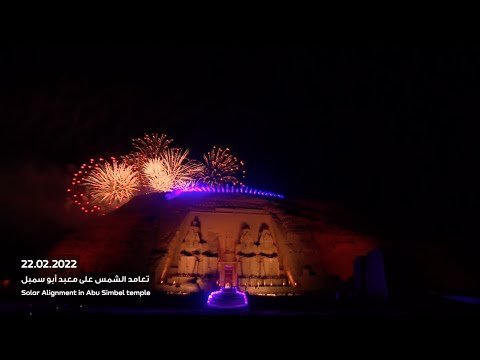
Twice each year, at precisely the right moment after sunrise, a shaft of golden light enters the temple entrance and travels 65 meters through the darkness to illuminate the sanctuary statues. This solar alignment was deliberately engineered by ancient Egyptian architects — and it works just as precisely today as it did 3,200 years ago.
The Sun Festival dates:
- 22 February — believed to commemorate Ramses II’s ascension to the throne
- 22 October — believed to mark the pharaoh’s birthday
On these mornings, crowds begin gathering before dawn. As the sun rises over the desert, light creeps slowly through the entrance corridor until it floods the faces of Amun, Ra-Horakhty, and Ramses. Only Ptah — god of darkness — remains in perpetual shadow.
Insider tip from Mohamed: If you can plan your entire Egypt trip around one moment, make it this. Arrive the night before and stay in Abu Simbel so you’re at the entrance before 5:30 AM. The atmosphere, with hundreds of people holding their breath, waiting for the light, is unforgettable.
Even if you visit on a regular day, a knowledgeable Egyptologist guide can show you exactly where to stand to visualize the effect.
The UNESCO Rescue: How Abu Simbel Was Saved
When Egypt’s Aswan High Dam was completed in 1970, the resulting Lake Nasser would have submerged Abu Simbel entirely. In one of the most ambitious heritage conservation projects in history, UNESCO coordinated an international effort to save the temples.
Key facts about the relocation:
- The operation ran from 1964 to 1968 — four years of painstaking work
- The temples were cut into 1,050 massive blocks, some weighing up to 30 tonnes
- The entire complex was moved 65 meters higher and 200 meters further from the water
- Engineers rebuilt an artificial cliff to contain the blocks and preserve the temples’ relationship to each other and to the sun
- The total cost was approximately $40 million, equivalent to several hundred million today, funded by 50 countries
- As thanks, Egypt gifted smaller dismantled Nubian temples to contributing nations — you can see one at the Metropolitan Museum of Art in New York
Even inside the temples, you can still spot faint lines where the cutting saws passed through the stone — a permanent reminder of one of the modern world’s greatest engineering achievements.
How to Get to Abu Simbel
Abu Simbel is remote, but the journey is well-trodden. You have three main options:
✈️ By Plane from Aswan
The fastest option. EgyptAir operates daily flights between Aswan and Abu Simbel Airport — a 45-minute hop. Expect to pay roughly $200–325 USD per person for a return ticket. Flights are timed around site visits, giving you approximately 1.5–2.5 hours at the temples before your return flight.
Best for: Travelers short on time or those ending a Nile cruise in Aswan.
For safety and travel context, read Is Egypt Safe for Nile River Cruises?
🚌 By Road from Aswan
A shared tour bus or private car from Aswan covers the 280 km journey in approximately 3 to 3.5 hours each way. Departures typically begin between 3:30 AM and 4:30 AM to arrive at the site by 5:00 AM and avoid the midday heat. Police checkpoints are in place; tourists must travel in licensed vehicles.
Best for: Budget-conscious travelers and those who want more time on-site (typically 3 hours).
🚢 By Lake Nasser Cruise
For the most atmospheric arrival, a Lake Nasser cruise departs from Aswan and sails south to Abu Simbel over 4–5 days, stopping at rarely-visited Nubian temples along the way. This is the option that puts Abu Simbel in its full historical and geographical context.
Several of the luxury Nile cruise brands we feature — including Mövenpick and Oberoi — include Abu Simbel as part of their extended Lake Nasser itineraries. If you’re comparing Nile cruise deals, look for packages that include an excursion to Abu Simbel.
Best for: Travelers wanting the full Egypt experience and those on a Nile cruise itinerary.
Is Abu Simbel Worth the Trip?
Yes — without question. Even among seasoned Egypt travelers, Abu Simbel consistently ranks as the most powerful single site they visit. This isn’t hyperbole; it’s the near-universal reaction.
Here’s why it’s worth the journey:
- Scale that doesn’t translate in photos. Standing beneath a 20-meter statue carved from a living cliff is a physical experience that images simply cannot replicate.
- The relocation story adds a second layer of wonder. You’re looking at something ancient that was saved by modern ingenuity — and you can see where the cuts were made.
- It’s far less crowded than Luxor or Giza. Especially early in the morning, Abu Simbel has a stillness and majesty that the main sites on the tourist trail can’t match.
- The setting on Lake Nasser is genuinely beautiful. Sunrise over the lake, with the golden desert stretching to Sudan, is a travel memory that stays with you.
Recommended time on-site: 2.5–3 hours to comfortably visit both temples with a guide.
Practical Visitor Tips
| What | Details |
|---|---|
| Opening Hours | Daily, 5:00 AM – 6:00 PM |
| Best Time to Visit | October–April (cooler weather); 5:00–8:00 AM (before heat and crowds) |
| Entrance Fee | Check Egypt’s Ministry of Tourism for current prices — fees are updated regularly |
| Photography | Allowed outside; not permitted inside the temples |
| Dress Code | Comfortable, breathable clothing; cover shoulders for respect |
| What to Bring | Water (essential), sunscreen, hat, comfortable walking shoes |
| Guided Tours | Strongly recommended — an Egyptologist unlocks layers invisible to independent visitors |
Sound & Light Show
Each evening, Abu Simbel hosts a Sound and Light Show — a dramatic, narrated spectacle in which the temples are illuminated, and the story of Ramses II unfolds through light and music. It runs in multiple languages. If you’re staying overnight in Abu Simbel, don’t miss it.
Where to Stay Near Abu Simbel
A handful of hotels operate in the village of Abu Simbel, including the well-regarded Eskaleh Nubian House and Seti Abu Simbel Lake Resort. Staying overnight lets you attend the Sound and Light Show and arrive at the temples before the day-trip coaches.
The Nubian Heritage of Abu Simbel
Abu Simbel sits in the heart of ancient Nubia — a civilization with its own distinct culture, language, and history that predates and parallels pharaonic Egypt. The modern village of Abu Simbel is largely Nubian, and the atmosphere here is noticeably different from Luxor or Cairo: quieter, warmer in manner, with the sound of Nubian music drifting from cafés at night.
Taking time to walk through the village, speak with local residents, and appreciate the Nubian influence on the temples adds a dimension that many day-trippers miss entirely.
Combine Your Visit: Abu Simbel + Nearby Sites
Abu Simbel works beautifully as part of a broader southern Egypt itinerary:
- Philae Temple (Aswan): Another UNESCO-rescued Nubian monument, dedicated to the goddess Isis. A natural pairing with Abu Simbel.
- Kalabsha Temple: Visible from a Lake Nasser cruise, this is another stunning relocated Nubian temple.
- Aswan city: The base for most Abu Simbel trips — worth at least two days for the Nubian Museum, the souk, and a felucca on the Nile.
If you’re planning a Nile cruise from Aswan to Luxor or a reverse itinerary, many of our cruise options include an Abu Simbel excursion add-on. Browse our Nile cruise deals to find the right fit.
Frequently Asked Questions
How far is Abu Simbel from Aswan?
Abu Simbel is approximately 280 km south of Aswan. By road, the journey takes around 3–3.5 hours. By plane, EgyptAir’s direct flight takes approximately 45 minutes.
Can I visit Abu Simbel on a day trip from Aswan?
Yes. Most visitors do exactly this — departing Aswan at around 4:00 AM by road or catching a morning flight, spending 3 hours at the temples, and returning to Aswan in the afternoon.
What is the Abu Simbel Sun Festival?
The Sun Festival occurs twice yearly — on 22 February and 22 October — when the rising sun aligns perfectly with the temple entrance and illuminates three of the four sanctuary statues. It marks dates believed to be connected to Ramses II’s coronation and birthday.
Is photography allowed inside Abu Simbel?
Photography is permitted outside the temples but is not allowed inside either the Great Temple or the Temple of Nefertari.
What is the best time of year to visit Abu Simbel?
October to April offers the most comfortable temperatures. December and January are peak seasons. Visiting early in the morning — around 5:00–6:00 AM — is strongly recommended to avoid the heat and the midday tour groups.
How long should I spend at Abu Simbel?
Allow 2.5 to 3 hours to explore both temples thoroughly, ideally with an Egyptologist as a guide.
Can I reach Abu Simbel by Lake Nasser cruise?
Yes — a 4 to 5-day Lake Nasser cruise from Aswan is the most scenic way to arrive. It includes other rarely-visited Nubian temples and ends at Abu Simbel. Check our luxury Nile cruise options for itineraries that include this route.
Final Thoughts from Mohamed Atta
Abu Simbel is one of those rare places that exceeds every expectation. I’ve guided travelers through Egypt for years, and the moment they turn the corner and see those four colossal faces for the first time — that expression never gets old.
The key to an extraordinary visit is simple: go early, go with a knowledgeable guide, and slow down. The stones have been here for 3,200 years. They can afford the time. So can you.
Ready to include Abu Simbel in your Egypt trip? Explore our Nile cruise packages — many include an Abu Simbel excursion as part of a complete Luxor-to-Aswan journey. Or contact us and let us build the itinerary around you.
Related Articles: