

Quick Answer
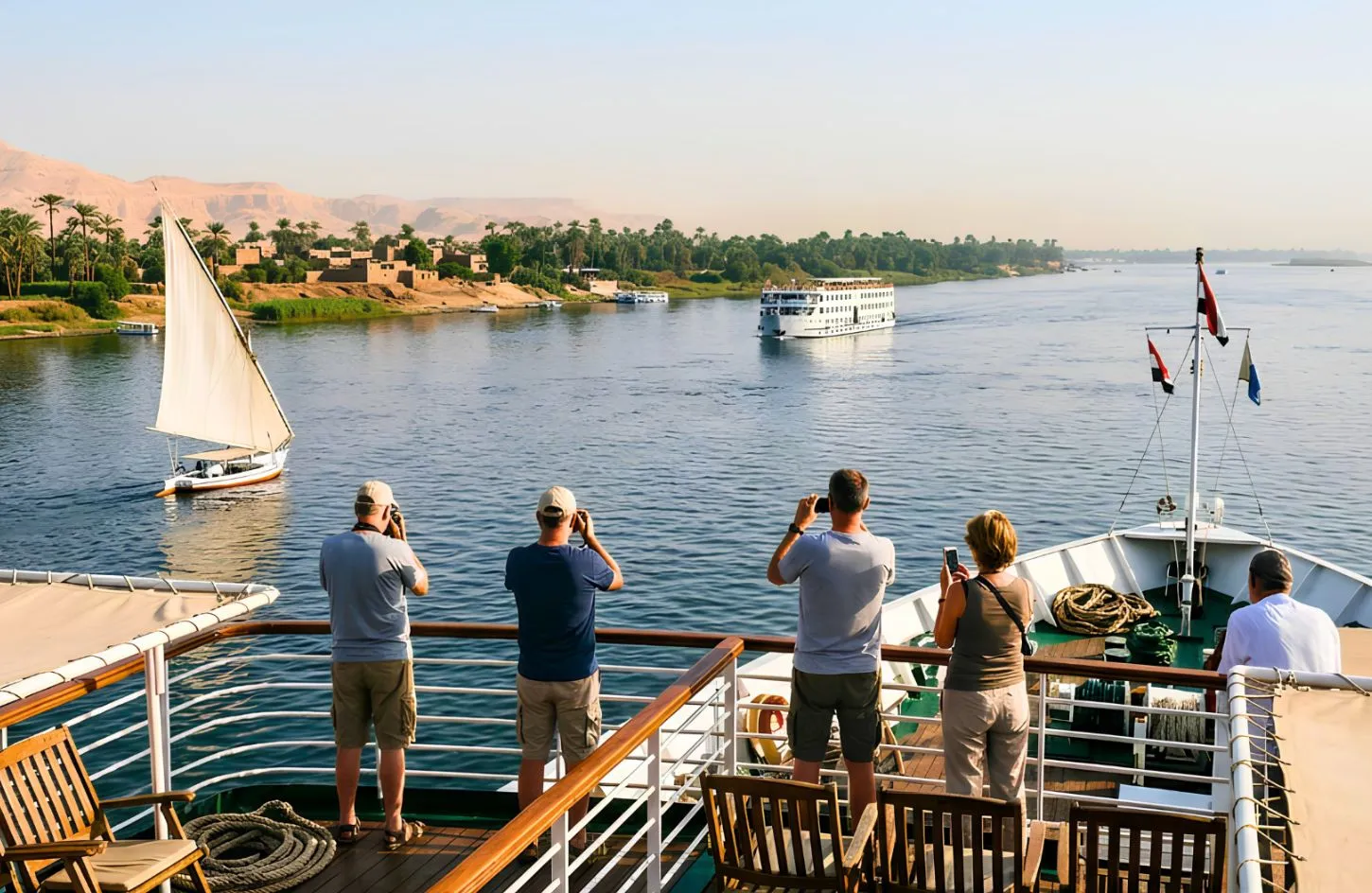
A Nile cruise between Luxor and Aswan is safe for tourists in 2026. The Luxor–Aswan corridor is one of Egypt’s most heavily managed tourist zones, patrolled by a dedicated tourist police force and visited by millions of international travelers each year. In over two decades of operating cruises on this river, our team at Nile Cruise Offers has not had a single security incident affecting any client aboard any of our ships. The practical risks on a Nile cruise — pickpocketing in markets, seasickness on rough-water days, intense heat in summer — are real and manageable. The dramatic risks many travelers worry about are, in our direct experience, not relevant to the cruise corridor.
Planning your first trip to Egypt? Read our complete guide to the best time for a Nile cruise to choose the perfect season for comfortable weather, sightseeing, and the best cruise experience.
Egypt Travel Advisories — What They Mean for Nile Cruise Passengers
Before anything else: yes, the US State Department rates Egypt as Level 2 — Exercise Increased Caution. The UK Foreign and Commonwealth Office echoes a similar position. Both advisories are worth reading. Neither of them is talking about a Nile cruise.
Government advisories cover entire countries. Egypt is a large, geographically diverse country that shares borders with Libya, Sudan, Gaza, and Israel. The Level 2 rating reflects concerns in North Sinai (an active conflict zone with no tourist infrastructure) and border regions that no cruise passenger or standard tourist ever visits. The advisory language specifically notes that tourist areas — Cairo, Luxor, Aswan, the Nile — are in a different category from these zones.
The Egyptian Tourism Authority reported 15.7 million international tourist arrivals in 2024, recovering toward pre-pandemic highs. UNWTO data places Egypt among the top 20 global tourism destinations. Millions of British, American, French, German, Australian, and Italian travelers complete Nile cruises every year without incident.
That is the context. Now, let us be specific about what you will actually experience.
Looking for the perfect cruise experience? Explore the finest luxury Nile cruises in Egypt with elegant cabins, expert-guided tours, and unforgettable journeys between Luxor and Aswan.
The Nile Cruise Corridor — Region by Region
The Luxor–Aswan route that all standard Nile cruise itineraries follow is a controlled, well-maintained tourist environment. Here is an honest breakdown of each zone:
| Region | Assessment | What to know |
|---|---|---|
| Luxor — East Bank (Karnak, Luxor Temple) | ✅ Very safe | Heavy tourist police presence. Major landmarks are staffed and managed. |
| Luxor — West Bank (Valley of the Kings, Hatshepsut) | ✅ Very safe | Dedicated tourist zone, licensed taxi drivers, sites enclosed. |
| Esna (Temple, Nile lock) | ✅ Very safe | Small town stop. Keep to the temple area. Persistent market sellers — ignore and keep moving. |
| Edfu (Temple of Horus) | ✅ Very safe | Cruise-managed excursion. You travel from ship to temple and back by horse carriage or modern bus. |
| Kom Ombo (Double temple at the river) | ✅ Very safe | The temple sits directly on the riverbank. One of the most relaxed stops on the route. |
| Aswan (Philae, High Dam, Felucca) | ✅ Very safe | One of the calmest cities in Egypt. Nubian culture, slow pace, minimal hassle. |
| Abu Simbel (Optional extension) | ✅ Very safe | A convoy system is required for road travel. Most cruise passengers fly from Aswan — a 40-minute flight, no security concerns at the site. |
| Hurghada / Sharm el-Sheikh | ✅ Very safe | Popular Red Sea resorts, well-managed. Separate from the Nile corridor. |
| North Sinai | ✅ safe | There is no tourist attraction to visit. It is not part of any cruise itinerary. |
If your itinerary runs Luxor to Aswan or Aswan to Luxor — which covers every standard Nile cruise — you will spend your entire time in the green rows of this table.
What the Real Risks Look Like on a Nile Cruise
Honest risk assessment means talking about what actually happens, not what theoretically could. Here is what we see, from two decades on this river.
Petty theft and market pressure
The souks around Luxor’s East Bank and the market near the Esna lock are where most negative traveler experiences happen. This means someone grabbing your arm to pull you toward a shop, a persistent seller following you for two minutes, or an overcharge attempt on a small purchase. None of this is violent. All of it is manageable by walking with purpose, saying “la shukran” (no thank you) once and not engaging further, and doing any souvenir shopping through your ship’s recommended contacts.
I tell every group the same thing before the Esna market stop: walk through quickly, don’t make eye contact with sellers, don’t touch anything you don’t intend to buy, and you’ll be fine. The clients who have difficult experiences are usually those who engage with persistent sellers rather than moving past them.
Want to travel with confidence? Discover practical Nile cruise travel tips for beginners, including safety advice, packing recommendations, and what to expect onboard.
Heat and health
From May through September, temperatures in Luxor regularly exceed 40°C — sometimes reaching 45°C. This is not a security-related safety issue, but it is a genuine physical risk for travelers who underestimate it. Heat exhaustion in the Valley of the Kings in August is more likely to affect your trip than any other hazard on this list.
Our practical guidance: if you travel in summer, schedule all temple visits before 9 am or after 4 pm. Carry at least 1.5 liters of water for any morning excursion. Wear a wide-brimmed hat, not just sunscreen. The ship itself will be air-conditioned; the issue is the hour or two at each temple site.
Winter travel (October through April) carries none of these concerns. The Luxor–Aswan corridor is extremely comfortable from November through March, with daytime temperatures around 22–28°C.
Minor illness
Nile cruise ships serve filtered water and cook on-board meals to a consistent standard. Gastrointestinal upset is possible — as it is anywhere new — but not common on well-maintained cruise ships.
We recommend: drinking bottled or filtered water throughout, going easy on street food on the first day in Egypt, and carrying basic anti-diarrhoeal medication as standard travel preparation.
Scams directed at tourists
The most common scam on the Luxor–Aswan route involves someone in civilian clothes claiming to be a “special guide” or “friend of the ship” and offering to take you somewhere. The solution is simple: arrange all excursions through your cruise ship or directly through Nile Cruise Offers before departure. If anyone approaches you outside an arranged context claiming to offer a service, decline and return to the ship.
Egypt Safety for Specific Traveler Groups
Solo female travellers
Egypt is not an effortless destination for solo women, and I want to be honest rather than reassuring at the expense of accuracy. Catcalling in Egyptian cities — including Luxor and Aswan — does happen. It is verbal, rarely physical, and the appropriate response is to ignore it completely and keep walking. Women who engage — even to express displeasure — find it continues longer than those who walk past without acknowledgment.
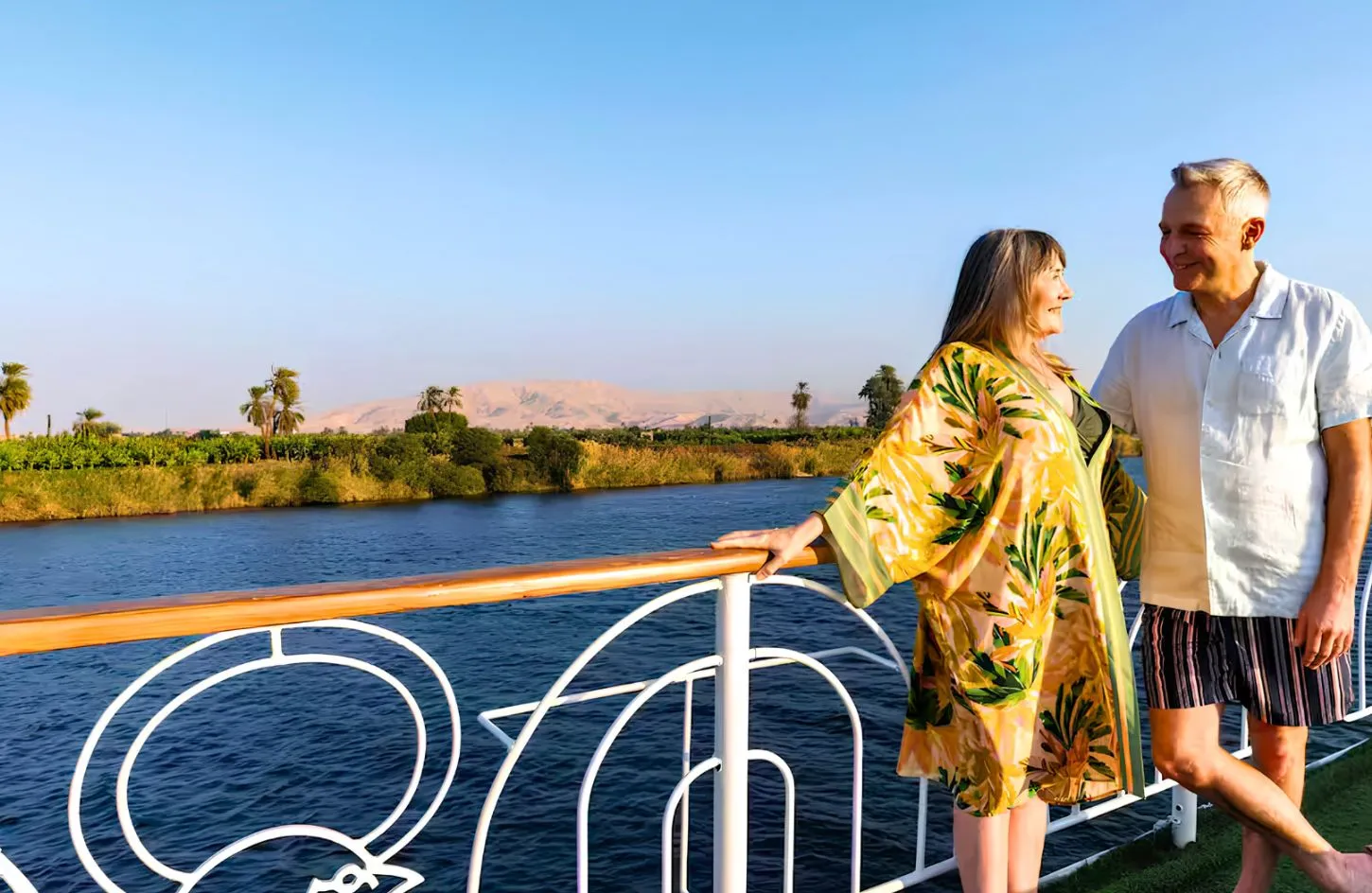
On a Nile cruise, in particular, the enclosed, managed nature of the experience makes it considerably more comfortable than solo travel in an Egyptian city. You are on a ship with a crew who know you, fellow passengers around you, and a structured program at every stop. Most of our solo female clients report feeling very comfortable throughout.
Practical adjustments that make a real difference: dress conservatively outside the ship (shoulders and knees covered, loose-fitting), avoid solo walking in local markets after dark, and when in doubt, rejoin a group or return to the ship. Several of our solo female travelers — including regular returning clients — describe Egypt as one of their favorite destinations. The difference between a positive and a negative experience is usually preparation, not luck.
Before booking your trip, explore the latest Nile cruise deals in Egypt to find affordable luxury packages and special offers for 2026 departures.
Families with children
Nile cruises are excellent for families. The temples are visually dramatic, the distances between sites are short, and the ship provides a home base that children find reassuring. There are no significant child-specific safety concerns on the standard cruise route. The main practical challenge for families is the heat in the summer months — the same guidance applies: early-morning and late-afternoon excursions, keep children hydrated, sunscreen every two hours.
Egyptian people are genuinely warm toward children. In my experience, traveling with children often makes interactions with local people more positive, not more difficult.
Elderly travellers and accessibility
The temples on the Luxor–Aswan route involve uneven stone surfaces, steps, and — in the Valley of the Kings — sloped tomb descents. None of this is extreme, but it requires reasonable mobility. Passengers with limited mobility should discuss specific sites with us before booking — some temples are more accessible than others, and we can adjust the excursion plan accordingly.
Heat is a more significant factor for elderly travelers than for younger ones. We strongly recommend winter travel (November through March) for anyone with cardiovascular concerns.
LGBTQ+ travellers
Egypt has no legal recognition of same-sex relationships, and public displays of affection between same-sex couples are not culturally accepted and carry legal risk. On a Nile cruise specifically — where you are part of an international group, on a private ship, largely removed from Egyptian civil society — most LGBTQ+ travelers report no incidents. The risk is not non-existent, but the cruise environment is considerably lower-risk than independent travel in Egyptian cities. We advise discretion in public areas and at temple sites.
American and British travellers
Visitors from the US and UK are extremely common on Nile cruises and are warmly received throughout the Luxor–Aswan corridor. Egyptian people who work in tourism — which is most of the people you will encounter — are experienced with international visitors and generally positive about American and British tourists. We have not observed heightened anti-Western sentiment in the tourist corridor over the past 20 years of operations.
Practical Safety Tips — What We Tell Every Client
These are the specific recommendations we send to every Nile Cruise Offers booking before departure. They are based on what we have seen that makes a real difference, not on generic travel advice.
- Book all excursions in advance through Nile Cruise Offers or your ship. Organized excursions come with licensed guides and transport. Self-arranged excursions outside the ship program vary significantly in quality and occasionally involve overcharging or misleading routing.
- Carry a copy of your passport, not the original, on excursions. Keep the original in the ship safe. A photocopy is sufficient for any police check in tourist areas.
- Use only ATMs inside banks or hotel lobbies in Luxor and Aswan. Street-facing ATMs are occasionally targeted with card skimmers. In-branch machines are consistently reliable.
- Agree on a price before getting in any taxi or horse carriage not arranged by the ship. Quote the price in Egyptian pounds before you move. Once you arrive at your destination, the agreed price is the price — do not accept post-journey renegotiation.
- Do not photograph military installations, bridges, or police checkpoints. This applies to the entire country. At temples and tourist sites, photography is generally permitted, and photographing local people is usually welcomed with permission asked first.
- Drink 2–3 liters of water daily, particularly if traveling between March and October. Dehydration in Egypt happens faster than most European and North American travelers expect. Ship meals and bottled water on board are generally clean and reliable.
- If you feel unwell, tell the ship’s crew immediately. Every ship on the Luxor–Aswan route has a crew member responsible for passenger welfare, and both Luxor and Aswan have adequate medical facilities for standard medical needs.
- Keep small change in a separate pocket for tips and minor purchases. Fumbling through your wallet in busy areas draws attention. Egyptian pounds in small denominations in a shirt pocket simplify the tipping process and minor transactions.
- Respond to persistent sellers with silence, not engagement. “La shukran,” once, then nothing further. Engaging — even negatively — signals that engagement is possible and prolongs the interaction.
- Register your trip with your country’s embassy before departure. This is standard best practice for any international travel. The US State Department’s STEP program, the UK’s FCDO registration, and equivalent services for other nationalities are free and take five minutes.
Discover the beauty and history of Philae Temple, one of Egypt’s most picturesque riverside temples dedicated to the goddess Isis.
What Has Changed in 2026
Egypt has made substantial investments in tourist infrastructure and security management over the past several years. A few changes relevant to Nile cruise passengers in 2026:
Grand Egyptian Museum — The full opening of GEM in Giza has redirected significant tourist traffic toward Cairo, resulting in slightly fewer crowds at Luxor sites during peak season compared to 2023–2024. If your itinerary includes Cairo before or after the cruise, allow at least half a day for the GEM — it is exceptional and requires time.
Digital entry requirements — Egypt now processes most visa-on-arrival applications and e-visa applications online. Most nationalities can obtain a 30-day tourist visa through the official Egypt e-visa portal before travel, which streamlines airport arrival considerably. Check current requirements for your specific nationality before booking.
Currency — The Egyptian pound has experienced significant fluctuation since 2022. As of early 2026, the exchange rate is more stable than in the 2022–2023 period. All Nile Cruise Offers prices are quoted in USD, which insulates you from pound fluctuations. Keep some USD or EUR cash alongside local pounds — both are widely accepted in tourist areas.
Airport experience — Luxor International Airport has improved significantly for passengers. Arrivals are generally smooth for holders of pre-obtained e-visas. Security procedures at Egyptian airports are thorough but not unusual by international standards.
Frequently Asked Questions – Nile Cruise Safety
Is Egypt safe to visit in 2026?
Egypt is safe for tourists visiting the standard travel corridor — Cairo, Luxor, Aswan, and the Nile cruise route. The Egyptian Tourism Authority reported 15.7 million international arrivals in 2024. The areas travelers should avoid — North Sinai and Libya border regions — are not part of any standard Egypt travel itinerary. The US State Department’s Level 2 advisory primarily reflects these border zones, not the Nile Valley or Cairo.
Is a Nile cruise safer than traveling independently in Egypt?
Yes, for most travelers. A Nile cruise provides a managed environment: you sleep on the ship, travel in groups to all sites, use ship-arranged transport, and have the ship’s crew available throughout. The variables that cause most negative tourist experiences in Egypt — unmarked taxis, unsolicited guides, unfamiliar neighborhoods — are largely removed from the cruise experience.
Are there any security incidents on Nile cruises?
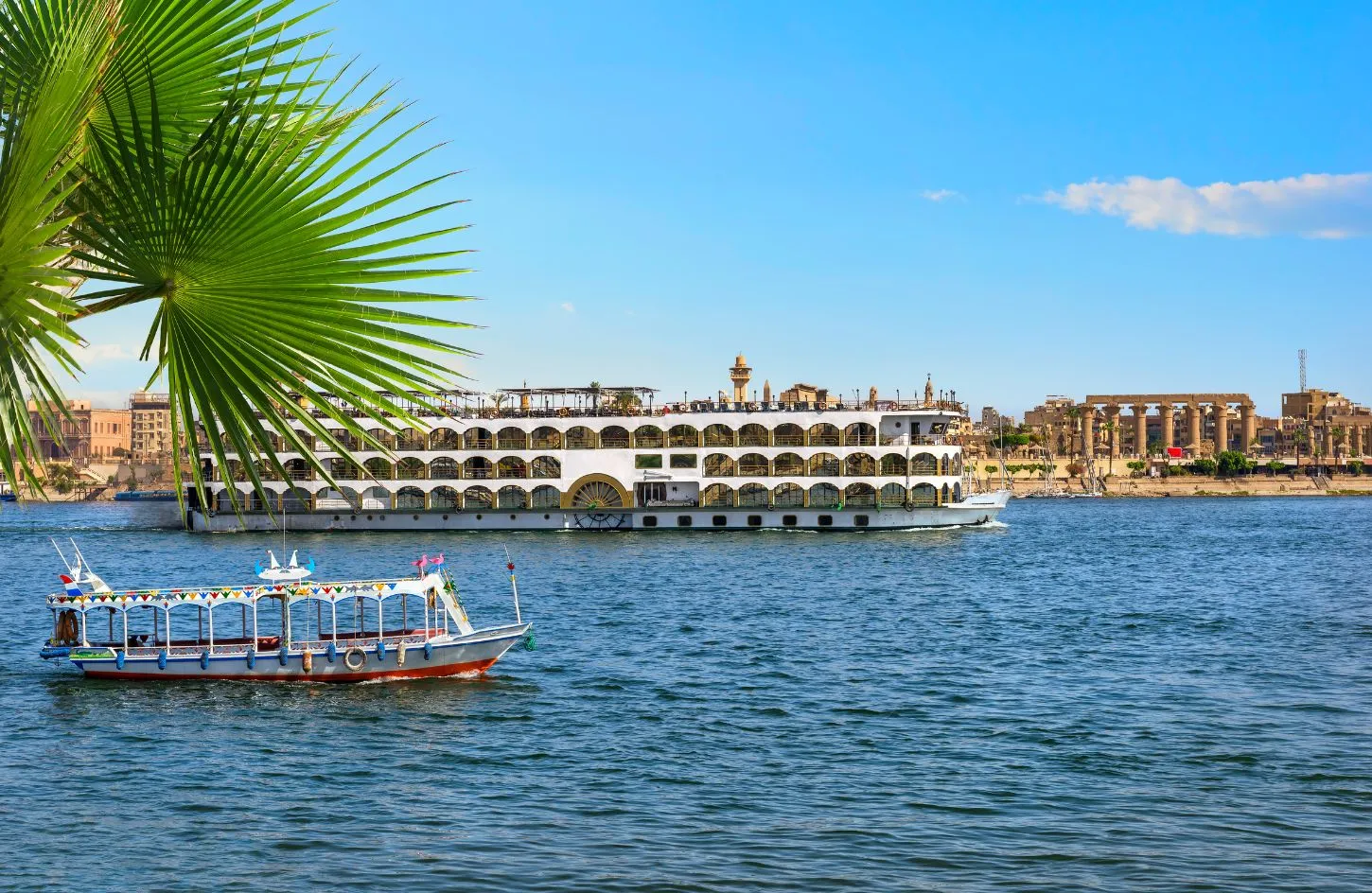
Nile cruise tourism has an extremely strong safety record. The last significant security incident affecting Nile cruise tourists occurred in the 1990s, after which Egypt implemented comprehensive tourist protection measures, including a dedicated tourist police force. In over twenty years of operations at Nile Cruise Offers, our team has not had a single security incident affecting any client on any of our ships.
What should I do if I feel unsafe on a Nile cruise excursion?
Return to the ship or your group immediately. Inform the ship’s tour manager or guest relations officer. Do not engage with whoever caused the concern. Every ship on the Luxor–Aswan route maintains contact with cruise staff during excursions — if something feels wrong, the fastest action is to contact your guide or return to the ship. Situations rarely escalate when handled calmly and promptly.
Is the Nile cruise corridor safe for Americans after recent tensions in the Middle East?
American tourists are among the most common nationalities on Nile cruise ships and are welcomed throughout the tourist corridor. The Luxor–Aswan route is geographically and operationally separated from any regional conflict zone. We have not observed any change in the reception of American travelers in the tourist corridor during any period of regional tension.
Is it safe to travel to Egypt during Ramadan?
Yes — and for a Nile cruise, Ramadan is genuinely an interesting time to travel. The cruise ship itself operates normally throughout Ramadan. Shore-side, some restaurants reduce hours, but temple sites remain open. The atmosphere in Luxor and Aswan during Ramadan evenings — with the Ramadan lights and the post-iftar energy — is something most travelers find memorable rather than inconvenient. Some sites are quieter during Ramadan than at peak season, which is a practical advantage.
Do I need travel insurance for a Nile cruise?
Yes, absolutely — this applies to any international travel, not just Egypt. We require proof of comprehensive travel insurance for all Nile Cruise Offers bookings. Ensure your policy includes medical evacuation, the most important coverage for travel in this part of the world.
Can I bring prescription medications into Egypt?
Yes, for personal use. Carry your prescription with you and keep medications in their original labeled packaging. Some medications that are legal elsewhere (certain opioid-based painkillers, specific psychiatric medications) may require prior approval from Egyptian authorities. Check your country’s Egyptian Embassy website for a current list, or contact your physician.
Our Safety Commitment at Nile Cruise Offers
Every ship in our portfolio — from the Paradise and Magic II to the Chateau Lafayette and Oberoi vessels — is operated by crews with established safety records on the Luxor–Aswan route. We do not add ships to our catalog that we would not put our own families on. That is a simple standard, and it shapes every booking decision we make.
Before every departure, our team reviews current conditions on the route, any changes to excursion logistics, and any relevant security advisories. We communicate relevant updates to clients in the pre-departure information pack, which is sent approximately two weeks before travel.
If you have specific safety concerns about your planned trip — about a particular destination, your nationality, a medical condition, or traveling solo — contact us directly before booking. We would rather answer every question now than have you travel with unanswered concerns.
