

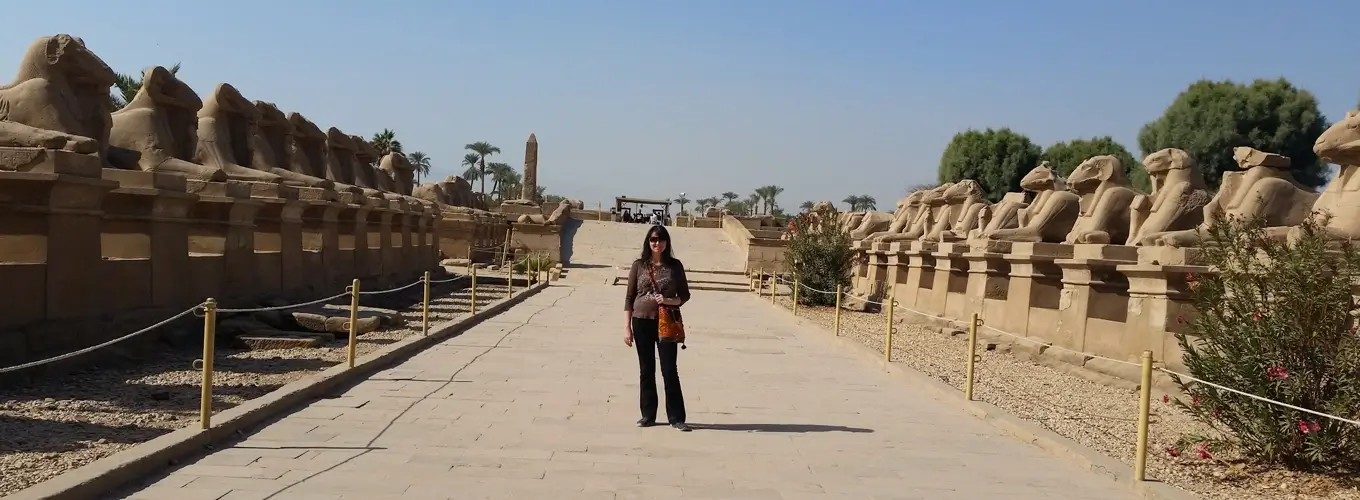
You may have dreamed of the slow, warm sweep of the Nile and the hush of ancient temples at dusk. That quiet pull is personal — it tells you this trip could change how you travel and what you remember.
You’re reading this on Nile Cruise Offers, where we help you compare routes, ships, and pricing so you can book the right itinerary with confidence. Our goal is to make your decision simple, clear, and suited to your pace.
Most modern sailings run between Luxor and Aswan and call at Philae, Kom Ombo, and Edfu before the big monuments in Luxor like the Valley of the Kings and Karnak. The classic stretch takes 4–5 days, while longer options reach Cairo or span 15 days for a grander journey that includes Abu Simbel and Lake Nasser.
Ship styles vary from motorships and deluxe vessels to boutique dahabiyas and traditional feluccas. Expect air-conditioned cabins, guided excursions by Egyptologists, and plenty of sun-deck time to absorb the nile river scenery.
In this article you’ll get a clear Luxor Aswan cruise route comparison, practical ways to match ship style to your tastes, and sample day plans so you can picture the experience before you book.
Key Takeaways
- You’ll see side-by-side comparisons to match pace, interests, and budget.
- Typical itineraries run 4–5 days; extended options can reach 15 days.
- Stops commonly include Philae, Kom Ombo, and Edfu before major Luxor sites.
- Ship choices range from motorships to dahabiyas and feluccas to fit your style.
- Expect guided tours by Egyptologists, air-conditioned cabins, and relaxed sun-deck time.
Quick look: Luxor ↔ Aswan vs Cairo and Lake Nasser routes
Deciding between a short Nile passage and an extended inland voyage shapes your whole trip. Nile Cruise Offers lays out the main options so you can shortlist two or three itineraries fast.
The Aswan→Luxor option usually runs 4 days/3 nights and stops at Kom Ombo and Edfu before the West and East Banks. The reverse, Luxor→Aswan, is commonly 5 days/4 nights and begins with major temple visits, then Edfu and Kom Ombo, finishing at Philae and the High Dam.
Cairo→Aswan is a deep, roughly 15-day itinerary that adds Middle Egypt sites like Abydos and Dendera. Lake Nasser sailings (about 5 days) focus on southern treasures such as Abu Simbel and Kasr Ibrim.
- Pick the efficient 4-day Aswan→Luxor or the fuller 5-day Luxor→Aswan depending on how many sites you want per day.
- Classic nile river options have the widest choice of ships and departure dates; Lake Nasser and Cairo departures are rarer and pricier.
- Air connections and early excursions (balloon rides or Abu Simbel flights) often determine your start and end logistics.
| Itinerary | Typical days | Highlights |
| Aswan → Luxor | 4 days / 3 nights | Kom Ombo, Edfu, Luxor temples |
| Luxor → Aswan | 5 days / 4 nights | Luxor East/West, Edfu, Philae |
| Cairo → Aswan | ~15 days | Middle Egypt sites + Upper Egypt stretch |
| Abu Simbel → Aswan (Lake Nasser) | ~5 days | Nubian temples, Kasr Ibrim |
Use this snapshot to narrow your choices by time, ship availability, and price, then move on to the next section for a deeper dive into which direction fits your style.
Discover Egypt Nile Cruises sailing between Luxor and Aswan.
Luxor Aswan Cruise Route Comparison: Which direction fits your style?
Choose the direction that fits how you like to travel: do you want big mornings or slow afternoons? Your choice shapes the daily pace, costs, and how tired you feel on tour.
Starting in Luxor means you begin with major temples and the West Bank. That front-loads walking and wow moments, then you unwind as you sail south. It often runs longer by a night and can cost a bit more.
Starting in Aswan eases you in with Philae, short boat rides, and calm river scenes. This northbound option commonly fits 4 days/3 nights and tends to be slightly cheaper.
- Pick Aswan→Luxor if you want a gentler warm-up and a shorter time commitment.
- Pick Luxor→Aswan if you want headline sites early and mellow days later.
- Consider flights, hotel nights, and how your energy levels work on long walking days.
| Start | Typical length | Practical fit |
| Luxor | 5 days / 4 nights | Start strong, unwind later; slightly higher fare |
| Aswan | 4 days / 3 nights | Gentle start, big finale; often cheaper |
| Both | Varies | Nile Cruise Offers matches departures and guides to your preferences |
What you’ll see along the way: must-visit temples and sites
Every stop reveals different layers of Egypt’s past, from royal tombs to island shrines. You’ll find big monuments and quiet corners that tell human stories across centuries.
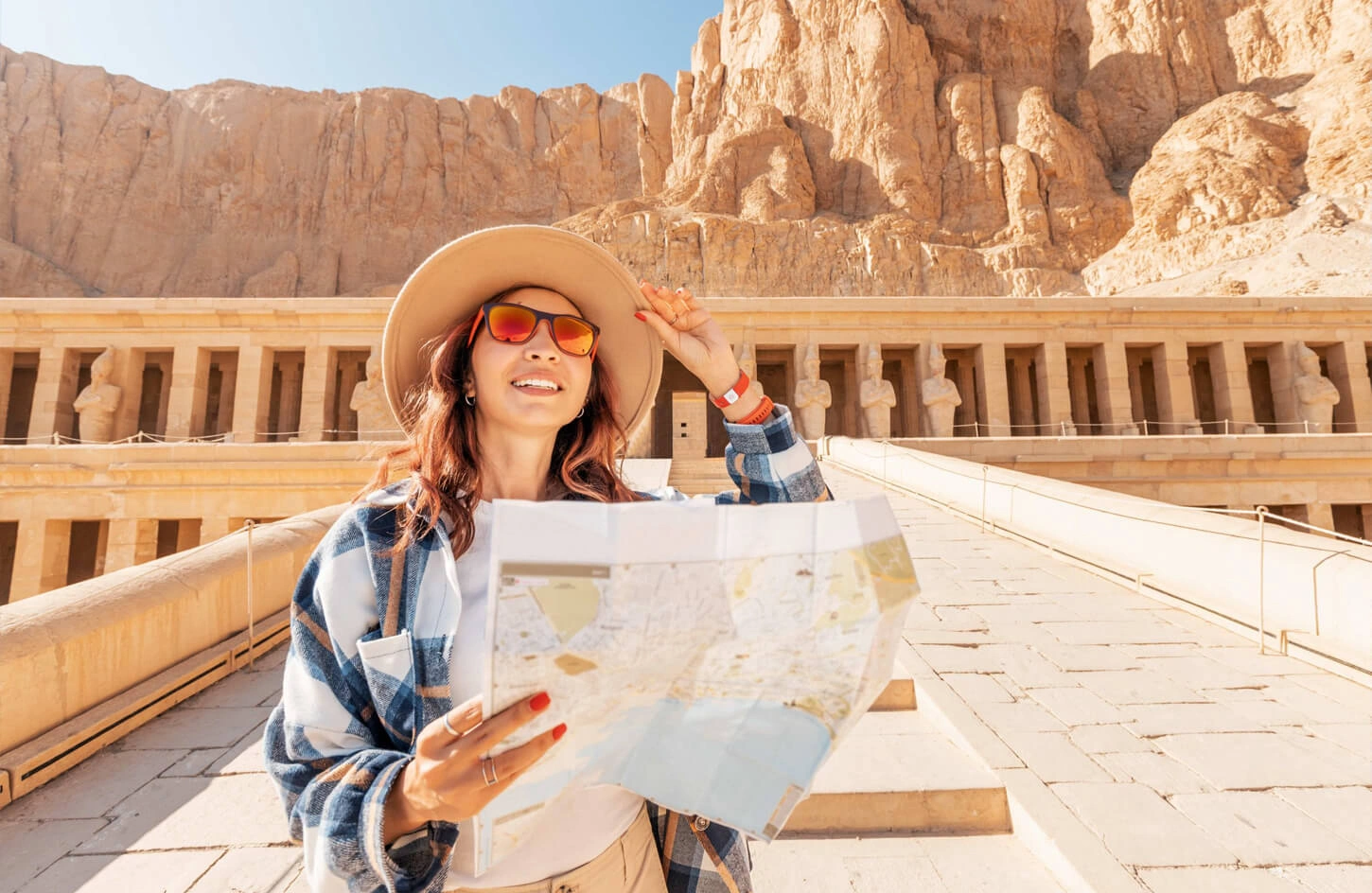
Plot your must-see temples so your boat and schedule hit the places you care about most along way. On the West Bank you visit the valley kings and Hatshepsut’s terraced temple. On the East Bank you’ll see karnak temple and luxor temple, both full of carved history.
- En route are Edfu’s Temple of Horus and kom ombo’s twin shrine with its Crocodile Museum.
- In town you can tour Philae temple and the unfinished obelisk, then float past Elephantine island in a felucca.
- Abu simbel is reachable from the south by early transfer and makes a powerful add‑on when you want the grand finale.
Expect sweeping nile river views: feluccas gliding, date palms, and riverside villages that have shaped life here for years. Use this checklist to match your direction and to decide which sites get extra time or a night visit for dramatic lighting.
| Site | Highlight | Why visit |
| Karnak Temple | Hypostyle Hall | Immense columns and layered history |
| Valley of the Kings | Royal tombs | Pharaohs’ painted burial chambers |
| Kom Ombo / Edfu | Twin temple & Horus reliefs | Well-preserved ritual art |
Learn the Best Time for Nile Cruise in Egypt before booking.
Trip Length and Pacing: Days, Nights, and How the Timing Feels
How you pace each day shapes whether the trip feels restorative or rushed. Decide how many days you truly want on the river, then choose aswan luxor or luxor aswan pacing to match your energy.
Short classics run 4 days/3 nights from Aswan to Luxor and work well if you want an efficient itinerary. Many travelers prefer at least 5 days/4 nights so touring with a private Egyptologist doesn’t feel packed.
Plan around timing quirks. A sunrise balloon over the west bank changes your first day. Abu Simbel departures from the south start very early and can make transfer time tight.
- Allow rest blocks: follow a full morning at Karnak or the West Bank with an easier afternoon sail.
- Decide how many nights you want onboard versus in the city or by the Red Sea.
- Families often benefit from an extra night to slow the pace.
| Option | Typical length | Best for |
| Short classic | 4 days / 3 nights | Efficient sightseers who want highlights |
| Standard | 5 days / 4 nights | Travelers who prefer relaxed pacing and deeper guides |
| Extended | 6+ days | Those adding Dendera, Abydos, or extra leisure time |
Nile Cruise Offers helps you right-size the plan so your days flow at a comfortable way and you get time to enjoy each site without a checklist sprint.
Prepare smarter with What to Pack for Nile Cruise Egypt checklist.
Ship styles and comfort levels: from budget motorships to boutique dahabiyas
From wind‑driven dahabiyas to full‑service motorships, each boat gives a distinct onboard feel. On Nile Cruise Offers you can filter and compare categories side by side so you pick what matches your pace and tastes.
Motorships run the gamut: standard for value, deluxe for spacious cabins and better dining, and luxury with suites, spas, and fine restaurants. These cruise ships often feel like floating hotels with AC, private bathrooms, lounges, and a sun deck to relax between shore visits.
Dahabiyas are small, wind‑powered vessels that host 8–20 guests. They stop at quiet villages and deliver intimate service and slower sailing. A felucca offers a simple sail for sunsets or an adventurous overnight; it has no cabins or bathrooms, so it suits flexible travelers.
- Expect Egyptologist guide briefings, cultural shows, and spa options on higher tiers.
- Families tend to prefer motorships for facilities; design‑minded travelers favor dahabiyas.
- Ask about private berths or upper‑deck cabins if unobstructed views matter.
| Category | Typical size | Key comforts |
| Standard motorship | 60–100 guests | Basic cabins, AC, shared lounge |
| Deluxe motorship | 40–80 guests | Spacious cabins, better dining, pool |
| Luxury vessel | 20–60 guests | Suites, spa, fine dining, high staff ratio |
| Dahabiya / Felucca | 2–20 guests | Quiet sailing, intimate service, village stops |
Make the right decision with Choose Luxury vs Standard Nile Cruise.
Cost comparison: where your cruise dollars go
Understanding fare components makes it easier to match your budget to the onboard experience you want.
Nile Cruise Offers breaks down what is usually included and what adds up. Standard ships are the most budget-friendly and cover basics like meals and guided shore visits. Deluxe options add space and design. Luxury tiers offer suites, spas, and gourmet dining.
Pricing changes with length, cabin category, and whether excursions use group guides or a private Egyptologist. New 2019 floating‑hotel rules raised hygiene and sustainability standards and set minimum nightly rates for higher stars, so expect those costs to show up in fares.
- Know price drivers: ship class, cabin type, sailing dates, days and nights, and tour style.
- Check meal plans, drink policies, and service charges to avoid surprise spending.
- Weigh extra hotel nights, transfers, or private guides into the total trip math.
| Price driver | Why it matters | Typical effect |
| Ship category | Comfort, amenities, staff ratio | Higher fare for luxury |
| Cabin choice | View, noise, space | Upper‑deck costs more |
| Excursions | Group vs private tour depth | Private adds per‑person fees |
| Trip logistics | Connections and extra hotels | May add one or more nights |
If you’re considering a cruise one category higher, price the extra against what you gain in time, comfort, and fewer crowds. Small choices—early booking, shoulder dates, bundled transfers—often boost value for travelers without a big price jump.
Avoid confusion with Tipping on Nile Cruise advice.
Sample day-by-day: Aswan → Luxor in 4 days/3 nights
Here’s a practical, easy-to-follow four-day plan that maps key visits and downtime on the Nile. It helps you visualize pace, inclusions, and highlights for this popular aswan luxor itinerary.
Day 1: Board in Aswan and visit the High Dam, Philae island temple, and the Unfinished Obelisk. Enjoy an optional felucca ride at golden hour as the vessel slips along way past palm-lined banks.
Day 2: Sail north to Kom Ombo’s twin shrine, then continue to Edfu to tour the Temple of Horus with its carved reliefs and ceremonial rooms. Mornings are best for photos; afternoons suit relaxed deck time.
Day 3: Arrive at the West Bank in Luxor for the Valley of the Kings, Hatshepsut’s terraces, and the Colossi of Memnon. Pace your day with water breaks and shade stops to stay comfortable on long walks.
Day 4: Finish on the East Bank with Karnak’s hypostyle hall and Luxor Temple. If you can, plan an evening visit to Luxor Temple for atmospheric lighting before disembarkation.
- Consider Abu Simbel before boarding: an early air transfer or 3‑hour road trip from Aswan is possible.
- The sample balances big archaeological days with restful sailing along the nile river to avoid burnout.
- Confirm which meals and site tickets are included and discuss optional extras with your guide on Day 1.
| Day | Main stops | Tip |
| Day 1 | High Dam, Philae, Unfinished Obelisk | Optional felucca at sunset |
| Day 2 | Kom Ombo, Edfu (Temple of Horus) | Best light in morning |
| Day 3 | West Bank: Valley Kings, Hatshepsut | Carry water and hat |
| Day 4 | Karnak, Luxor Temple | Evening visit is magical |
Sample day-by-day: Luxor → Aswan in 5 days/4 nights
Launch your journey in the heart of ancient worship, and finish where slow water and soft sunsets set the tone. Nile Cruise Offers lays out this reverse classic so you can compare direction and pacing clearly.
- Day 1: Start on the east bank with karnak temple and luxor temple. Extra nights give you time to absorb the sites.
- Day 2: Cross to the west bank for valley kings, Hatshepsut’s terraces, and the Colossi. Sail later to Edfu for a calm evening.
- Day 3: Visit Edfu’s grand temple in the morning, then kom ombo in the afternoon as the nile river scenery changes.
- Day 4: In Aswan, tour the high dam, philae, and the unfinished obelisk, then enjoy a sunset felucca ride.
- Day 5: Disembark in Aswan; add abu simbel by air or road if you want a powerful finale.
| Day | Main stops | Why it works |
| Day 1 | Karnak, Luxor Temple | Strong start; plenty of time with extra nights |
| Day 2 | Valley Kings, Hatshepsut, Colossi | Smoother pacing; less rush |
| Day 3 | Edfu, Kom Ombo | Best morning light at Edfu; scenic sail |
| Day 4 | High Dam, Philae, Unfinished Obelisk | Tranquil finish with sunset sail |
| Day 5 | Disembark; Abu Simbel option | Easy transfers; add-on by air or road |
Understand itinerary types in How to Choose a Nile Cruise.
Beyond the classic route: Cairo → Aswan and Abu Simbel → Aswan (Lake Nasser)
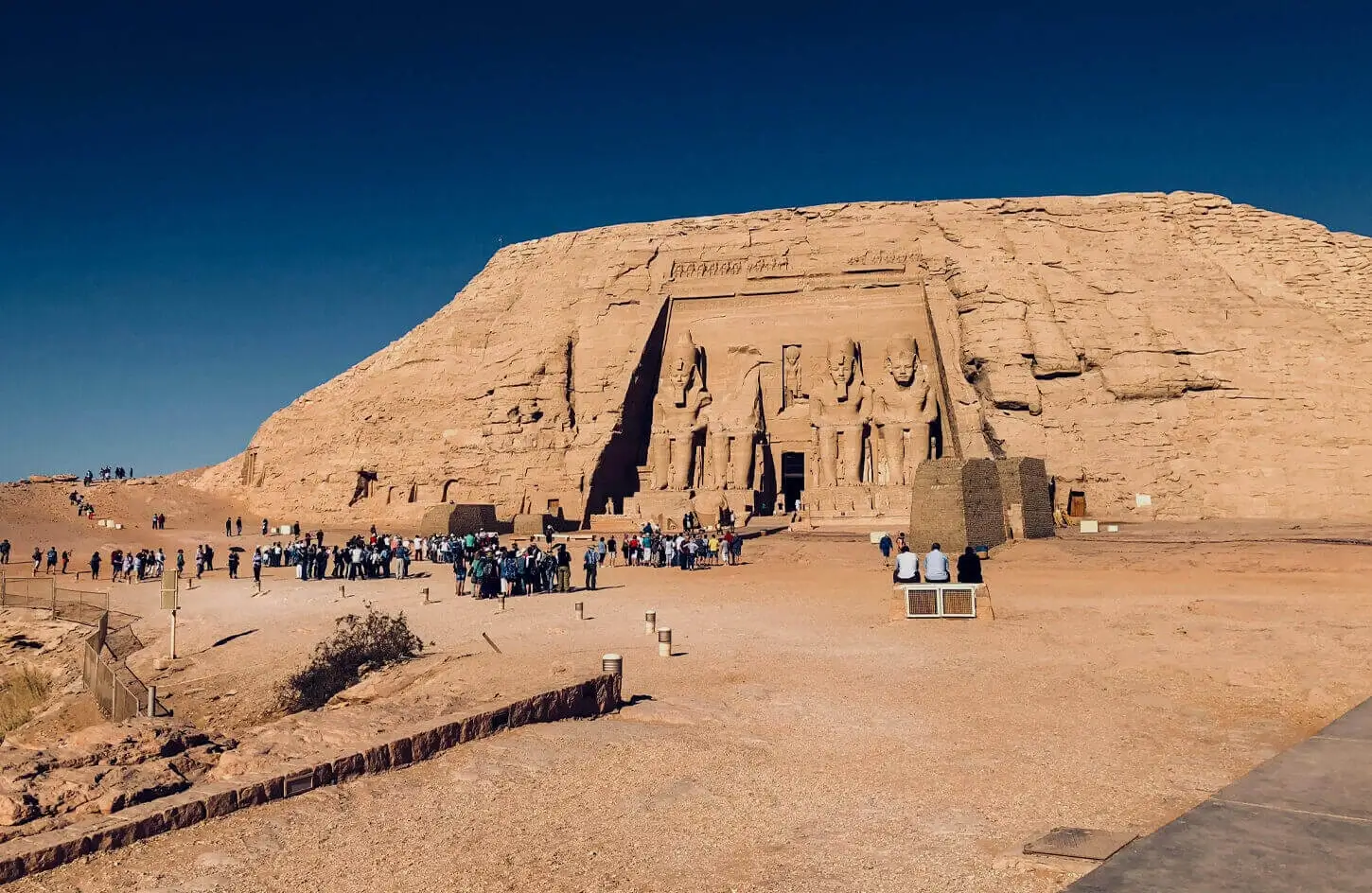
If you crave rare ruins and quieter decks, the extended Cairo→Aswan and Lake Nasser options deliver a very different Nile experience.
The Cairo→Aswan itinerary runs about 15 days. It links pyramids, Middle Egypt tombs such as Beni Hassan and Tel El‑Amarna, and Upper Egypt monuments. Fewer ships serve this path, so fares rise and departure windows tighten.
Lake Nasser sailings—often listed as Abu Simbel → Aswan—take roughly five days. You visit Kasr Ibrim, Amada, the Pennut Tomb, and Wadi el Seboua. These cruises offer serene water, remote temples, and intimate archaeological stops.
- Consider Cairo→Aswan for an epic, once-in‑years immersion into Egypt’s deep past.
- Expect higher prices, limited ships, and fixed departure dates.
- Lake Nasser pairs well with a classic aswan luxor segment; do one before the other.
- Kom Ombo and Edfu belong to the classic run; Lake Nasser focuses on relocated Nubian sites.
- These itineraries suit travelers who value discovery over ship variety and crowded decks.
- Nile Cruise Offers will piece together transfers so your extended temple focus flows smoothly.
| Itinerary | Typical days | Highlights |
| Cairo → Aswan | ~15 days | Pyramids, Beni Hassan, Tel El‑Amarna |
| Abu Simbel → Aswan (Lake Nasser) | ~5 days | Kasr Ibrim, Amada, Wadi el Seboua |
| Classic segment | 4–5 days | Kom Ombo, Edfu, major temples |
Clarify pricing with What Is Included in Nile Cruise explanation.
When to go and how to plan: seasons, direction, and flight logistics
Plan your travel dates around weather and flight windows so your time on the water feels relaxed. Mild winter months are best for long outdoor days. Summer brings heat and fewer crowds.
Book air connections early during holidays and high season. Some boat types and smaller ships have limited departures. Motorships run most often; dahabiyas and Lake Nasser vessels sell out faster.
If a sunrise balloon is on your list, allow buffer hours before a major walking day. Abu Simbel options from the south begin very early by road or air, so align transfers and overnight plans.
- Aim for cooler months for comfort and plan midday shade and hydration breaks.
- Reserve flights and limited-berth ships months ahead for peak dates.
- Schedule felucca rides for late afternoon to catch the best light at sunset.
- Match your way direction with incoming and outgoing flight slots to cut transfer stress.
- Families should favor shorter transfers and earlier evening meals onboard.
| Planning item | Why it matters | Quick tip |
| Season | Comfort at outdoor sites | Travel in cooler months; shoulder seasons balance crowds and temps |
| Flights & transfers | Keep sailing days intact | Book air early and allow transfer buffers |
| Special activities | Balloon and Abu Simbel timing | Plan balloons at sunrise with a recovery day; Abu Simbel needs early starts |
| Ship choice | Departure frequency and availability | Motorships have many departures; smaller ships sell out—reserve sooner |
Nile Cruise Offers can coordinate your flights, pre- or post-stays, and boat embarkation so your days flow from takeoff to disembarkation with minimal fuss.
Explore benefits in Should I Take a Nile Cruise? breakdown.
Who each route suits best: match your travel style and goals
Some travelers want big, busy days; others prefer slow sails and quiet decks—pick the pace that fits you. Nile Cruise Offers helps match your priorities for pace, comfort, and depth so your trip feels tailored, not generic.
If you’re new to Egypt, the popular Aswan→Luxor four‑day option is efficient and gives a big finish in Luxor. Starting in Luxor and sailing south often runs five days and costs a touch more, ideal if you want a gentler wind‑down.
Boat choice shifts the vibe. Choose a dahabiya for privacy and a handcrafted experience. Pick a luxury motorship for spa perks, larger cabins, and full service. Short felucca sails are minimalist and magical for sunset moments on the deck.
- Families: favor classic cruises with more onboard facilities and kid-friendly services.
- Couples often select boutique boats for quiet and privacy.
- Photographers and serious history fans: aim for shoulder seasons and early/late site slots to avoid crowds at temples.
- If you want deep context, book a boat known for strong Egyptologist programming and guided tours.
| Traveler type | Best fit | Why |
| First-timers | Aswan→Luxor (4 days) | Efficient highlights, strong finale |
| Luxury seekers | Luxury motorship | Comfort, spa, large cabins |
| Authenticity lovers | Dahabiya/felucca | Intimate sailing, sunset deck moments |
Nile Cruise Offers pairs your goals with the right boat and program so your experience, tour pacing, and choices feel right for you.
Explore security measures in Is Egypt Safe for Nile River Cruises?
Conclusion
Close your planning loop by focusing on what you want to see each day and how you want to spend your nights on the water.
Your best nile cruise matches itinerary, direction, and nights to your pace and budget. Classic 4–5 day options cover Philae, Kom Ombo, Edfu, the Valley of the Kings, Hatshepsut, Karnak, and Luxor Temple. Lake Nasser trips add Abu Simbel and quieter Nubian temples.
Balance comfort and character: motorships and cruise ships for facilities, dahabiyas for intimacy, a felucca for a short romantic boat ride. Factor air transfers, balloon timing, and hotels so your days and monuments flow without stress.
With Nile Cruise Offers, you can compare, customize, and book the right cruise itinerary so your egypt nile experience feels effortless and memorable.